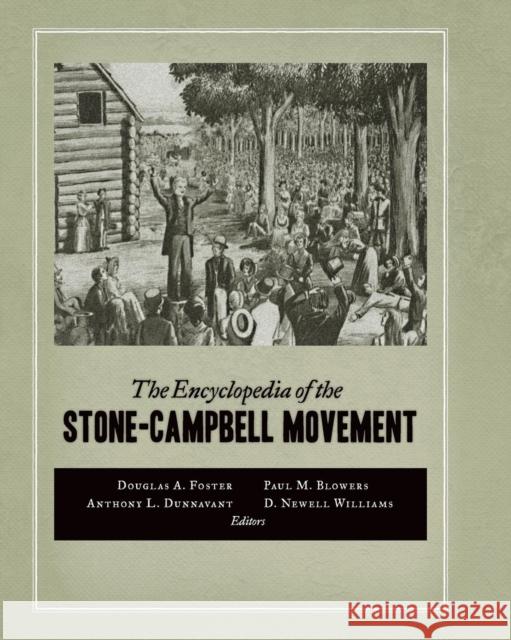
The religious reform tradition known as the Stone-Campbell movement came into being on the American frontier in the early decades of the nineteenth century. Named for its two principal founders, Barton W. Stone and Alexander Campbell, its purpose was twofold: to restore the church to the practice and teaching of the New Testament and, by this means, to find a basis for reuniting all Christians. Today, there are three major branches of the Stone-Campbell tradition: the Christian Church (Disciples of Christ), Churches of Christ, and Christian Churches/Churches of Christ. This volume brings...
The religious reform tradition known as the Stone-Campbell movement came into being on the American frontier in the early decades of the nineteenth ce...
With roots in British and American endeavors to restore apostolic Christianity, the Stone-Campbell Movement drew its inspiration from the independent efforts of nineteenth-century religious reformers Barton W. Stone and the father-son team of Thomas and Alexander Campbell. The union of these two movements in the 1830s and the growth of the new body thrust it into a place of significance in early nineteenth-century America, and it quickly spread to other parts of the English-speaking world. From its beginnings the Movement has developed into one of the most vital and diverse Christian...
With roots in British and American endeavors to restore apostolic Christianity, the Stone-Campbell Movement drew its inspiration from the independent ...