Since the publication of his haunting, elegiac Goodbye to a River in 1960, John Graves has become one of Texas' most beloved writers, whose circle of loyal readers extends far beyond the borders of his home state. A "regional" writer only by virtue of his gift for vividly evoking the spirit of the land and its people, Mr. Graves is also admired for the unerring craftsmanship of his prose.
Now the University of Texas Press takes great pleasure in publishing A John Graves Reader to introduce his writing to a new generation of readers. This anthology contains...
Since the publication of his haunting, elegiac Goodbye to a River in 1960, John Graves has become one of Texas' most beloved writers, ...
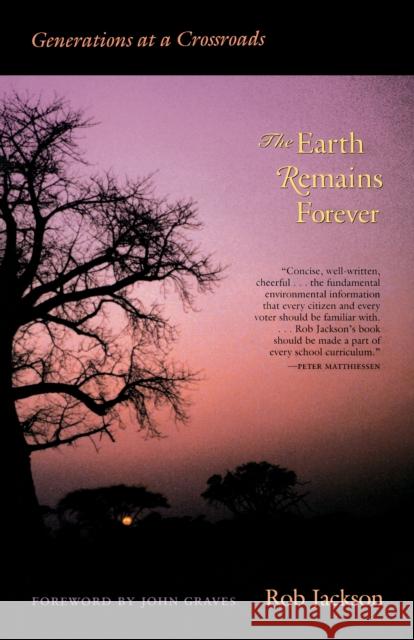
Writing especially for people who've tuned out the environmental debate, Rob Jackson persuasively argues that we're at a crucial turning point in environmental history, where choices we make now will determine the quality of life into the unforeseeable future. Laying out the scientific facts in plain language and with flashes of humor, he shows how the escalation of population growth and resource consumption in the twentieth century caused problems from ozone depletion to global warming, habitat destruction, and biodiversity loss. At the same time, however, he highlights ongoing solutions...
Writing especially for people who've tuned out the environmental debate, Rob Jackson persuasively argues that we're at a crucial turning point in e...
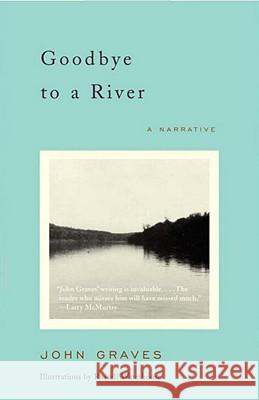
In the 1950s, a series of dams was proposed along the Brazos River in north-central Texas. For John Graves, this project meant that if the stream s regimen was thus changed, the beautiful and sometimes brutal surrounding countryside would also change, as would the lives of the people whose rugged ancestors had eked out an existence there. Graves therefore decided to visit that stretch of the river, which he had known intimately as a youth. Goodbye to a River" "is his account of that farewell canoe voyage. As he braves rapids and fatigue and the fickle autumn weather, he muses upon old...
In the 1950s, a series of dams was proposed along the Brazos River in north-central Texas. For John Graves, this project meant that if the stream s re...
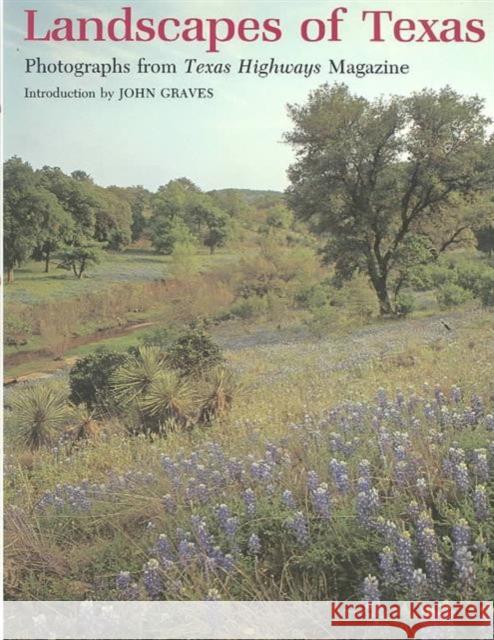
Many outlanders think of Texas as a land of cactus flats or High Plains ranches, its landscape broken only by barbed wire fences of perhaps an oil derrick. Texans, of course, know better. Here, in 202 magnificently reproduced, full-color photographs from "Texas Highways" magazine, the astonishing diversity and beauty of Texas landscapes are splendidly and dramatically displayed. The damp pine forests, shaded lakes, and tangled thickets of East Texas; the fertile fields of the rolling prairies; the vast wheat and cotton farms and rangelands of the Panhandle plains; the rugged peaks...
Many outlanders think of Texas as a land of cactus flats or High Plains ranches, its landscape broken only by barbed wire fences of perhaps an oi...
The changing seasons make grandly visible not only nature's recurring miracle of life, death, and rebirth which enfolds and nurtures us all but also the special character of a particular region observed over time, its secret beauties and sudden terrors, the coursing life of the place itself. Jim Bones' magnificent photographic record of a year in the Texas Hill Country chronicles that sequence of natural details which mark the year's passing in a part of Texas many Texans have come to revere as a kind of heartland. Complementing the photographs, John Graves's essay on the region tells the...
The changing seasons make grandly visible not only nature's recurring miracle of life, death, and rebirth which enfolds and nurtures us all but also t...