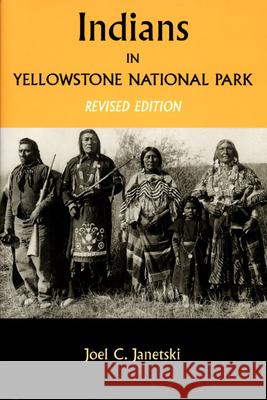
The vast, pine-covered plateau now known as Yellowstone National Park has been lived in, traveled through, and exploited by humans for thousands of years. It is still possible to see the remnants of old camps and deep-rutted trails over which ancient peoples crossed the Park to reach the bison-rich plains.
When did humans first visit the area we now call Yellowstone? Who lived there when the first Europeans entered the region? What happened to the last of the early inhabitants? How did the Nez Perce, fleeing across the northen of the newly established Park in 1877, escape...
The vast, pine-covered plateau now known as Yellowstone National Park has been lived in, traveled through, and exploited by humans for thousands of...
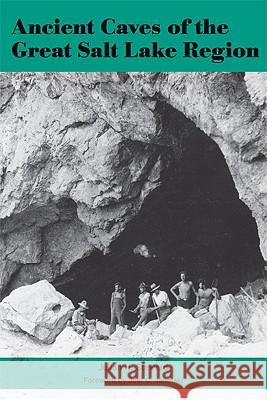
From 1930 to 1931, the University of Utah and the Smithsonian Institute s Bureau of American Ethnology sponsored archaeological field work in the vicinity of the Great Salt Lake. Particular attention was paid to caves that had once been submerged by Lake Bonneville, a prehistoric lake that was some 1,000 feet above the level of the remnant Great Salt Lake. Previous studies had demonstrated that such caves, as the lake subsided, were soon inhabited by ancient peoples and the archaeological explorations were aimed at discovering ancient cultures that could be dated by reference to the...
From 1930 to 1931, the University of Utah and the Smithsonian Institute s Bureau of American Ethnology sponsored archaeological field work in the vici...
The history of archaeological work in the Clear Creek Canyon region of central Utah, including reports of Five Finger Ridge excavations and the establishment of Fremont Indian State Park.
The history of archaeological work in the Clear Creek Canyon region of central Utah, including reports of Five Finger Ridge excavations and the est...
Dr. Ray T. Matheny, Professor Emeritus of Anthropology at BYU, where he mentored undergraduate and graduate students, also established the first BYU field school of archaeology and was the initiator and director of numerous archaeological projects. "An Archaeological Legacy "contains a short biography of Dr. Matheny s life and work as well as essays by his colleagues many of whom are his former students about a variety of geographical areas and topics, mostly within the scope of the major areas of Dr. Matheny s work: the Colorado Plateau, American Southwest, and Mesoamerica. Essays cover such...
Dr. Ray T. Matheny, Professor Emeritus of Anthropology at BYU, where he mentored undergraduate and graduate students, also established the first BYU f...
"Archaeology in the Great Basin and Southwest "is a compilation of papers by friends and colleagues that honor Don D. Fowler. The volume encompasses the breadth and depth of Fowler s work in archaeology and sister disciplines with original scholarship on the human past of the arid west. Included are theoretical, methodological, and empirical papers that synthesize and present fresh perspectives on Great Basin and Southwest archaeology and cover a sweep of topics from Paleoindian research to collaboration with Native Americans. Fowler has continually reminded scholars that to understand the...
"Archaeology in the Great Basin and Southwest "is a compilation of papers by friends and colleagues that honor Don D. Fowler. The volume encompasses t...