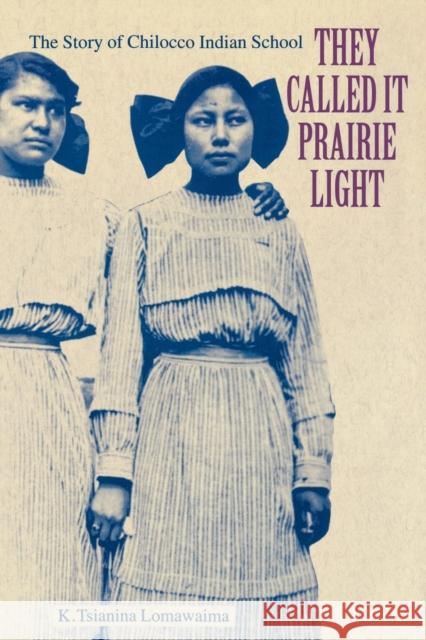
Established in 1884 and operative for nearly a century, the Chilocco Indian School in Oklahoma was one of a series of off-reservation boarding schools intended to assimilate American Indian children into mainstream American life. Critics have characterized the schools as destroyers of Indian communities and cultures, but the reality that K. Tsianina Lomawaima discloses was much more complex.
Lomawaima allows the Chilocco students to speak for themselves. In recollections juxtaposed against the official records of racist ideology and repressive practice, students from the 1920s and 1930s...
Established in 1884 and operative for nearly a century, the Chilocco Indian School in Oklahoma was one of a series of off-reservation boarding schools...
In the early 1970s, the federal government began recognizing self-determination for American Indian nations. As sovereign entities, Indian nations have been able to establish policies concerning health care, education, religious freedom, law enforcement, gaming, and taxation. Yet these gains have not gone unchallenged. Starting in the late 1980s, states have tried to regulate and profit from casino gambling on Indian lands. Treaty rights to hunt, fish, and gather remain hotly contested, and traditional religious practices have been denied protection. Tribal courts struggle with state and...
In the early 1970s, the federal government began recognizing self-determination for American Indian nations. As sovereign entities, Indian nations ...
Offering a portrait of American Indian education, this book evaluates US education policies and practices - from early 20th century federal incarnations of colonial education through the standards movement. It reveals the falseness of fears attached to notions of dangerous cultural difference.
Offering a portrait of American Indian education, this book evaluates US education policies and practices - from early 20th century federal incarnatio...