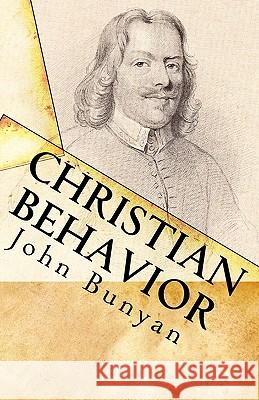
Here is one of the most influential Christian allegorical stories ever written. In it we follow Christian on his journey to the Celestial City. The journey is fraught with peril and Christian must overcome many obstacles and temptations along the way. Powerful, inspirational, and thought provoking.
Here is one of the most influential Christian allegorical stories ever written. In it we follow Christian on his journey to the Celestial City. The jo...
John Bunyon was an English 17th Christian writer and preacher. He is best known for his allegory The Pilgrims Progress. Bunyan wrote The Holy War while being imprisoned for preaching without a license. This confinement lasted 12 years. The Holy War, made by King Shaddai upon Diabolus, for the regaining of the metropolis of the world; or, the losing and taking again of the town of Mansoul is a book of spiritual warfare. In this allegory an old tinker named Bedford is the central character. He is an independent Baptist. When telling the story of the symbolic battles Bunyan uses actual military...
John Bunyon was an English 17th Christian writer and preacher. He is best known for his allegory The Pilgrims Progress. Bunyan wrote The Holy War whil...
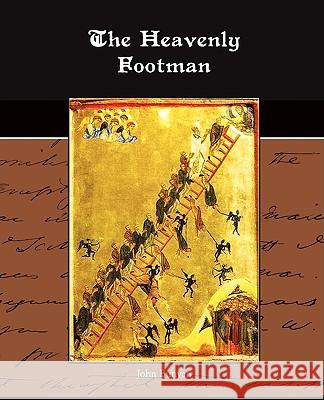
John Bunyon was an English 17th Christian writer and preacher. He is best known for his allegory The Pilgrims Progress. In his autobiographical book, Grace Abounding, Bunyan describes himself as having led an abandoned life in his youth, and as having been morally reprehensible as a result. After contemplating his acts as a youth he became a Baptist. In 1655 he became a church deacon and began preaching. In The Heavenly Footman Bunyan discusses heaven and how to run to obtain. He talks about the journey being as important as the destination. Bunyan discusses the motives for the journey....
John Bunyon was an English 17th Christian writer and preacher. He is best known for his allegory The Pilgrims Progress. In his autobiographical book, ...
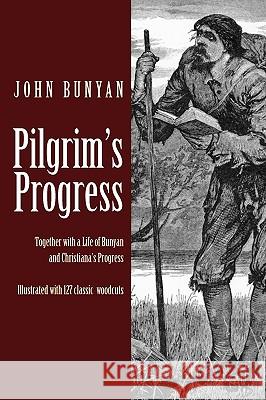
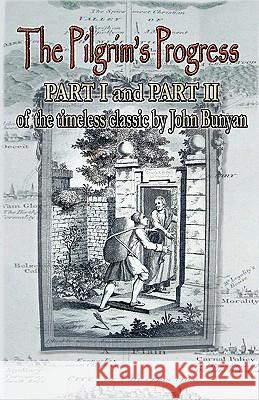
Bunyan's allegory captures the hearts and minds of readers with its depth of understanding and scriptural knowledge, as well as his subtle comedy and witticisms. This edition contains both parts of Bunyan's tale, including all of the original references in an easy-to-read format.
Bunyan's allegory captures the hearts and minds of readers with its depth of understanding and scriptural knowledge, as well as his subtle comedy and ...
Seleccionadas de entre las muchas reflexiones sobre la oracion de Bunyan, esta nueva colecci+n de oraciones ha sido editada para los lectores de hoy.
Gathered from Bunyan's many reflections on prayer in his writings, this new collection on prayer has been edited for today's readers.
Seleccionadas de entre las muchas reflexiones sobre la oracion de Bunyan, esta nueva colecci+n de oraciones ha sido editada para los lectores de hoy. ...
John Bunyon was an English 17th Christian writer and preacher. He is best known for his allegory The Pilgrims Progress. In his autobiographical book, Grace Abounding, Bunyan describes himself as having led an abandoned life in his youth, and as having been morally reprehensible as a result. After contemplating his acts as a youth he became a Baptist. In 1655 he became a church deacon and began preaching. The Pharisee and Publican is a sermon, which uses a text from Luke. "Two men went up into the temple to pray; the one a Pharisee, and the other a Publican. The Pharisee stood and prayed thus...
John Bunyon was an English 17th Christian writer and preacher. He is best known for his allegory The Pilgrims Progress. In his autobiographical book, ...
This accurate, revised text retains Bunyan's distinctive clarity of style while offering contemporary smoothness without being racy. Based upon the definitive Oxford Press text of 1960 by Wharey and Sharrock, the book pays particular attention to the maintenance of the author's doctrine and purposes.
This accurate, revised text retains Bunyan's distinctive clarity of style while offering contemporary smoothness without being racy. Based upon the de...
This treatise was written in 1663 during John Bunyan's incarceration in the Bedford prison and it was first published as a pocket edition in 1674 after his release from prison. Noted in his own "Epistle to the Reader," Mr. Bunyan's desire for Christians to have a pocket reader of very practical Christianity is, perhaps, something quite needed for Christians today. Among his contemporaries, and even among those following him, were very devout and pious men of God, who had written "Bodies" of practical divinity or practical Christianity that were hundreds, even thousands, of pages long. This...
This treatise was written in 1663 during John Bunyan's incarceration in the Bedford prison and it was first published as a pocket edition in 1674 afte...