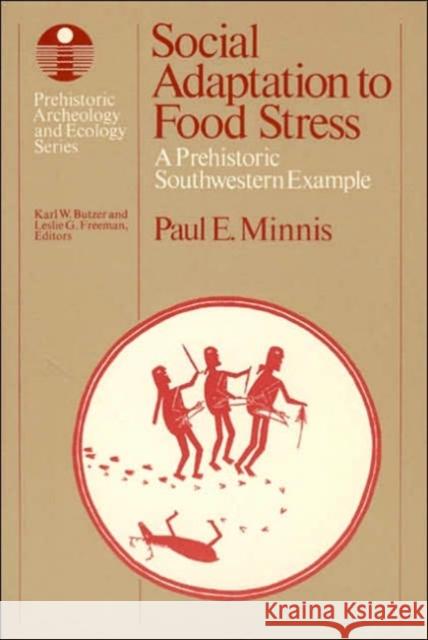
Combining anthropology, archeology, and evolutionary theory, Paul E. Minnis develops a model of how tribal societies deal with severe food shortages. While focusing on the prehistory of the Rio Mimbres region of New Mexico, he provides comparative data from the Fringe Enga of New Guinea, the Tikopia of Tikopia Island, and the Gwembe Tonga of South Africa. Minnis proposes that, faced with the threat of food shortages, nonstratified societies survive by employing a series of responses that are increasingly effective but also are increasingly costly and demand increasingly larger cooperative...
Combining anthropology, archeology, and evolutionary theory, Paul E. Minnis develops a model of how tribal societies deal with severe food shortages. ...
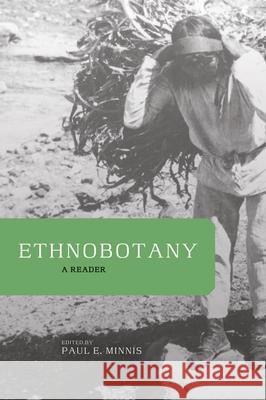
This reader in ethnobotany includes fourteen chapters organized in four parts. Paul Minnis provides a general introduction; the authors of the section introductions are Catherine S. Foeler (ethnoecology), Cecil H. Brown (folk classification), Timothy Jones (foods and medicines), and Richard I. Ford (agriculture).
"Ethnobotany: A Reader" is intended for use as a textbook in upper division undergraduate and graduate courses in economic botany, ethnobotany, and human ecology. The book brings together for the first time previously published journal articles that provide diverse perspectives...
This reader in ethnobotany includes fourteen chapters organized in four parts. Paul Minnis provides a general introduction; the authors of the sect...
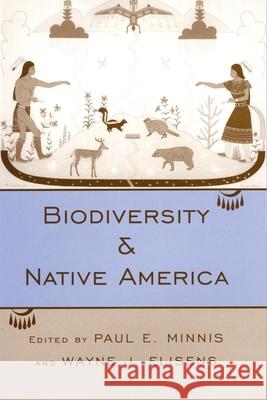
Exploring the relationship between Native Americans and the natural world, Biodiversity and Native America questions the widespread view that indigenous peoples had minimal ecological impact in North America. Introducing a variety of perspectives - ethnopharmacological, ethnographic, archaeological, and biological - this volume shows that Native Americans were active managers of natural ecological systems. The book covers groups from the sophisticated agriculturalists of the Mississippi River drainage region to the low-density hunter-gatherers of arid western North America.
This book...
Exploring the relationship between Native Americans and the natural world, Biodiversity and Native America questions the widespread view that indig...
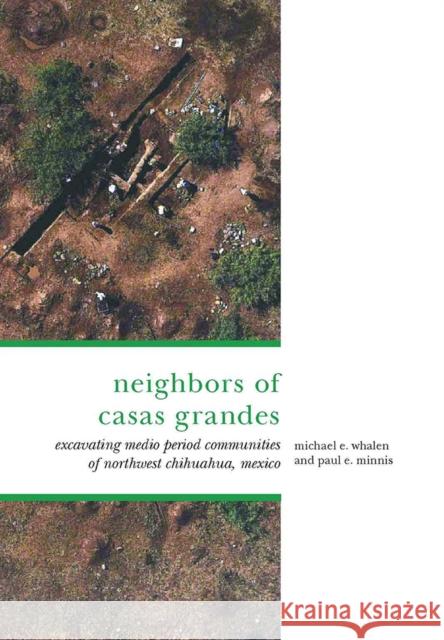
Casas Grandes, or Paquime, is one of the most important settlements in the prehistoric North American Southwest. The largest and most complex community in the Puebloan world, it was characterized by its principal excavator, Charles Di Peso, as an outpost of the Toltec empire, which used it as a trade link between Mesoamerican and southwestern cultures. Michael E. Whalen and Paul E. Minnis have worked extensively in the Casas Grandes area and now offer new research arguing that it was not as similar to the highly developed complex societies of Mesoamerica as has been thought. In the...
Casas Grandes, or Paquime, is one of the most important settlements in the prehistoric North American Southwest. The largest and most complex ...
Casas Grandes, or Paquime, in northwestern Mexico was of one of the few socially complex prehistoric civilizations in North America. Now, based on more than a decade of surveys, excavations, and field work, Michael Whalen and Paul Minnis provide a comprehensive new look at Casas Grandes and its surrounding communities in The Neighbors of Casas Grandes. This volume provides a fascinating and detailed look into the culture of the Casas Grandes area, involving not just the research of the architecture and artifacts left behind but also the ecology of the area. The authors' research...
Casas Grandes, or Paquime, in northwestern Mexico was of one of the few socially complex prehistoric civilizations in North America. Now, based on mor...
The environmental diversity of North America is astounding from the circumpolar tundra with few plants more than a few centimeters tall to the lush, semitropical forests of the southeastern United States and Caribbean Basin. No less remarkable is the record of plants usage by the various indigenous people who have been living there for more than twelve millennia. For the vast majority of this time, their livelihood food, shelter, fuel, and medicine depended on their knowledge and use of the environment. The most comprehensive overview in more than half a century about the...
The environmental diversity of North America is astounding from the circumpolar tundra with few plants more than a few centimeters tall to the lush, s...
The environmental diversity of North America is astounding from circumpolar tundra with a small number of plants more than a few centimeters tall to the lush semitropical forests of the southeastern United States and the Caribbean Basin. No less remarkable is the record of plant usage by the various indigenous peoples who have been living here for more than 12,000 years. For the vast majority of this time, their livelihood food, shelter, fuel, and medicine depended on their knowledge and use of the plants that surrounded them. The most comprehensive overview in more than half a century...
The environmental diversity of North America is astounding from circumpolar tundra with a small number of plants more than a few centimeters tall to t...
Over many millennia, farmers across the world have domesticated literally thousands of species and developed tens of thousands of varieties of these plants. Despite the astonishing agricultural diversity that existed long ago, the world s current food base has narrowed to a dangerous level. By studying the long and dynamic history of farming in the ancient past, archaeology can play a part in helping ensure the stability of the human food supply by identifying once-important crops and showing where and how such crops were grown in the past. Thanks to this work, extinct crops might even be...
Over many millennia, farmers across the world have domesticated literally thousands of species and developed tens of thousands of varieties of these p...
In the mid-1560s Spanish explorers marched northward through Mexico to the farthest northern reaches of the Spanish empire in Latin America. They beheld an impressive site known as Casas Grandes in the Mexican state of Chihuahua. Row upon row of walls featured houses and plazas of what was once a large population center, now deserted. Called Casas Grandes (Spanish for large houses ) but also known as Paquime, the prehistoric archaeological site may have been one of the first that Spanish explorers encountered. The Ibarra expedition, occurring perhaps no more than a hundred years after the...
In the mid-1560s Spanish explorers marched northward through Mexico to the farthest northern reaches of the Spanish empire in Latin America. They behe...