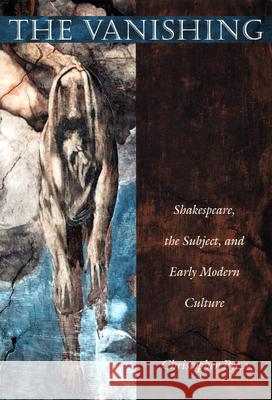
In "The Vanishing" Christopher Pye combines psychoanalytic and cultural theory to advance an innovative interpretation of Renaissance history and subjectivity. Locating the emergence of the modern subject in the era's transition from feudalism to a modern societal state, Pye supports his argument with interpretations of diverse cultural and literary phenomena, including Shakespeare's "Hamlet" and "King Lear, "witchcraft and demonism, anatomy theaters, and the paintings of Michelangelo. Pye explores the emergence of the early modern subject in terms of a range of subjectivizing...
In "The Vanishing" Christopher Pye combines psychoanalytic and cultural theory to advance an innovative interpretation of Renaissance history and subj...
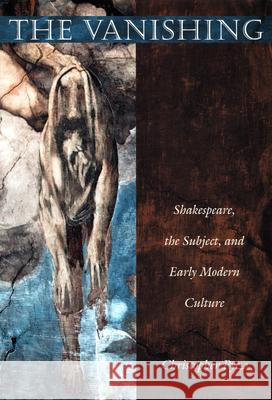
In "The Vanishing" Christopher Pye combines psychoanalytic and cultural theory to advance an innovative interpretation of Renaissance history and subjectivity. Locating the emergence of the modern subject in the era's transition from feudalism to a modern societal state, Pye supports his argument with interpretations of diverse cultural and literary phenomena, including Shakespeare's "Hamlet" and "King Lear, "witchcraft and demonism, anatomy theaters, and the paintings of Michelangelo. Pye explores the emergence of the early modern subject in terms of a range of subjectivizing...
In "The Vanishing" Christopher Pye combines psychoanalytic and cultural theory to advance an innovative interpretation of Renaissance history and subj...
First published in 1989, this title explores the relationship between theater and power in the English Renaissance. Shakespeare's Henry V, Richard II, and Macbeth are examined alongside a range of cultural materials, including philosophical and historical accounts of sovereignty, royal portraiture and representations of treason and punishment. Renaissance theater was far more than a vehicle for the expression of a political content: it played a constitutive role in forming the distinctive theory of sovereignty and the distinctive political subjectivity of the era. By reading Shakespeare's...
First published in 1989, this title explores the relationship between theater and power in the English Renaissance. Shakespeare's Henry V, Richard II,...
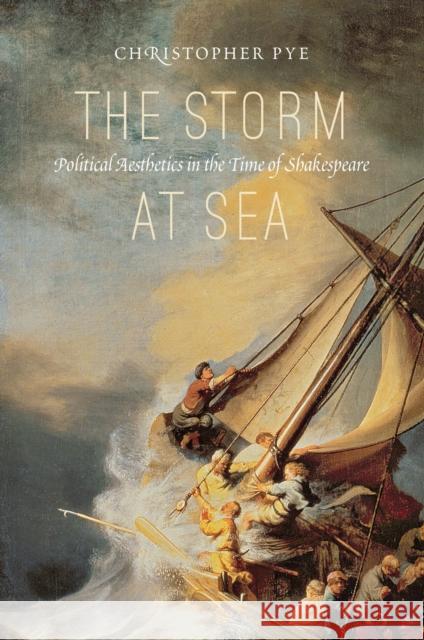
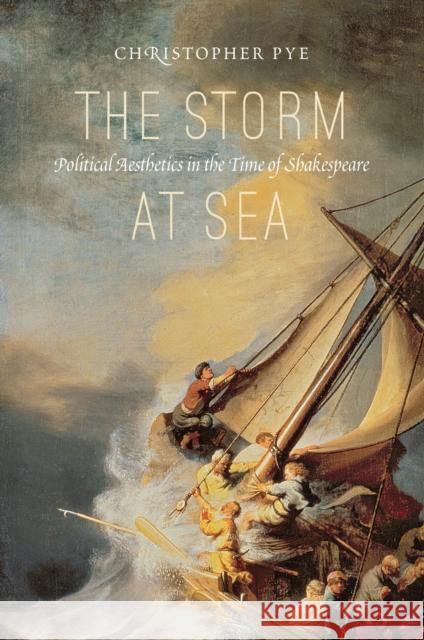
The Storm at Sea: Political Aesthetics in the Time of Shakespeare counters a tradition of cultural analysis that judges considerations of aesthetic autonomy in the early modern context to be either anachronistic or an index of political disengagement. Pye argues that for a post-theocratic era in which the mise-en-forme of the social domain itself was for the first time at stake, the problem of the aesthetic lay at the very core of the political; it is precisely through its engagement with the question of aesthetic autonomy that early modern works most profoundly explore...
The Storm at Sea: Political Aesthetics in the Time of Shakespeare counters a tradition of cultural analysis that judges considerations of aes...
The Storm at Sea: Political Aesthetics in the Time of Shakespeare counters a tradition of cultural analysis that judges considerations of aesthetic autonomy in the early modern context to be either anachronistic or an index of political disengagement. Pye argues that for a post-theocratic era in which the mise-en-forme of the social domain itself was for the first time at stake, the problem of the aesthetic lay at the very core of the political; it is precisely through its engagement with the question of aesthetic autonomy that early modern works most profoundly explore...
The Storm at Sea: Political Aesthetics in the Time of Shakespeare counters a tradition of cultural analysis that judges considerations of aes...