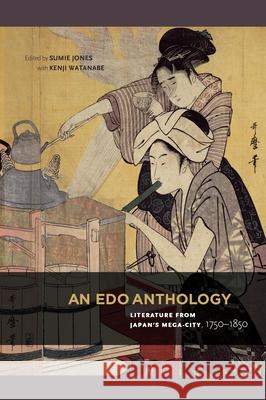
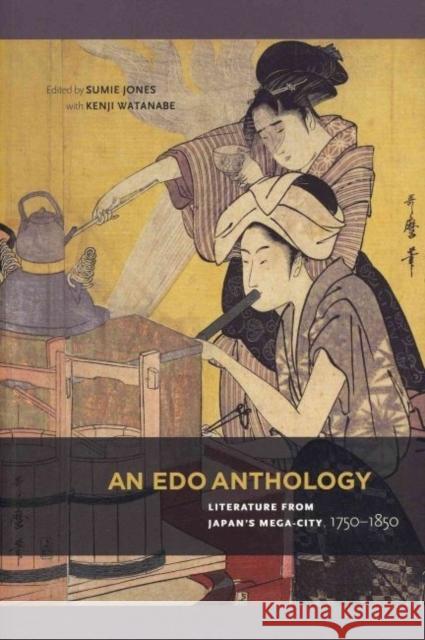
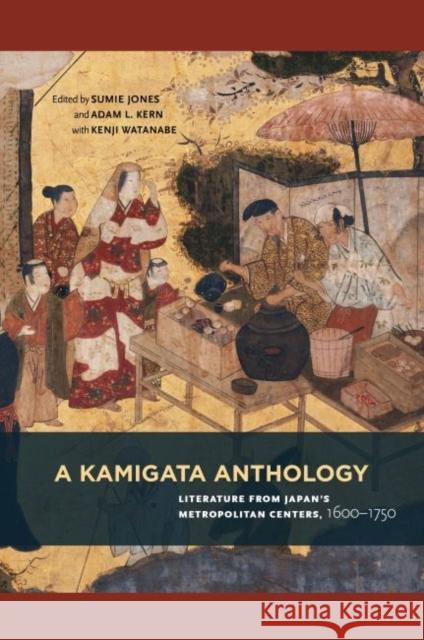
During the eighteenth century, Edo (today's Tokyo) became the world's largest city, quickly surpassing London and Paris. Its rapidly expanding population and flourishing economy encouraged the development of a thriving popular culture. Innovative and ambitious young authors and artists soon began to look beyond the established categories of poetry, drama, and prose, banding together to invent completely new literary forms that focused on the fun and charm of Edo. Their writings were sometimes witty, wild, and bawdy, and other times sensitive, wise, and polished. Now some of these high...
During the eighteenth century, Edo (today's Tokyo) became the world's largest city, quickly surpassing London and Paris. Its rapidly expanding popu...
During the eighteenth century, Edo (today's Tokyo) became the world's largest city, quickly surpassing London and Paris. Its rapidly expanding population and flourishing economy encouraged the development of a thriving popular culture. Innovative and ambitious young authors and artists soon began to look beyond the established categories of poetry, drama, and prose, banding together to invent completely new literary forms that focused on the fun and charm of Edo. Their writings were sometimes witty, wild, and bawdy, and other times sensitive, wise, and polished. Now some of these high...
During the eighteenth century, Edo (today's Tokyo) became the world's largest city, quickly surpassing London and Paris. Its rapidly expanding popu...
The city of Tokyo, renamed after the Meiji Restoration, developed an urban culture that was a dynamic integration of Edo's highly developed traditions and Meiji renovations, some of which reflected the influence of Western culture. This wide-ranging anthology--including fictional and dramatic works, essays, newspaper articles, political manifestos, and cartoons--tells the story of how the city's literature and arts grew out of an often chaotic and sometimes paradoxical political environment to move toward a consummate Japanese "modernity."
Tokyo's downtown audience constituted a...
The city of Tokyo, renamed after the Meiji Restoration, developed an urban culture that was a dynamic integration of Edo's highly developed traditi...
The city of Tokyo, renamed after the Meiji Restoration, developed an urban culture that was a dynamic integration of Edo's highly developed traditions and Meiji renovations, some of which reflected the influence of Western culture. This wide-ranging anthology--including fictional and dramatic works, essays, newspaper articles, political manifestos, and cartoons--tells the story of how the city's literature and arts grew out of an often chaotic and sometimes paradoxical political environment to move toward a consummate Japanese "modernity."
Tokyo's downtown audience constituted a...
The city of Tokyo, renamed after the Meiji Restoration, developed an urban culture that was a dynamic integration of Edo's highly developed traditi...