Unchecked aggression and violence take a significant toll on society. Even if we manage to avoid being the direct victim of a violent act, the effects of aggression and violence reach us all: We hear about the mauling of a woman by an aggressive dog, our children are bullied at school, or we deal with impulsive violence while commuting to work or attending a sporting event. Reflecting psychology in general, the dominant roles of learning and environmental influences - both social and nonsocial - have traditionally been prominent in discussions of the etiology of human aggression. Biological...
Unchecked aggression and violence take a significant toll on society. Even if we manage to avoid being the direct victim of a violent act, the effects...
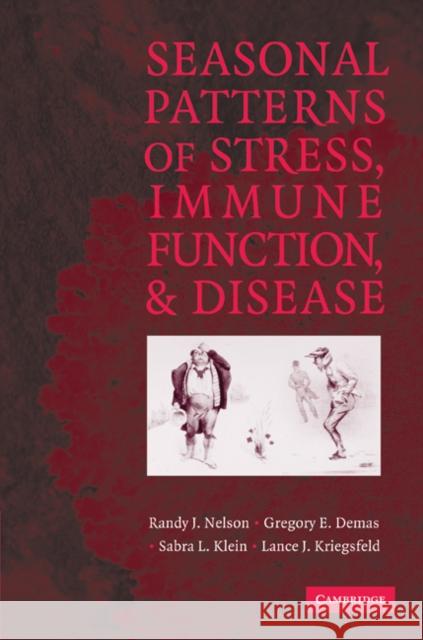
This volume presents evidence that infection is cyclical with the seasons, and that this phenomenon is mirrored in cycles of immune function. The authors identify the mechanisms by which immune systems are bolstered to counteract seasonally-recurrent stressors, such as extreme temperature reductions and food shortages. Stress, infectious diseases, autoimmune diseases, and human cancers are examined, and the role of hormones such as melatonin and glucocorticoids are considered. This is the first monograph to examine seasonal immune function from an interdisciplinary perspective.
This volume presents evidence that infection is cyclical with the seasons, and that this phenomenon is mirrored in cycles of immune function. The auth...
This volume presents evidence that infection is cyclical with the seasons, and that this phenomenon is mirrored in cycles of immune function. The authors identify the mechanisms by which immune systems are bolstered to counteract seasonally-recurrent stressors, such as extreme temperature reductions and food shortages. Stress, infectious diseases, autoimmune diseases, and human cancers are examined, and the role of hormones such as melatonin and glucocorticoids are considered. This is the first monograph to examine seasonal immune function from an interdisciplinary perspective.
This volume presents evidence that infection is cyclical with the seasons, and that this phenomenon is mirrored in cycles of immune function. The auth...
Life evolves in a cyclic environment, and to be successful, organisms must adapt not only to their spatial habitat, but also to their temporal habitat. How do plants and animals determine the time of year so they can anticipate seasonal changes in their habitats? In most cases, day length, or photoperiod, acts as the principal external cue for determining seasonal activity. For organisms not living at the bottom of the ocean or deep in a cave, day follows night, and the length of the day changes predictably throughout the year. These changes in photoperiod provide the most accurate signal for...
Life evolves in a cyclic environment, and to be successful, organisms must adapt not only to their spatial habitat, but also to their temporal habitat...