Grant's career in the closing months of 1861 has been obscured by the success which came to him on the battlefield early in the following year, beginning with the victory at Fort Donelson in February 1862.Hence, Volume 3 of this definitive edition will be especially valuable to historians of the presidency as well as the Civil War for the clear, com-prehensive insight itprovides into Grant's attitudes and motives on the eve of his military victories. The fourteen-week period covered by this volume has been exhaustively researched, and includes a great store of...
Grant's career in the closing months of 1861 has been obscured by the success which came to him on the battlefield early in the following year, beginn...
When Vicksburg fell, Washington promoted Grant to major general in the U.S. Army, which meant that Grant, already a major general of volunteers, would retain his rank after the war. Only three other officers on active duty held this rank, none of them commanding in the field. At Vicksburg Grant supervised the parole of 30,000pris-oners. His victory there had opened trade on the Mississippi; for a short time his duty also consisted of making sure the Union, not the Confederacy, benefited from this newly opened route. At the end of August Grant went to New Orleans to...
When Vicksburg fell, Washington promoted Grant to major general in the U.S. Army, which meant that Grant, already a major general of volunteers, would...
On June 2, 1864, Ulysses S. Grant post-poned until the following morning an assault on Confederate lines near Cold Harbor planned for that afternoon be-cause of delays in positioning troops. In the meantime, Confederate forces strengthened their lines, and the assault became a slaughter that haunted Grant for the rest of his life. Thus began a summer of frustration for the general-in-chief of the U.S. Army. By failing to press their advantage, Major General William F. "Baldy" Smith and Major General Ambrose E. Burnside in a six-week period fumbled two genuine opportunities to defeat...
On June 2, 1864, Ulysses S. Grant post-poned until the following morning an assault on Confederate lines near Cold Harbor planned for that afternoon b...
This volume provides a panoramic view of the Civil War unavailable elsewhere. Grant continued the siege of General Robert E. Lee's Army of Northern Vir-ginia at Petersburg, but as summer ended, his armies had dramatic success elsewhere. On September 2, Major Gen-eral William T. Sherman occupied At-lanta; September 19, Major General Philip H. Sheridan defeated Lieutenant General Jubal A. Early at the battle of Winchester; and on October 19 Sheridan again defeated Early at the battle of Cedar Creek. President Abraham Lincoln's re--election spelled doom for the Con-federacy....
This volume provides a panoramic view of the Civil War unavailable elsewhere. Grant continued the siege of General Robert E. Lee's Army of Nor...
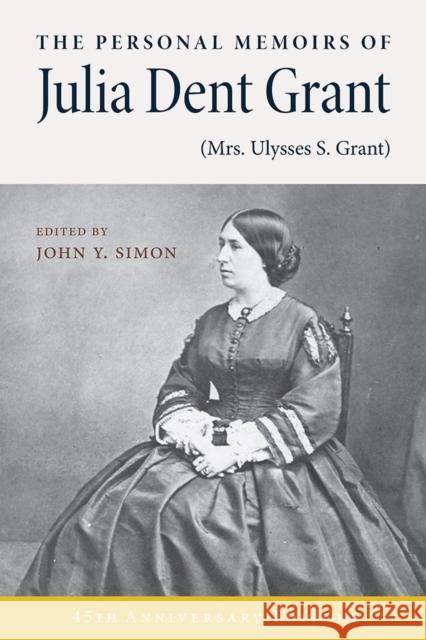
Julia Dent Grant wrote her reminiscences with the vivacity and charm she exhibited throughout her life, telling her story in the easy flow of an afternoon conversation with a close friend. Mrs. Grant was raised the pampered daughter of a Missouri planter, and she later remembered her girlhood as an idyll that she wished could have lasted.
Many of the anecdotes she relates give fascinating glimpses into a very troubled period of American history. A dramatic reminiscence recounts the night that Lincoln was assassinated. Mrs. Grant insisted that she and her husband turn down an...
Julia Dent Grant wrote her reminiscences with the vivacity and charm she exhibited throughout her life, telling her story in the easy flow of an af...
Ulysses S. Grant as symbol became as important in peace as he had been in war. The nation rewarded Grant with the rank of full general, the first U.S. officer to hold the rank since George Washington.
Disliking politics, Grant sought to avoid the growing controversy over Reconstruction policy. Although he faced growing pressure to take a stand, he maintained public silence, firmly believing it wrong for an army officer "to take part in elections."
Grant also worked hard to reorganize the army to meet postwar needs. Increased friction between settlers and Indians, Fenian...
Ulysses S. Grant as symbol became as important in peace as he had been in war. The nation rewarded Grant with the rank of full general, the first U...
This volume carries Ulysses S. Grant through a brief period of welcome calm to the storms of the White House. Seemingly resigned to becoming president, Grant detached himself from military routine in Washington, D.C., during the summer of 1868 to tour the Great Plains. He then settled in Galena to escape the clamor of the presidential campaign. Grant reveled in his respite from official duties, writing to his father, "I have enjoyed my summers vacation very much and look forward with dread to my return to Washington." Grant's residence in Galena shielded him from public scrutiny. "Whilst I...
This volume carries Ulysses S. Grant through a brief period of welcome calm to the storms of the White House. Seemingly resigned to becoming presid...
Volume 20 is the first in this acclaimed series to cover the months when Ulysses S. Grant held no military commission. As president, however, Grant's significance grew rather than diminished. His leadership and decisions touched directly or indirectly most people in the United States and many more around the globe.
Grant spoke sincerely when he said that "I have done all I could to advance the best interests of the citizens of our country, without regard to color, and I shall endeavor to do in the future what I have done in the past." He urged adoption of the Fifteenth Amendment and...
Volume 20 is the first in this acclaimed series to cover the months when Ulysses S. Grant held no military commission. As president, however, Grant...
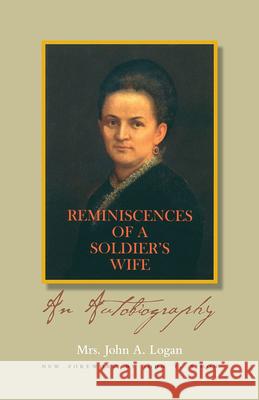
"To tell my own story is to tell that of my famous husband, General John A. Logan," explains Mary S. Logan in the preface to her autobiography.
Married to John A. Logan for thirty-one years, Mary Logan shared in her distinguished husband s career as a prosecutor in southern Illinois, as a Civil War general, and as a senator from Illinois. She observed firsthand the extraordinary events before, during, and after the Civil War, and she knew personally those world leaders who held the power to shape history. After the death of her husband, she maintained her influence in Washington, D.C....
"To tell my own story is to tell that of my famous husband, General John A. Logan," explains Mary S. Logan in the preface to her autobiography.