George Cukor is one of the studio era's most famous and admired directors, with many of the American cinema's most beloved classics to his credit, including The Women, Gaslight, Adam's Rib, A Star is Born, and My Fair Lady to his credit. Not himself a scriptwriter, he was particularly adept at choosing which properties to adapt and then managing the adaptation process with verve and effectiveness. What makes for a good adapter, for a talented master of ceremonies who knows where to put everything and everybody (including the camera)? Who knows how to make a property his own even while...
George Cukor is one of the studio era's most famous and admired directors, with many of the American cinema's most beloved classics to his credit, inc...
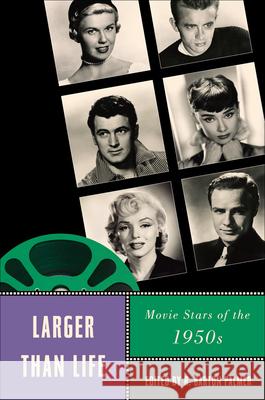
The constellation of Hollywood stars burned brightly in the 1950s, even as the industry fell on hard economic times. Major artists of the 1940s--James Stewart, Jerry Lewis, and Gregory Peck--continued to exert a magical appeal but the younger generation of moviegoers was soon enthralled by an emerging cast, led by James Dean and Marlon Brando. They, among others, ushered in a provocative acting style, "the Method," bringing hard-edged, realistic performances to the screen. Adult-oriented small-budget dramas were ideal showcases for Method actors, startlingly realized when Brando seized the...
The constellation of Hollywood stars burned brightly in the 1950s, even as the industry fell on hard economic times. Major artists of the 1940s--James...
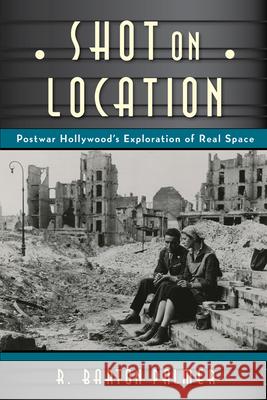
In the early days of filmmaking, before many of Hollywood's elaborate sets and soundstages had been built, it was common for movies to be shot on location. Decades later, Hollywood filmmakers rediscovered the practice of using real locations and documentary footage in their narrative features. Why did this happen? What caused this sudden change?
Renowned film scholar R. Barton Palmer answers this question in Shot on Location by exploring the historical, ideological, economic, and technological developments that led Hollywood to head back outside in order to capture footage...
In the early days of filmmaking, before many of Hollywood's elaborate sets and soundstages had been built, it was common for movies to be shot on loca...
Murray Pomerance R. Barton, Prof. Palmer Murray Pomerance
Today's film scholars draw from a dizzying range of theoretical perspectives--they're just as likely to cite philosopher Gilles Deleuze as they are to quote classic film theorist Andre Bazin. To students first encountering them, these theoretical lenses for viewing film can seem exhilarating, but also overwhelming.
Thinking in the Dark introduces readers to twenty-one key theorists whose work has made a great impact on film scholarship today, including Rudolf Arnheim, Sergei Eisenstein, Michel Foucault, Siegfried Kracauer, and Judith Butler. Rather than just discussing each...
Today's film scholars draw from a dizzying range of theoretical perspectives--they're just as likely to cite philosopher Gilles Deleuze as they are to...
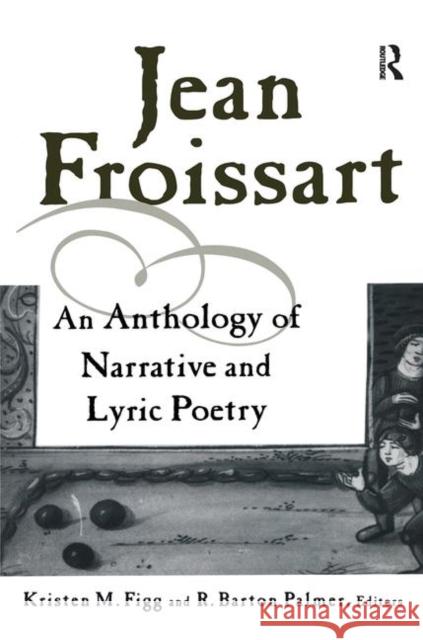
Jean Froissant is probably the best known medieval historian. His Chronicle (of the Hundred Years War) is among the top ten historical works in western civilization. In his own time, though, he was better known as a poet. This dual-language anthology includes excerpts from Chroniques as well as several of his verse and prose compositions.
Jean Froissant is probably the best known medieval historian. His Chronicle (of the Hundred Years War) is among the top ten historical works in wester...
La Prise d'Alixandre (The Taking of Alexandria) is the crowning masterwork of Machaut's literary career. Based on his extensive discussion with returning crusaders, the poet recounts King Peter I of Cyprus's successful attack and capture of the Egyptian city of Alexandria in 1365. This volume features a full discussion of Machaut's life and career, and a historical commentary.
La Prise d'Alixandre (The Taking of Alexandria) is the crowning masterwork of Machaut's literary career. Based on his extensive discussion with return...