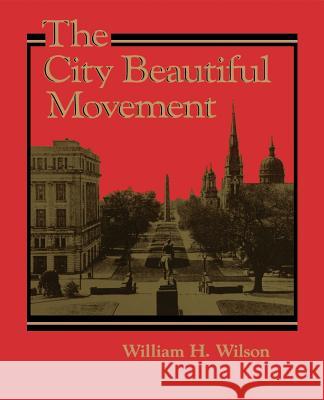
Critics of the turn-of-the-century's City Beautiful Movement denounced its projects--broad, tree-lined boulevards and monumental but low-lying civic buildings--as grandiose and unnecessary. In this masterful analysis, William H. Wilson sees the movement as its founders did: as an exercise in participatory politics aimed at changing the way citizens thought about cities.
Critics of the turn-of-the-century's City Beautiful Movement denounced its projects--broad, tree-lined boulevards and monumental but low-lying civi...
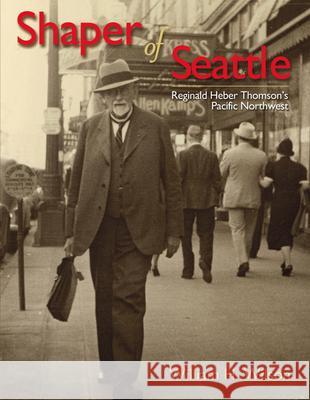
Despite Seattle's dismal infrastructure upon his 1881 arrival, a young, ambitious, and educated Reginald Heber Thomson recognized the fledgling city's potential. Throughout the following decades, his dedicated guidance produced a clean, reliable water supply, a workable sewage system, regraded streets, and more. Shaper of Seattle recounts the life and work of an extraordinary man and his devotion to the Emerald City.
Despite Seattle's dismal infrastructure upon his 1881 arrival, a young, ambitious, and educated Reginald Heber Thomson recognized the fledgling city's...
As a young man Asahel Curtis worked in his older brother Edward's successful Seattle photography studio, but a conflict over Klondike gold rush photographs led to their lifelong estrangement, and Asahel eventually opened his own business. Even though he earned his living as a commercial photographer, his major focus was outside the camera lens.
Asahel married and purchased a farm in the Yakima Valley. He became a dedicated member of Washington's good roads movement, striving for economic development and increased tourism. He was a founder of the Seattle Mountaineers Club and had an...
As a young man Asahel Curtis worked in his older brother Edward's successful Seattle photography studio, but a conflict over Klondike gold rush photog...