Ernest Hemingway Robert W. Lewis Robert E. Fleming
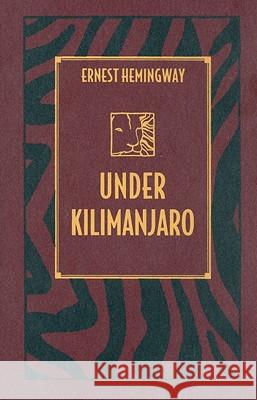
An American literary treasure "The sun was not up but that was because of the flank of the mountain it had to rise over and the light was gray but good and Ngui and I were walking through the grass that was wet from the dew. He walked ahead because he knew where the bait had been hung and I watched the trees and his back and the trail his black legs made through the wetness of the grass. We walked silently and the cold wet of the new knee-high grass against my legs was cold and pleasant. Ngui carried the old Winchester pump gun and I carried the Springfield and the only noise that I heard...
An American literary treasure "The sun was not up but that was because of the flank of the mountain it had to rise over and the light was gray but goo...
This selection of seventeen essays on the writing of Ernest Hemingway is edited by Robert W. Lewis, the President of the Hemingway Society and Chairman of the Hemingway Foundation. Commentary on Hemingway is now entering new fields with the opening of the enormously rich Hemingway collection at the John F. Kennedy library in Boston. Lewis' selection illustrates the pluralism and richness of current research and criticism. He has divided these essays into four groupings which examine Hemingway's women characters, his relations with other writers textual and critical studies and his fiction...
This selection of seventeen essays on the writing of Ernest Hemingway is edited by Robert W. Lewis, the President of the Hemingway Society and Chai...
Love was a central theme of Ernest Hemingway's major works. And although his passages on sexual love and on romantic love may be widely remembered and frequently quoted, says Robert W. Lewis in this scholarly and detailed consideration, Hemingway's later work revealed his ultimate belief that brotherly love was the supreme love of mankind. Eros, Hemingway concluded, was a neutral value, neither good nor bad in itself, but yet capable of complementing agape in giving man pleasure.
By examining the forms and essences of the various kinds of love, Hemingway worked out an explanation...
Love was a central theme of Ernest Hemingway's major works. And although his passages on sexual love and on romantic love may be widely remembered ...
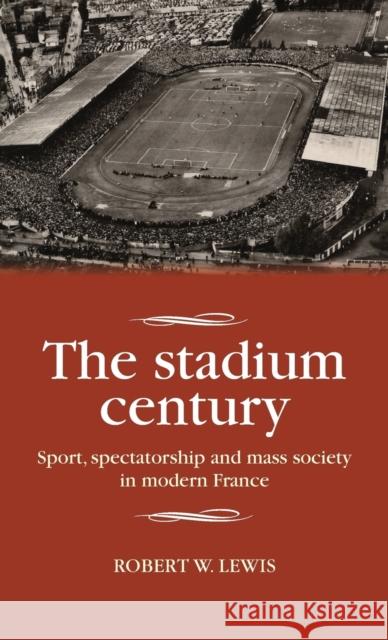
The stadium century traces the history of stadia and mass spectatorship in modern France from the vElodromes of the late nineteenth century to the construction of the Stade de France before the 1998 soccer World Cup and argues that stadia played a privileged role in shaping mass society in twentieth-century France. Drawing off a wide range of archival and published sources, Robert W. Lewis links the histories of French urbanism, mass politics and sport through the history of the stadium.
The book demonstrates that the stadium was at the center of long-running...
The stadium century traces the history of stadia and mass spectatorship in modern France from the vElodromes of the late nineteen...