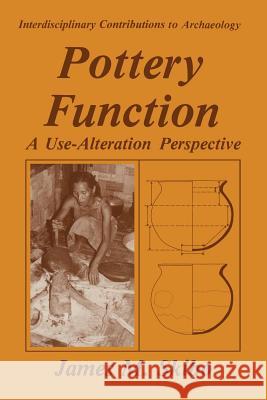
The 1992 publication of Pottery Function brought together the ethnographic study of the Kalinga and developed a method and theory for how pottery was actually used. Since then, there have been considerable advances in understanding how pottery was actually used, particularly in the area of residue analysis, abrasion, and sooting/carbonization. At the 20th anniversary of the book, it is time to assess what has been done and learned. One of the concerns of those working in pottery analysis is that they are unsure how to "do" use-alteration analysis on their collection. Another common concern is...
The 1992 publication of Pottery Function brought together the ethnographic study of the Kalinga and developed a method and theory for how pottery was ...
There are many ways to study pots or the sherds of pots. In this book James Skibo has focused on the surface wear and tear found on the resin-coated, low-fired cooking pots of the Kalinga people in north- western Luzon. This detailed analysis is part of a much larger evalua- tion of Kalinga pottery production and use by the staff members and students at the University of Arizona that has been underway since 1972. Here he has analyzed the variants among the possible residual clues on pots that have endured the stresses of having been used for cooking meat and vegetables or rice; standing on...
There are many ways to study pots or the sherds of pots. In this book James Skibo has focused on the surface wear and tear found on the resin-coated, ...
Behavioral archaeology, defined as the study of people-object interactions in all times and places, emerged in the 1970s, in large part because of the innovative work of Michael Schiffer and colleagues. This volume provides an overview of how behavioral archaeology has evolved and how it has affected the field of archaeology at large.
The contributors to this volume are Schiffer s former students, from his first doctoral student to his most recent. This generational span has allowed for chapters that reflect Schiffer s research from the 1970s to 2012. They are iconoclastic and creative...
Behavioral archaeology, defined as the study of people-object interactions in all times and places, emerged in the 1970s, in large part because of ...