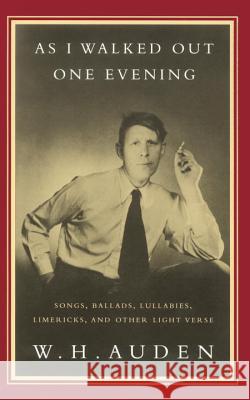
W. H. Auden once defined light verse as the kind that is written by poets who are democratically in tune with their audience and whose language is straightforward and close to general speech. Given that definition, the 123 poems in this collection all qualify; they are as accessible as popular songs yet have the wisdom and profundity of the greatest poetry. As I Walked Out One Evening contains some of Auden's most memorable verse: "Now Through the Night's Caressing Grip," "Lullaby: Lay your Sleeping Head, My Love," "Under Which Lyre," and "Funeral Blues." Alongside them are less...
W. H. Auden once defined light verse as the kind that is written by poets who are democratically in tune with their audience and whose language is str...
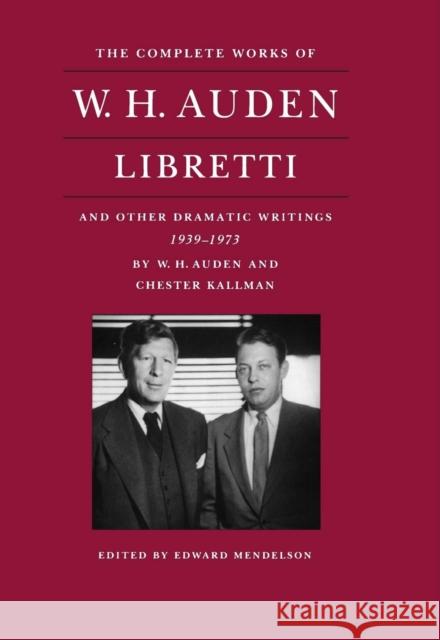
W. H. Auden called opera the "last refuge of the High Style," and considered it the one art in which the grand manner survived the ironic levelings of modernity. He began writing libretti soon after he arrived in America in 1939 and abandoned his earlier attempts to write public, political drama. Opera gave him the opportunity to rise to the high style in public, not in an attempt to elevate his own status as a poet, but in service of the heroic voice of the singers. These works present their mythical actions with a direct intensity unlike anything in even his greatest poems. In this...
W. H. Auden called opera the "last refuge of the High Style," and considered it the one art in which the grand manner survived the ironic levelings...
This book contains all the essays and reviews that W. H. Auden wrote during the years when he was living in England, and also includes the full original versions of his two illustrated travel books, Letters from Iceland (written in collaboration with Louis MacNeice) and Journey to a War (written in collaboration with Christopher Isherwood). Auden's early prose ranges from extravagant indiscreet travel diaries through sharply observed critiques of writers from John Skelton to Winston Churchill. It includes studies of Communism and Christianity; audaciously wide-ranging essays...
This book contains all the essays and reviews that W. H. Auden wrote during the years when he was living in England, and also includes the full ori...
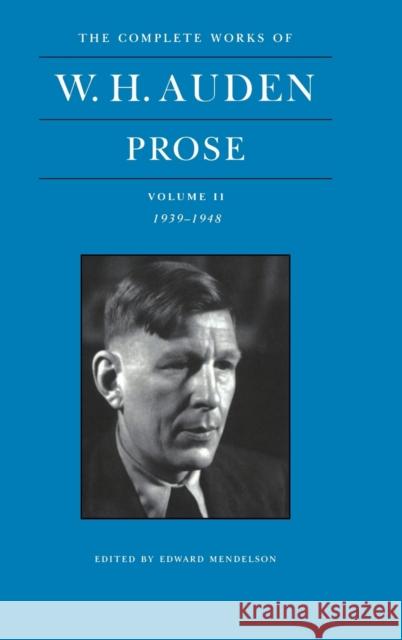
W. H. Auden's first ten years in the United States were marked by rapid and extensive change in his life and thought. He became an American citizen, fell in love with Chester Kallman, and began to reflect on American culture and to explore the ideas of Reinhold Niebuhr and other Protestant theologians. This volume contains every piece of prose that Auden wrote during these years, including essays and reviews he published under pseudonyms. Most have never been reprinted in any form since their initial publication in such magazines and newspapers as the Nation, the New...
W. H. Auden's first ten years in the United States were marked by rapid and extensive change in his life and thought. He became an American citizen...
This volume contains all of W. H. Auden's prose works from 1949 through 1955, including many little-known essays that exemplify his range, wit, depth, and wisdom. The book includes the complete text of Auden's first separately published prose book, The Enchafed Flood, or, The Romantic Iconography of the Sea, followed by more than one hundred separate essays, reviews, introductions, and lectures, as well as a questionnaire (complete with his own answers) about the reader's fantasy version of Eden. Two reviews that Auden wrote for the New Yorker, but which the magazine never...
This volume contains all of W. H. Auden's prose works from 1949 through 1955, including many little-known essays that exemplify his range, wit, dep...
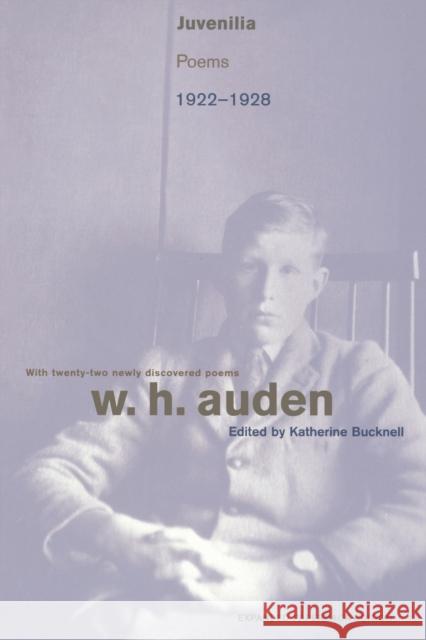
You know the terror that for poets lurks Beyond the ferry when to Minos brought. Poets must utter their Collected Works, Including Juvenilia.. . . --from "Letter to Lord Byron" (1936)
Regardless of how poets feel about their youthful attempts at verse, their early poems not only enrich our understanding of their artistic growth, but also reveal much about the nature of literary genius. No other twentieth-century poet has left behind such a wealth of early poetry as did W. H. Auden. By bringing together for the first time all the poems written...
You know the terror that for poets lurks Beyond the ferry when to Minos brought. Poets must utter their Collected Works, ...
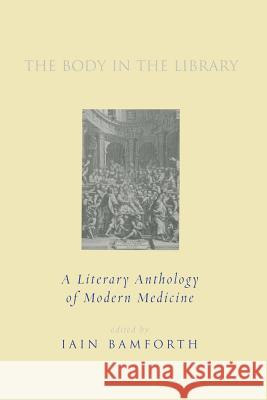
"The Body in the Library"provides a nuanced and realistic picture of how medicine and society have abetted and thwarted each other ever since the lawyers behind the French Revolution banished the clergy and replaced them with doctors, priests of the body. Ranging from Charles Dickens to Oliver Sacks, Anton Chekhov to Raymond Queneau, Fanny Burney to Virginia Woolf, Miguel Torga to Guido Ceronetti, "The Body in the Library" is an anthology of poems, stories, journal entries, Socratic dialogue, table-talk, clinical vignettes, aphorisms, and excerpts written by doctor-writers themselves....
"The Body in the Library"provides a nuanced and realistic picture of how medicine and society have abetted and thwarted each other ever since the lawy...