No matter how beautiful or brilliant a girl may be, the reputation of not being frequently cut in on makes her position at a dance unfortunate. Perhaps boys prefer her company to that of the butterflies with whom they dance a dozen times an but, youth in this jazz-nourished generation is temperamentally restless, and the idea of fox-trotting more than one full fox trot with the same girl is distasteful, not to say odious. When it comes to several dances and the intermissions between she can be quite sure that a young man, once relieved, will never tread on her wayward toes again.
No matter how beautiful or brilliant a girl may be, the reputation of not being frequently cut in on makes her position at a dance unfortunate. Perhap...
May Day, Fitzgerald's first great novelette, mingles autobiographical details with events from contemporary history. In May 1919, after an interfraternity dance at Delmonico's, Fitzgerald was bounced out of the Fifty-ninth-Street Childs for a disturbance similar to the one created by Peter Himmel in the story. At the same time, the assault on the New York Trumpet by a mob of drunken soldiers parallels a raid on the socialist New York Call during the red scare of 1919. Like many of Fitzgerald's stories from Tales of the Jazz Age, May Day includes a "touch of disaster"--in this case the violent...
May Day, Fitzgerald's first great novelette, mingles autobiographical details with events from contemporary history. In May 1919, after an interfrater...
The Crack-Up tells the story of Fitzgerald's sudden descent at the age of thirty-nine from glamorous success to empty despair, and his determined recovery. Compiled and edited by Edmund Wilson shortly after F. Scott Fitzgerald's death, this revealing collection of his essays as well as letters to and from Gertrude Stein, Edith Wharton, T.S. Eliot, John Dos Passos tells of a man with charm and talent to burn, whose gaiety and genius made him a living symbol of the Jazz Age, and whose recklessness brought him grief and loss. "Fitzgerald's physical and spiritual exhaustion is described...
The Crack-Up tells the story of Fitzgerald's sudden descent at the age of thirty-nine from glamorous success to empty despair, and his determ...
Commemorating the 100th anniversary of his birth, these essays present a middle-aged Fitzgerald looking back on the era he came to epitomize. This book of five confessional essays from the 1930s follows Fitzgerald and his wife Zelda from the height of their celebrity as the darlings of the 1920s to years of rapid decline leading to the self-proclaimed "Crack Up" in 1936. The poetics of Fitzgerald's style are not lost in nonfiction, and these pieces display some of his finest writing. Newly designed and typeset in a modern 6-by-9-inch format by Waking Lion Press.
Commemorating the 100th anniversary of his birth, these essays present a middle-aged Fitzgerald looking back on the era he came to epitomize. This boo...
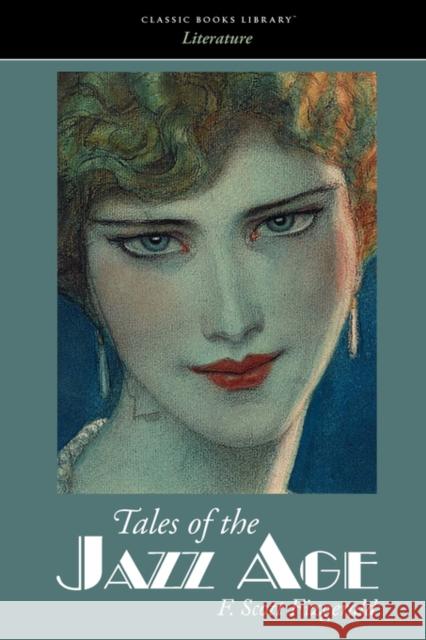
In these eleven stories, Fitzgerald depicts the Roaring Twenties as he lived them. He masterfully blends accounts of flappers and the smart set with more fantastical visions of America, always imbuing his narratives with his trademark themes of money, class, ambition and love.
In these eleven stories, Fitzgerald depicts the Roaring Twenties as he lived them. He masterfully blends accounts of flappers and the smart set with m...
Fitzgerald was an early 20th century writer famed for his short stories. This collection of stories is set in the era Fitzgerald is most familiar with. This volume has a table on contents with a brief description of the stories written by Fitzgerald.
Fitzgerald was an early 20th century writer famed for his short stories. This collection of stories is set in the era Fitzgerald is most familiar with...
Commemorating the 100th anniversary of his birth, these essays present a middle-aged Fitzgerald looking back on the era he came to epitomize. This book of five confessional essays from the 1930s follows Fitzgerald and his wife Zelda from the height of their celebrity as the darlings of the 1920s to years of rapid decline leading to the self-proclaimed "Crack Up" in 1936. The poetics of Fitzgerald's style are not lost in nonfiction, and these pieces display some of his finest writing. Newly designed and typeset in a modern 6-by-9-inch format by Waking Lion Press.
Commemorating the 100th anniversary of his birth, these essays present a middle-aged Fitzgerald looking back on the era he came to epitomize. This boo...
Commemorating the 100th anniversary of his birth, these essays present a middle-aged Fitzgerald looking back on the era he came to epitomize. This book of five confessional essays from the 1930s follows Fitzgerald and his wife Zelda from the height of their celebrity as the darlings of the 1920s to years of rapid decline leading to the self-proclaimed "Crack Up" in 1936. The poetics of Fitzgerald's style are not lost in nonfiction, and these pieces display some of his finest writing. Newly designed and typeset in a modern 6-by-9-inch format by Waking Lion Press.
Commemorating the 100th anniversary of his birth, these essays present a middle-aged Fitzgerald looking back on the era he came to epitomize. This boo...
THE BEAUTIFUL AND DAMNED, first published in 1922, is F. Scott Fitzgerald's second novel. It tells the story of Anthony Patch (a 1920s socialite and presumptive heir to a tycoon's fortune), the relationship with his wife Gloria, his service in the army, and alcoholism. The novel provides an excellent portrait of the Eastern elite as the Jazz Age begins its ascent. As with all of Fitzgerald's other novels, it is a brilliant character study and is also an exploration of the complexities of marriage and intimacy.
THE BEAUTIFUL AND DAMNED, first published in 1922, is F. Scott Fitzgerald's second novel. It tells the story of Anthony Patch (a 1920s socialite and p...