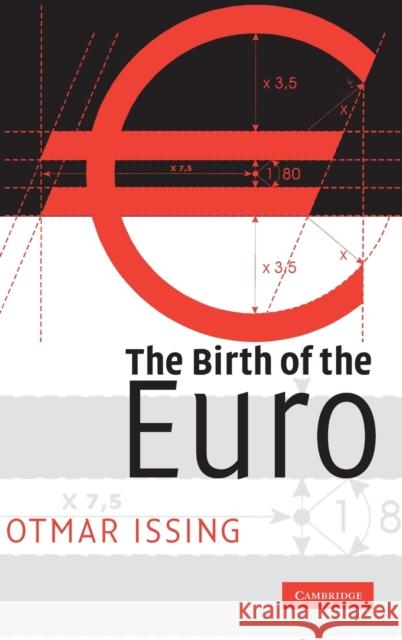
How and for whose benefit the European Central Bank (ECB) will work is one of the most important issues facing Europe, and has been the subject of vast media and academic interest. Much of this discussion has been of an increasingly emotional and political nature and has served to blur rather than inform. Written by a team at the ECB, including Otmar Issing, its Chief Economist, this study provides the first comprehensive, inside, non-technical analysis of the monetary policy strategy, institutional features and operational procedures of the Eurosystem.
How and for whose benefit the European Central Bank (ECB) will work is one of the most important issues facing Europe, and has been the subject of vas...
Based on lectures given as part of The Stone Lectures in Economics, this book discusses the problem of formulating monetary policy in practice, under the uncertain circumstances which characterize the real world. How should central banks set monetary policy? In which way should they take uncertainty into account when designing a monetary policy strategy? Should they respond to shocks aggressively or cautiously? These questions are discussed both with reference to the experience of the Bundesbank and of the European Central Bank and in relation to a simple stylized economic model.
Based on lectures given as part of The Stone Lectures in Economics, this book discusses the problem of formulating monetary policy in practice, under ...
Today, 318 million people in 15 countries use the Euro, which now rivals the importance of the US Dollar in the world economy. This is an outcome that few would have predicted with confidence when the Euro was launched. How can we explain this success and what are the prospects for the future? There is nobody better placed to answer these questions than Otmar Issing, who as a founding member of the Executive Board of the European Central Bank (1998 2006), was one of the Euro's principal architects. His story is a unique insider account, combining personal memoir with reference to the academic...
Today, 318 million people in 15 countries use the Euro, which now rivals the importance of the US Dollar in the world economy. This is an outcome that...
How and for whose benefit the European Central Bank (ECB) will work is one of the most important issues facing Europe, and has been the subject of vast media and academic interest. Much of this discussion has been of an increasingly emotional and political nature and has served to blur rather than inform. Written by a team at the ECB, including Otmar Issing, its Chief Economist, this study provides the first comprehensive, inside, non-technical analysis of the monetary policy strategy, institutional features and operational procedures of the Eurosystem.
How and for whose benefit the European Central Bank (ECB) will work is one of the most important issues facing Europe, and has been the subject of vas...