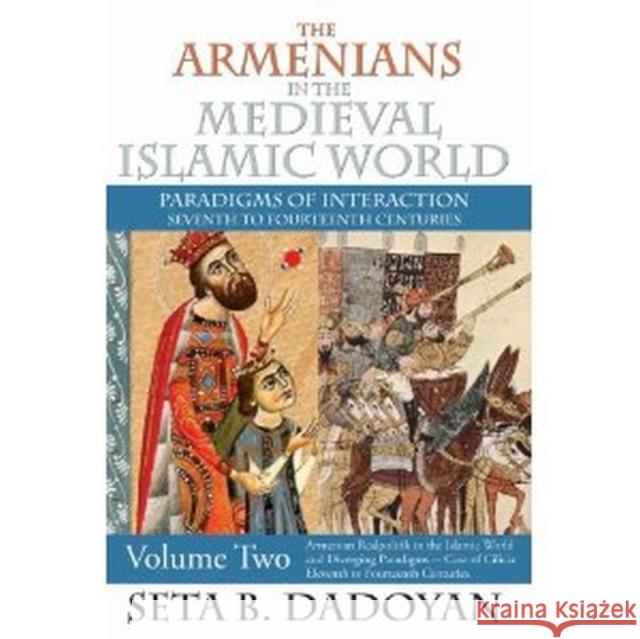
In the second of a three-volume work, Seta B. Dadoyan explores the Armenian condition from the 970s to the end of the fourteenth century. This period marked the gradual loss of semi-autonomy on the traditional mainland and the rise of Armenian power of diverging patterns in southeastern Asia Minor, north Syria, Cilicia, and Egypt.
Dadoyan's premise is that if Armenians and Armenia have always been located in the Middle East and the Islamic world, then their history is also a natural part of that region and its peoples. She observes that the Armenian experience has been too...
In the second of a three-volume work, Seta B. Dadoyan explores the Armenian condition from the 970s to the end of the fourteenth century. This peri...
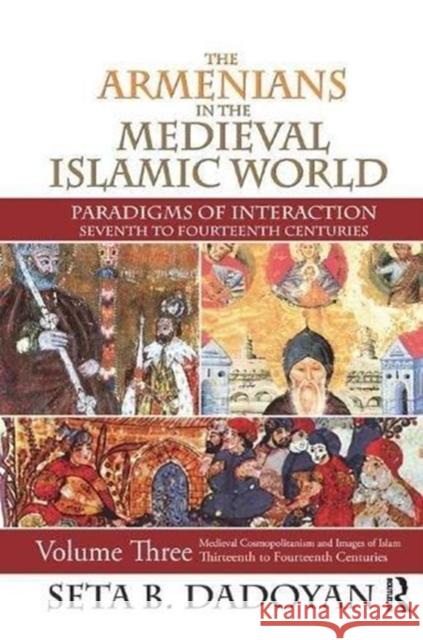
In the third volume of the trilogy, Seta B. Dadoyan focuses on social and cultural aspects, rather than the core political focus exhibited in her first two volumes. Her objective is to suggest political readings of these themes and related texts by revealing hitherto unstudied and novel interactions in the cities of Asia Minor during the Mongol Period.
Dadoyan focuses on the Armenian condition and role in the medieval Islamic world. She argues that if the entire region was the habitat of most of the Armenians, their history too is part of these locations and peoples. Dadoyan draws...
In the third volume of the trilogy, Seta B. Dadoyan focuses on social and cultural aspects, rather than the core political focus exhibited in her f...