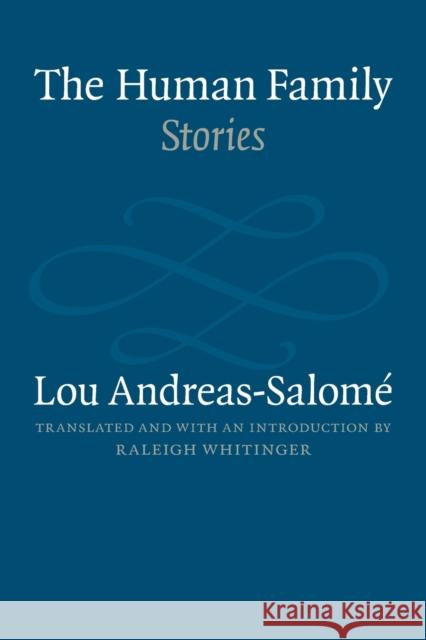
The Human Family is the first complete translation of the cycle of ten novellas that Lou Andreas-Salome (1861-1937) wrote between 1895 and 1898. This collection contributes to the rediscovery of Andreas-Salome's significance as a thinker and writer, above all with regard to her literary contribution to modern feminism and the principles of women's emancipation. Born in St. Petersburg to a German diplomat and his wife, Andreas-Salome has always been a figure of interest because of her close relationships to influential thinkers such as Friedrich Nietzsche, Rainer Maria Rilke, and Sigmund...
The Human Family is the first complete translation of the cycle of ten novellas that Lou Andreas-Salome (1861-1937) wrote between 1895 and 1898. This ...
In Berlin, 1803, readers rushed to their bookstores and libraries to learn more about Countess Charlotte Ursinus, who had murdered several people with poison and was now in prison. To their surprise, Confessions of a Poisoner, Written by Herself turned out to be not an account by this serial killer but a novel, its author anonymous and its pages filled with promiscuous sex, sharp social criticism, and dark humor.
In their introduction to the translation, Raleigh Whitinger and Diana Spokiene show how Confessions was written in response to a literary tradition...
In Berlin, 1803, readers rushed to their bookstores and libraries to learn more about Countess Charlotte Ursinus, who had murdered several people w...
In Berlin, 1803, readers rushed to their bookstores and libraries to learn more about Countess Charlotte Ursinus, who had murdered several people with poison and was now in prison. To their surprise, Confessions of a Poisoner, Written by Herself turned out to be not an account by this serial killer but a novel, its author anonymous and its pages filled with promiscuous sex, sharp social criticism, and dark humor.
In their introduction to the translation, Raleigh Whitinger and Diana Spokiene show how Confessions was written in response to a literary tradition...
In Berlin, 1803, readers rushed to their bookstores and libraries to learn more about Countess Charlotte Ursinus, who had murdered several people w...