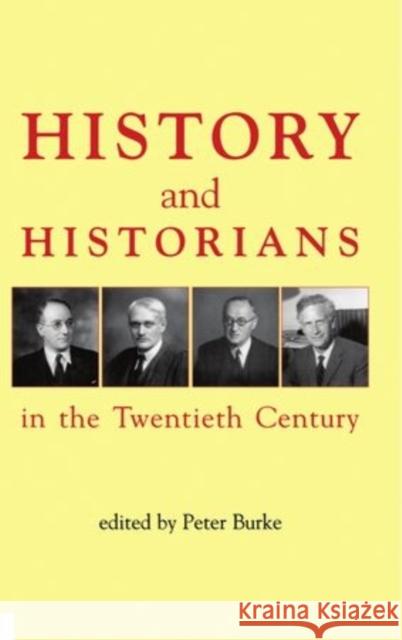
One of the major intellectual debates at the beginning of the new century concerns the status of accounts of the past. Do historians discover or invent, construct or reconstruct the objects they study? The discussion has been particularly lively in France and in the USA, and it is therefore appropriate that a group of distinguished historians from Britain should now engage with this subject. These ten essays present a historical and critical overview of British historical thought and writing since 1900, focusing on selected periods, regions, disciplines, and themes. This challenging volume...
One of the major intellectual debates at the beginning of the new century concerns the status of accounts of the past. Do historians discover or inven...
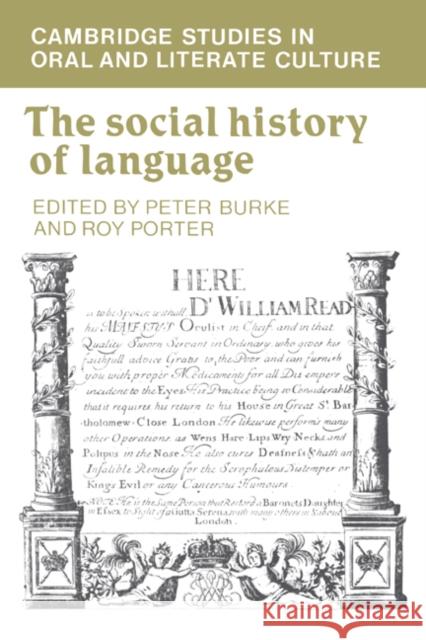
In the last few years, social historians have discovered what might be called the ?linguistic dimension? of their discipline, just as sociolinguists have been discovering the ?historical dimension? and historians of language the ?social dimension?. They have become interested in language both as a source for social history and also as a historical phenomenon in its own right. This volume of essays brings together some of this recent work by social historians of Britain, France and Italy from the sixteenth to the twentieth century. The authors concern themselves with the politics as well as...
In the last few years, social historians have discovered what might be called the ?linguistic dimension? of their discipline, just as sociolinguists h...
In this collection of essays, of which four are published here for the first time, Peter Burke explores the theory and practice of what is called "new cultural history." He focuses on the varieties of cultural history which have emerged since the writings of Jacob Burckhardt and Johan Huizinga. No new orthodoxy has emerged to replace the classic model, Burke suggests, despite the importance of innovative approaches inspired by social and cultural anthropology.After discussing the origins and identity of cultural history, Burke explores the social history of dreams and the relation between...
In this collection of essays, of which four are published here for the first time, Peter Burke explores the theory and practice of what is called "new...
The aim of this book is to analyze, to describe and to evaluate the achievement of the Annales School, a journal of historical studies founded in 1929 in France. The journal was founded in order to promote a new kind of historythe substitution of a problem-oriented analytical history for a traditional narrative of events, and the history of the whole range of human activities in place of a mainly political history. This critical text describes, analyzes, and evaluates the acheivements of the Annales School, combining chronological and thematic approaches. The author distinguishes three...
The aim of this book is to analyze, to describe and to evaluate the achievement of the Annales School, a journal of historical studies founded in 1929...
This text evaluates the place of images among other kinds of historical evidence. By reviewing the many varieties of images by region, period and medium, and looking at the pragmatic uses of images (e.g. the Bayeux Tapestry, an engraving of a printing press, a reconstruction of a building), the author sheds light on our assumption that these practical uses are reflections of specific historical meanings and influences. He also shows how this assumption can be problematic.
This text evaluates the place of images among other kinds of historical evidence. By reviewing the many varieties of images by region, period and medi...
The second edition of History and Social Theory will continue to stimulate both students and scholars across a range of disciplines with its challenging assessment of the roles of history and social science today.
The second edition of History and Social Theory will continue to stimulate both students and scholars across a range of disciplines with its challengi...
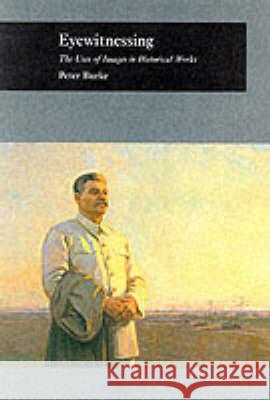
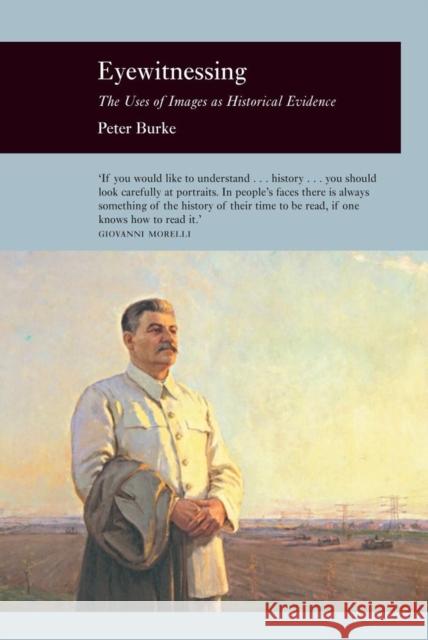
Eyewitnessing evaluates the place of images among other kinds of historical evidence. By reviewing the many varieties of images by region, period and medium, and looking at the pragmatic uses of images (e.g. the Bayeux Tapestry, an engraving of a printing press, a reconstruction of a building), Peter Burke sheds light on our assumption that these practical uses are 'reflections' of specific historical meanings and influences. He also shows how this assumption can be problematic. Traditional art historians have depended on two types of analysis when dealing with visual imagery:...
Eyewitnessing evaluates the place of images among other kinds of historical evidence. By reviewing the many varieties of images by region, peri...
In seinem klar und anregend geschriebenen Buch führt Peter Burke durch den Bildersaal der Geschichte und erweitert so den Fundus historischer Quellen. Bilder sind fern aller Kunstbetrachtung auch als Materialien zur historischen Erkenntnis zu lesen und bieten dem Historiker eine bisher kaum genutzte Chance, Geschichte zu schreiben. Gemälde, Drucke, Karikaturen, Landkarten, Plakate, Photographien und die bewegten Bilder des Films sind vielsagend, sie können aber auch lügen oder die Wirklichkeit verschleiern und manipulieren. Anhand vieler Beispiele von der Antike bis heute, vom...
In seinem klar und anregend geschriebenen Buch führt Peter Burke durch den Bildersaal der Geschichte und erweitert so den Fundus historischer Quellen...
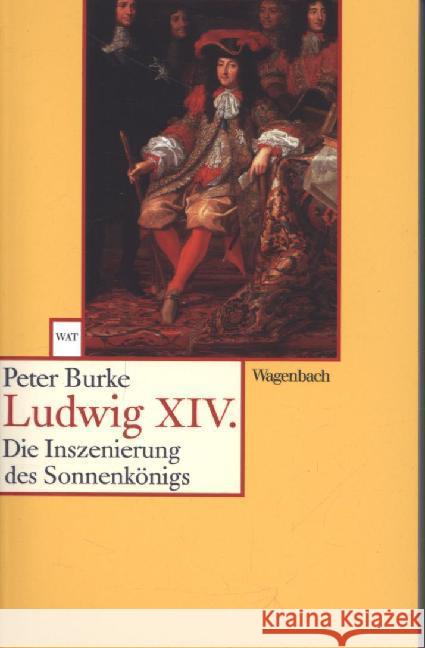
Ludwig XIV., König von Frankreich, trat 1643 im Alter von vier Jahren die Nachfolge seines Vaters an und regierte 72 Jahre bis zu seinem Tode 1715. In dieser Zeit wurde unter Aufbietung aller damals verfügbaren Medien ein umfassendes Herrscherbild des "Sonnenkönigs" hergestellt.§Diese Inszenierung des königlichen Spektakels fand statt in ausgefeilten Porträts, Gemälden, Münzen, Standbildern, Triumphbögen, Opern und Gedichten. Der Kunsthistoriker Peter Burke rekonstruiert - chronologisch vorgehend - die allmählichen Entwicklungen sowie Wendepunkte der Geschichte und spannt den Bogen...
Ludwig XIV., König von Frankreich, trat 1643 im Alter von vier Jahren die Nachfolge seines Vaters an und regierte 72 Jahre bis zu seinem Tode 1715. I...