In this book, Douglas Biow traces the role that humanists played in the development of professions and professionalism in Renaissance Italy, and vice versa. For instance, humanists were initially quite hostile to medicine, viewing it as poorly adapted to their program of study. They much preferred the secretarial profession, which they made their own throughout the Renaissance and eventually defined in treatises in the late sixteenth and early seventeenth centuries. Examining a wide range of treatises, poems, and other works that humanists wrote both as and about doctors, ambassadors, and...
In this book, Douglas Biow traces the role that humanists played in the development of professions and professionalism in Renaissance Italy, and vice ...
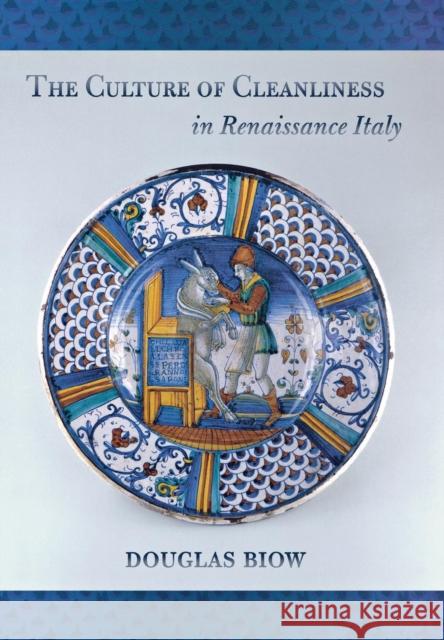
Concerned about sanitation during a severe bout of plague in Milan, Leonardo da Vinci designed an ideal, clean city. Leonardo was far from alone among his contemporaries in thinking about personal and public hygiene, as Douglas Biow shows in The Culture of Cleanliness in Renaissance Italy. A concern for cleanliness, he argues, was everywhere in the Renaissance.Anxieties about cleanliness were expressed in literature from humanist panegyrics to bawdy carnival songs, as well as in the visual arts. Biow surveys them all to explain why the topic so permeated Renaissance culture. At one level,...
Concerned about sanitation during a severe bout of plague in Milan, Leonardo da Vinci designed an ideal, clean city. Leonardo was far from alone among...
In Your Face concentrates on the Renaissance concern with "self-fashioning" by examining how a group of Renaissance artists and writers encoded their own improprieties in their works of art. In the elitist court society of sixteenth-century Italy, where moderation, limitation, and discretion were generally held to be essential virtues, these men consistently sought to stand out and to underplay their conspicuousness at once. The heroes (or anti-heroes) of this book--Michelangelo Buonarroti, Benvenuto Cellini, Pietro Aretino, and Anton Francesco Doni--violated norms of decorum by...
In Your Face concentrates on the Renaissance concern with "self-fashioning" by examining how a group of Renaissance artists and writers encoded...
In Your Face concentrates on the Renaissance concern with "self-fashioning" by examining how a group of Renaissance artists and writers encoded their own improprieties in their works of art. In the elitist court society of sixteenth-century Italy, where moderation, limitation, and discretion were generally held to be essential virtues, these men consistently sought to stand out and to underplay their conspicuousness at once. The heroes (or anti-heroes) of this book--Michelangelo Buonarroti, Benvenuto Cellini, Pietro Aretino, and Anton Francesco Doni--violated norms of decorum by...
In Your Face concentrates on the Renaissance concern with "self-fashioning" by examining how a group of Renaissance artists and writers encoded...