This volume offers a reconstruction of the Proto-Ainu language based on the comparative method and internal reconstruction. The book is divided into three parts, the first is dedicated to the reconstruction of Proto-Ainu phonology (vocalism, consonantism, and prosody), the second represents a vocabulary of reconstructed Proto-Ainu lexical items, and the third deals with the problem of the genetic affiliation of the Ainu language. This problem has been approached in the present study from the point of view of the systematic comparisons of reconstructions, not the straight comparisons of the...
This volume offers a reconstruction of the Proto-Ainu language based on the comparative method and internal reconstruction. The book is divided into t...
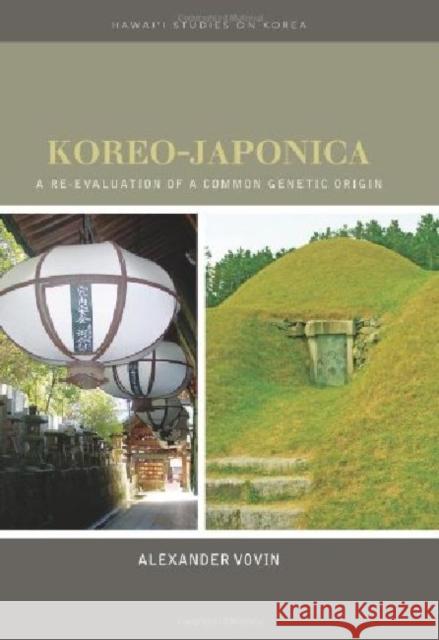
The Japonic (Japanese and Ryukyuan) portmanteau language family and the Korean language have long been considered isolates on the fringe of northeast Asia. Although in the last fifty years many specialists in Japonic and Korean historical linguistics have voiced their support for a genetic relationship between the two, this concept has not been endorsed by general historical linguists and no significant attempts have been made to advance beyond the status quo. Alexander Vovin, a longtime advocate of the genetic relationship view, engaged in a reanalysis of the known data in the hope of...
The Japonic (Japanese and Ryukyuan) portmanteau language family and the Korean language have long been considered isolates on the fringe of northea...
This new translation, the lifework of the author, is fully academically oriented. Given that it is the largest Japanese poetic anthology and thus the most important compendium of Japanese culture of the Asuka period (AD 592-710) and most of the Nara period (AD 710-784), it is very much more than a work of literature, which has been the single focus of previous translations by Pierson and Suga.Thus, in this translation the author has sought to present the Man'yōshῡ to the reader preserving as far as possible the flavour, sounds and semantics of the original poems. The result...
This new translation, the lifework of the author, is fully academically oriented. Given that it is the largest Japanese poetic anthology and thus the ...
This is the second volume to be published in the 20-volume set. It includes 114 poems (104 tanka, ten choka), traditionally considered to be the zoka genre, although some of them can be classified as benka, since they deal with death and sorrow. It also contains two poems in Chinese. The volume has several long introductions (all written in Chinese) to the poems that follow. All the poems in this volume were composed between AD 724 and 733, which represents a much greater homogeneity in comparison to books one to four. Most of the poems were written by Yamanoue-no...
This is the second volume to be published in the 20-volume set. It includes 114 poems (104 tanka, ten choka), traditionally considered t...
Book fourteen of the Man'yōshῡ ('Anthology of Myriad Leaves') continues Alexander Vovin's new English translation of this 20-volume major work which was compiled between c.759 and 782 AD, making it the earliest and largest Japanese poetic anthology in existence and thus the most important compendium of Japanese culture of the Asuka and Nara periods. Book fourteen is the third volume of the Man'yōshῡ to be published to date (following books fifteen (2009) and five (2011)) and contains 230 tanka poems, together with a few significant variants, bringing the...
Book fourteen of the Man'yōshῡ ('Anthology of Myriad Leaves') continues Alexander Vovin's new English translation of this 20-volume ...
Book twenty (20.4293-4516) of the Man'yōshū comprises 224 poems (218 tanka, six chōka) with unspecified genres. From the social point of view this book is the most varied one, as it includes poems from empresses and princes, various strata of the nobility, down to the lowest border guard soldiers. Organized chronologically, book twenty is important for two important reasons. First, it contains many poems written in Eastern Old Japanese. Second, given the fact that many authors of the poems written in Western Old Japanese are well known historical and...
Book twenty (20.4293-4516) of the Man'yōshū comprises 224 poems (218 tanka, six chōka) with unspecified genres. Fr...