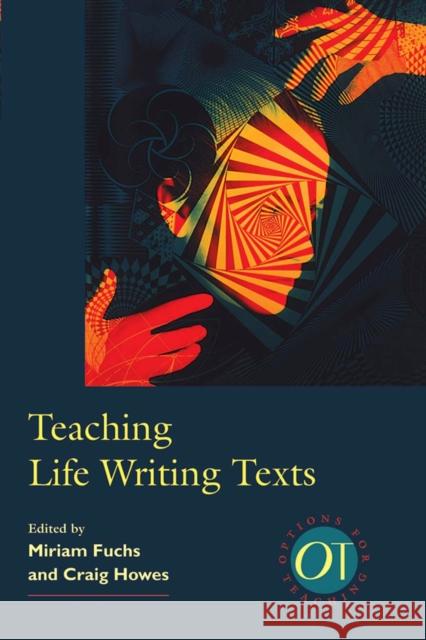
The past thirty years have witnessed a rapid growth in the number and variety of courses and programs that study life writing from literary, philosophical, psychological, and cultural perspectives. The field has evolved from the traditional approach that biographies and autobiographies were always about prominent people--historically significant persons, the nobility, celebrities, writers--to the conception of life writing as a genre of interrogation and revelation. The texts now studied include memoirs, testimonios, diaries, oral histories, genealogies, and group biographies and extend to...
The past thirty years have witnessed a rapid growth in the number and variety of courses and programs that study life writing from literary, philos...
The past thirty years have witnessed a rapid growth in the number and variety of courses and programs that study life writing from literary, philosophical, psychological, and cultural perspectives. The field has evolved from the traditional approach that biographies and autobiographies were always about prominent people--historically significant persons, the nobility, celebrities, writers--to the conception of life writing as a genre of interrogation and revelation. The texts now studied include memoirs, testimonios, diaries, oral histories, genealogies, and group biographies and extend to...
The past thirty years have witnessed a rapid growth in the number and variety of courses and programs that study life writing from literary, philos...
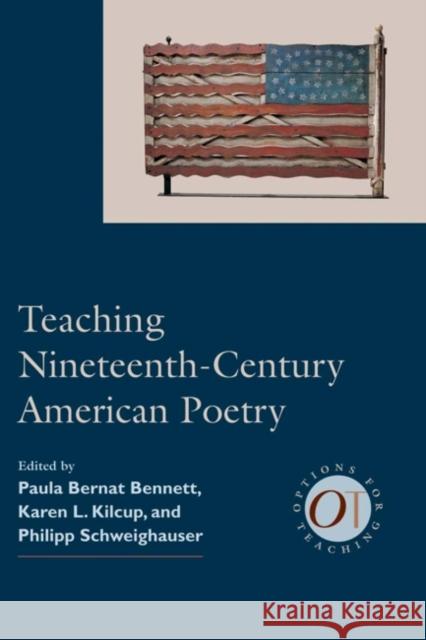
Twentieth-century modernism reduced the list of nineteenth-century American poets to Walt Whitman, Emily Dickinson, and (less often) Edgar Allan Poe. The rest were virtually forgotten. This volume in the MLA series Options for Teaching marks a milestone in the resurgence of the study of the rest. It features poets, like Henry Wadsworth Longfellow and Lydia Huntley Sigourney, who were famous in their day, as well as poets who were marginalized on the basis of their race (Paul Laurence Dunbar, Alexander Posey) or their sociopolitical agenda (Emma Lazarus, John Greenleaf Whittier). It also...
Twentieth-century modernism reduced the list of nineteenth-century American poets to Walt Whitman, Emily Dickinson, and (less often) Edgar Allan Po...
Twentieth-century modernism reduced the list of nineteenth-century American poets to Walt Whitman, Emily Dickinson, and (less often) Edgar Allan Poe. The rest were virtually forgotten. This volume in the MLA series Options for Teaching marks a milestone in the resurgence of the study of the rest. It features poets, like Henry Wadsworth Longfellow and Lydia Huntley Sigourney, who were famous in their day, as well as poets who were marginalized on the basis of their race (Paul Laurence Dunbar, Alexander Posey) or their sociopolitical agenda (Emma Lazarus, John Greenleaf Whittier). It also...
Twentieth-century modernism reduced the list of nineteenth-century American poets to Walt Whitman, Emily Dickinson, and (less often) Edgar Allan Po...