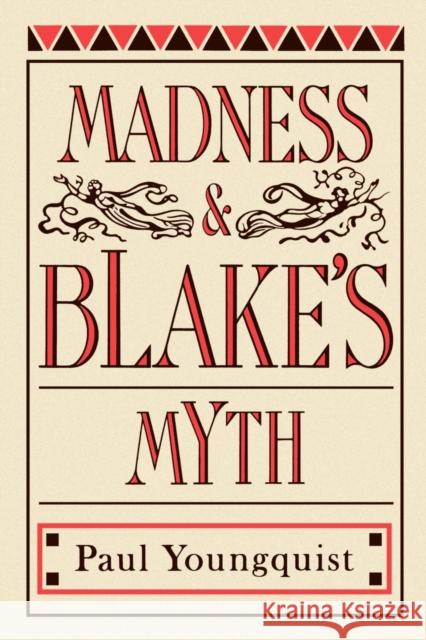
This book offers the first systematic study of madness and its significance for the poetry of William Blake. Blake's reputation as an artist was long clouded by suspicions of madness. Although the great victory of his modern critics has been to see his work clearly, unobstructed by this prejudice, criticism now runs the risk of vindicating Blake the poet at the expense of understanding certain elements of his poetry.
In Madness and Blake's Myth, Paul Youngquist argues that, in its thematic content and dramatic method, Blake's myth is about madness. From the early lyrics to...
This book offers the first systematic study of madness and its significance for the poetry of William Blake. Blake's reputation as an artist was lo...
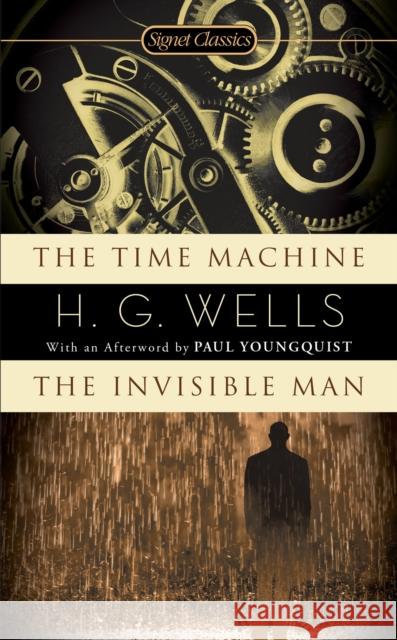
Together in one indispensable volume, The Time Machine and The Invisible Man are masterpieces of irony and imaginative vision from H. G. Wells, the father of science fiction. The Time Machine conveys the Time Traveller into the distant future and an extraordinary world. There, stranded on a slowly dying Earth, he discovers two bizarre races: the effete Eloi and the subterranean Morlocks--a haunting portrayal of Darwin's evolutionary theory carried to a terrible conclusion. The Invisible Man is the fascinating tale of a brash young scientist who,...
Together in one indispensable volume, The Time Machine and The Invisible Man are masterpieces of irony and imaginative vision from H. G....
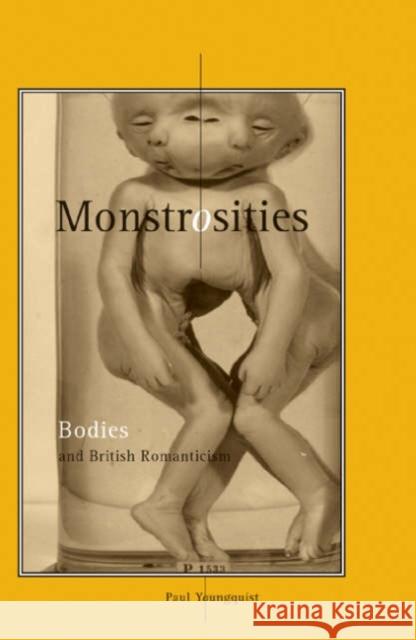
A surprising evaluation of the role of the physical body in the construction of British identity. Eighteenth-century medicine used the word "monstrosities" to describe physically deformed bodies--those irreducible to the "proper body" in their singular, sometimes startling difference. Considering British society in confrontation with such monstrosities, Paul Youngquist reveals the cultural politics of embodiment in Britain during the late eighteenth and early nineteenth centuries. Drawing on the histories of medicine, economics, liberalism, and nationalism, his work shows that bodies are not...
A surprising evaluation of the role of the physical body in the construction of British identity. Eighteenth-century medicine used the word "monstrosi...
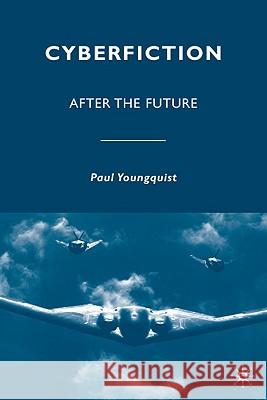
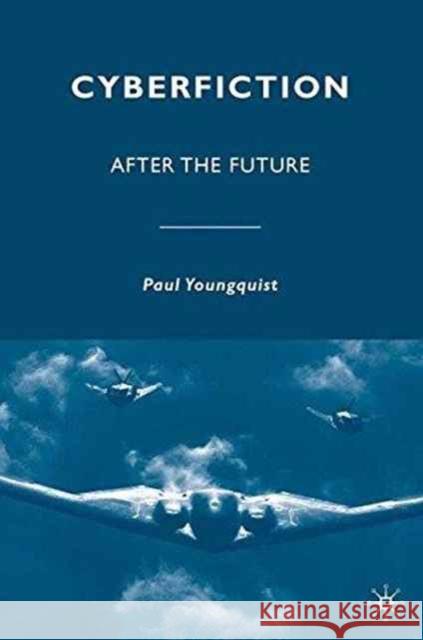
Cyberfiction: After the Future explores a world where cybernetics sets the terms for life and culture - our world of ubiquitous info-tech, instantaneous capital flows, and immanent catastrophe. Economics fuses with technology to create a new kind of speculative fiction: cyberfiction. Paul Youngquist reveals the ways in which J. G. Ballard, Philip K. Dick, Samuel Delany, Octavia Butler, and William Gibson, among others, map a territory where information reigns supreme and the future is becoming a thing of the past.
Cyberfiction: After the Future explores a world where cybernetics sets the terms for life and culture - our world of ubiquitous info-tech, instantaneo...
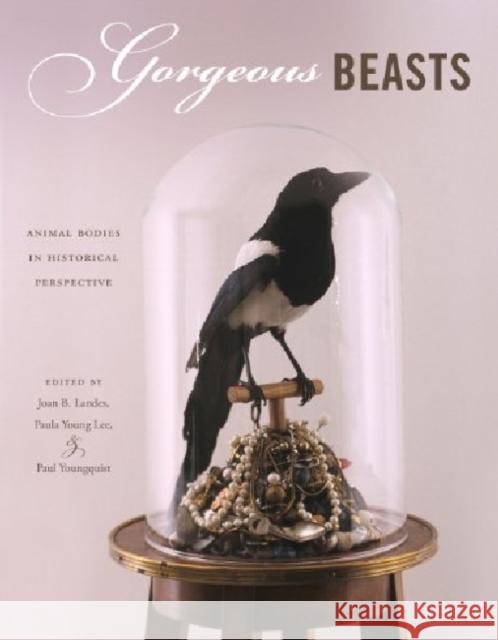
Gorgeous Beasts takes a fresh look at the place of animals in history and art. Refusing the traditional subordination of animals to humans, the essays gathered here examine a rich variety of ways animals contribute to culture: as living things, as scientific specimens, as food, weapons, tropes, and occasions for thought and creativity. History and culture set the terms for this inquiry. As history changes, so do the ways animals participate in culture. Gorgeous Beasts offers a series of discontinuous but probing studies of the forms their participation takes.
This...
Gorgeous Beasts takes a fresh look at the place of animals in history and art. Refusing the traditional subordination of animals to humans...
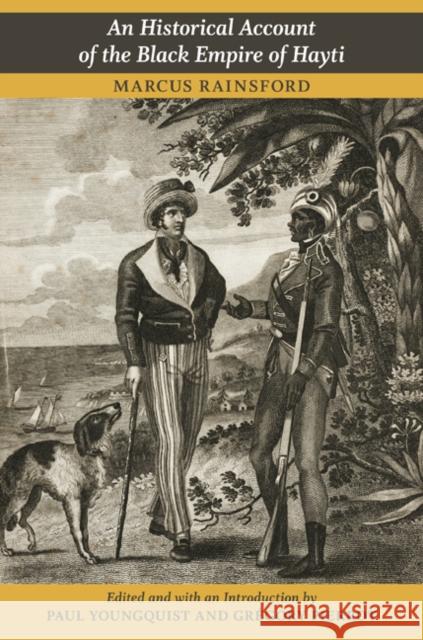
As the first complete narrative in English of the Haitian Revolution, Marcus Rainsford's "An Historical Account of the Black Empire of Hayti" was highly influential in establishing nineteenth-century world opinion of this momentous event. This new edition is the first to appear since the original publication in 1805. Rainsford, a career officer in the British army, went to Haiti to recruit black soldiers for the British. By publishing his observations of the prowess of black troops, and recounting his meetings with Toussaint Louverture, Rainsford offered eyewitness testimonial that...
As the first complete narrative in English of the Haitian Revolution, Marcus Rainsford's "An Historical Account of the Black Empire of Hayti" was high...
Gorgeous Beasts takes a fresh look at the place of animals in history and art. Refusing the traditional subordination of animals to humans, the essays gathered here examine a rich variety of ways animals contribute to culture: as living things, as scientific specimens, as food, weapons, tropes, and occasions for thought and creativity. History and culture set the terms for this inquiry. As history changes, so do the ways animals participate in culture. Gorgeous Beasts offers a series of discontinuous but probing studies of the forms their participation takes.
This...
Gorgeous Beasts takes a fresh look at the place of animals in history and art. Refusing the traditional subordination of animals to humans...
Cyberfiction: After the Future explores a world where cybernetics sets the terms for life and culture - our world of ubiquitous info-tech, instantaneous capital flows, and immanent catastrophe. Economics fuses with technology to create a new kind of speculative fiction: cyberfiction. Paul Youngquist reveals the ways in which J. G. Ballard, Philip K. Dick, Samuel Delany, Octavia Butler, and William Gibson, among others, map a territory where information reigns supreme and the future is becoming a thing of the past.
Cyberfiction: After the Future explores a world where cybernetics sets the terms for life and culture - our world of ubiquitous info-tech, instantaneo...