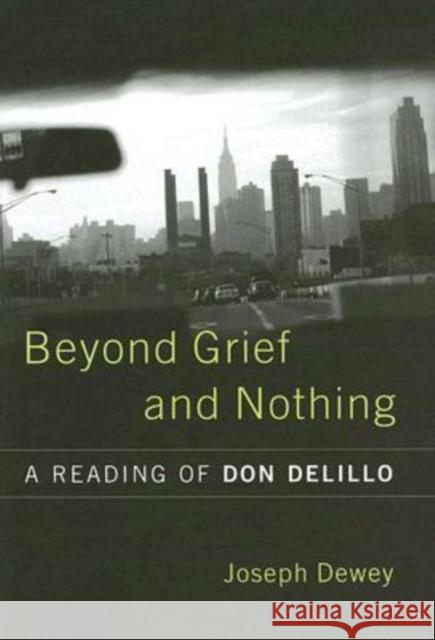
Beginning in 1982 with The Names and continuing with White Noise and Underworld, DeLillo defined himself as a provocative, articulate anatomist of American culture. Dewey offers an astute assessment of this daunting yet important writer's four-decade cultural critique. Dewey finds DeLillo's concerns to be organized around three rubrics that mark the writer's own creative evolution: the love of the street, the embrace of the word, and the celebration of the soul.
Beginning in 1982 with The Names and continuing with White Noise and Underworld, DeLillo defined himself as a provocative, articulate anatomist of Ame...
Pulitzer Prizewinning author Michael Chabon has emerged as one of the most daring writers of American fiction in the post-Pynchon era. Joseph Dewey examines how Chabon's narratives have sought to bring together the defining elements of the two principal expressions of the American narrative that his generation inherited: the formal extravagances of postmodernism and the compelling storytelling of psychological realism. Like the audacious, self-conscious excesses of Pynchon and his postmodern disciples, Dewey argues, Chabon's fictions are extravagant, often ironic, experiments into form...
Pulitzer Prizewinning author Michael Chabon has emerged as one of the most daring writers of American fiction in the post-Pynchon era. Joseph Dewey ex...