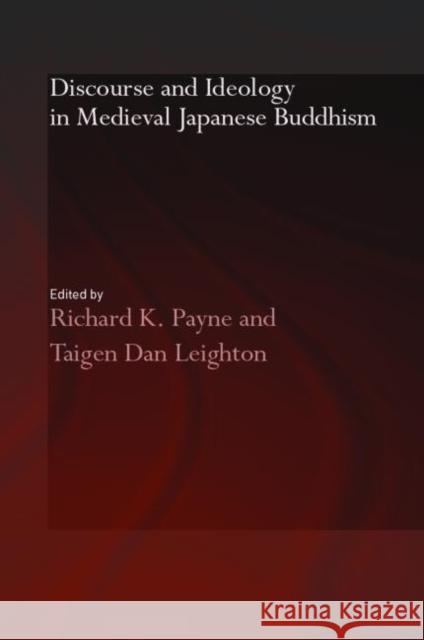
The medieval period of Japanese religious history is commonly known as one in which there was a radical transformation of the religious culture. This book suggests an alternate approach to understanding the dynamics of that transformation. One main topic of analysis focuses on what Buddhism - its practices and doctrines, its traditions and institutions - meant for medieval Japanese peoples themselves. This is achieved by using the notions of discourse and ideology and juxtaposing various topics on shared linguistic practices and discursive worlds of medieval Japanese...
The medieval period of Japanese religious history is commonly known as one in which there was a radical transformation of the religious culture. Th...
The essays in this collection are an interdisciplinary examination of various aspects of Buddhism during the Kamakura era, including religious practice, literature, and institutional history. They work toward a synchronic historiography and thus provide a broader understanding and appreciation of the complexity and richness of Buddhism during the Kamakura era and of Japanese Buddhism as a whole.
Contributors: Richard K. Payne, James C. Dobbins, George S. Tanabe, Mark T. Unno, Jacqueline I. Stone, Robert E. Morrell, James H. Foard
The essays in this collection are an interdisciplinary examination of various aspects of Buddhism during the Kamakura era, including religious prac...
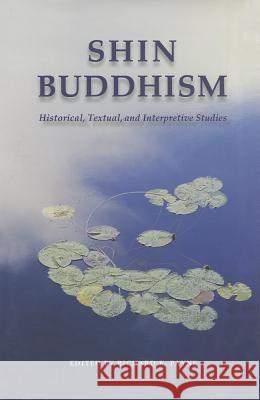
This collection brings together studies of the history, textual tradition, and contemporary interpretation of Shin Buddhism by leading scholars in the field of Pure Land Buddhist studies. The historical studies included here span the range of Pure Land from its origins in India through its development as a distinct system of Buddhist praxis--that is, the dialectic of doctrine and practice--in China, to its rise as a separate and self-identified Pure Land (Jodo) tradition in Japan. In recent decades the term Pure Land Buddhism has come to be used very inclusively, as a term for all forms of...
This collection brings together studies of the history, textual tradition, and contemporary interpretation of Shin Buddhism by leading scholars in ...
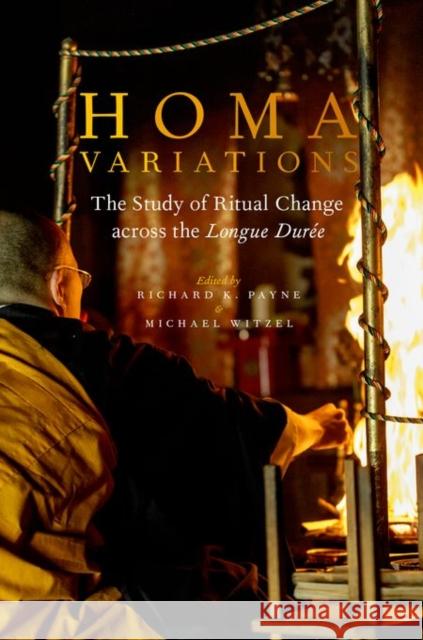
Found in many different religious cultures, the practice of making votive offerings into fire dates back to the earliest periods of human history. Throughout the tantric world, this kind of ritual offering practice is known as the homa. With roots in Vedic and Zoroastrian rituals, the tantric homa was formed in early medieval India. Since that time tantric Buddhist practitioners transmitted it to East and Central Asia, and more recently to Europe and the Americas. Today, Hindu forms of the homa are being practiced outside of India as well. Despite this historical and cultural range, the...
Found in many different religious cultures, the practice of making votive offerings into fire dates back to the earliest periods of human history. Thr...
Found in many different religious cultures, the practice of making votive offerings into fire dates back to the earliest periods of human history. Throughout the tantric world, this kind of ritual offering practice is known as the homa. With roots in Vedic and Zoroastrian rituals, the tantric homa was formed in early medieval India. Since that time tantric Buddhist practitioners transmitted it to East and Central Asia, and more recently to Europe and the Americas. Today, Hindu forms of the homa are being practiced outside of India as well. Despite this historical and cultural range, the...
Found in many different religious cultures, the practice of making votive offerings into fire dates back to the earliest periods of human history. Thr...
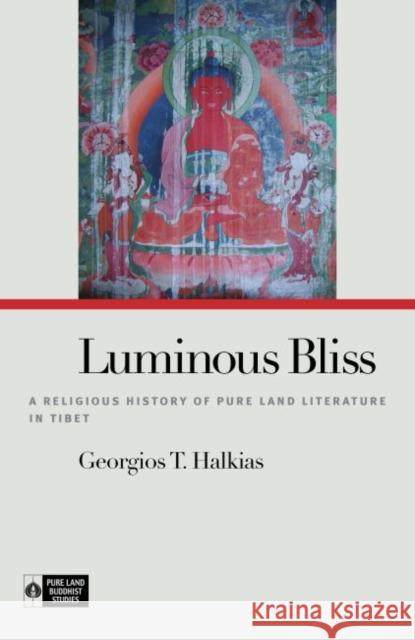
With an annotated English translation and critical analysis of the Orgyan-gling gold manuscript of the short Sukhavativyuha-sutra
Pure Land Buddhism as a whole has received comparatively little attention in Western studies on Buddhism despite the importance of "buddha-fields" (pure lands) for the growth and expression of Mahayana Buddhism. In this first religious history of Tibetan Pure Land literature, Georgios Halkias delves into a rich collection of literary, historical, and archaeological sources to highlight important aspects of this neglected pan-Asian Buddhist tradition. He...
With an annotated English translation and critical analysis of the Orgyan-gling gold manuscript of the short Sukhavativyuha-sutra
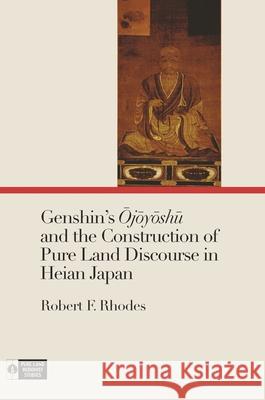
The Ojoyoshu, written by the monk Genshin (942-1017), is one of the most important texts in the history of Japanese religions. It is the first comprehensive guide to the doctrine and practice of Pure Land Buddhism written in Japan and so played a pivotal role in establishing this form of Buddhism in the country. In Genshin's Ojoyoshu and the Construction of Pure Land Discourse in Heian Japan, the first book in English on the Ojoyoshu in more than forty years, Robert Rhodes draws on the latest scholarship to shed new light on the text, its author, and the tumultuous age in which it was...
The Ojoyoshu, written by the monk Genshin (942-1017), is one of the most important texts in the history of Japanese religions. It is the first comp...
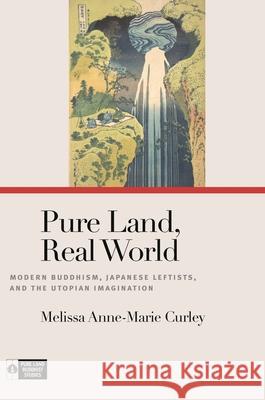
For close to a thousand years Amida's Pure Land, a paradise of perfect ease and equality, was the most powerful image of shared happiness circulating in the Japanese imagination. In the late nineteenth century, some Buddhist thinkers sought to reinterpret the Pure Land in ways that would allow it speak to modern Japan. Their efforts succeeded in ways they could not have predicted. During the war years, economist Kawakami Hajime, philosopher Miki Kiyoshi, and historian Ienaga Saburo--left-leaning thinkers with no special training in doctrinal studies and no strong connection to any Buddhist...
For close to a thousand years Amida's Pure Land, a paradise of perfect ease and equality, was the most powerful image of shared happiness circulati...
Shinko Mochizuki Richard K. Payne Natalie E. F. Quli
This work has long guided research on Pure Land Buddhism by scholars in Japan. While many subsequent specialized studies have provided greater depth and focused research on specific aspects of that history, the overall structure described in this work remains largely unchanged.
This work has long guided research on Pure Land Buddhism by scholars in Japan. While many subsequent specialized studies have provided greater depth a...