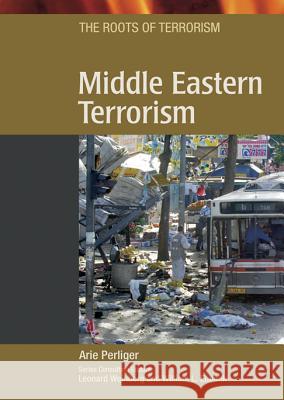
The September 11, 2001 terrorist attacks on the United States brought the issue of terrorism to the forefront of American attention and controversy. To determine how to prevent further destruction, it is necessary to understand the shadowy phenomenon that causes it. Who are the terrorists? What are their motives? What are the roots of this form of violence, and will it come to an end? What exactly is terrorism?
The September 11, 2001 terrorist attacks on the United States brought the issue of terrorism to the forefront of American attention and controversy. T...
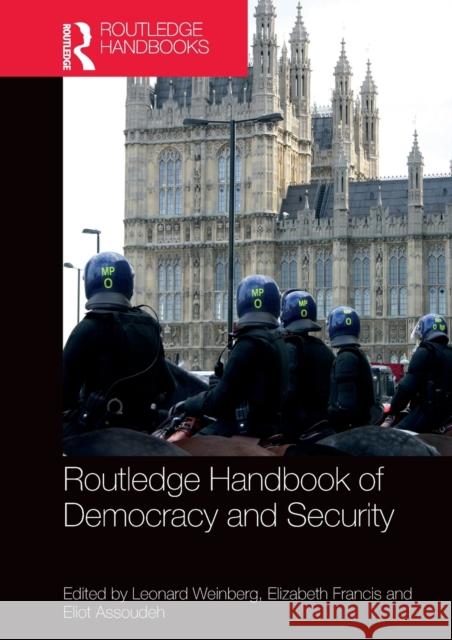
This new handbook is a coherent examination of security challenges to democracies and their outcomes, highlighting the tension between liberty and democracy. Grounded in historical analysis, each of the six sections addresses past and emerging security threats; legal and legislative responses to them; successful and unsuccessful efforts to reconcile democracy and security; and a range of theoretical questions.
A long list of prominent writers from Thomas Hobbes and John Locke to Samuel Huntington and Steven Pinker has maintained that the fundamental role of government (the state) is to...
This new handbook is a coherent examination of security challenges to democracies and their outcomes, highlighting the tension between liberty and ...
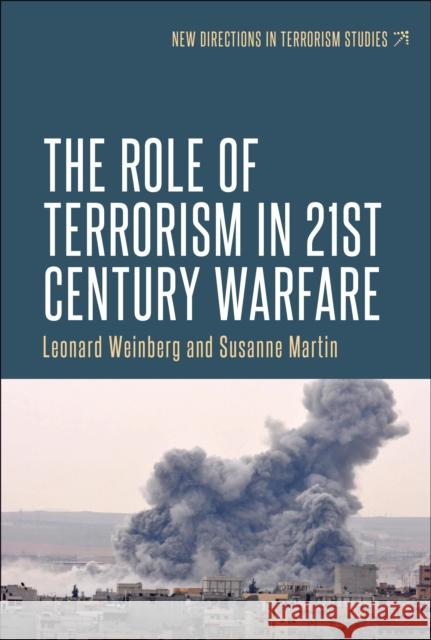
The role of terrorism in twenty-first-century warfare is a critical reflection on the major armed conflicts occurring during the 1990s and the first decade of the Twenty First Century. Conflicts in Bosnia, Kosovo, Chechnya, Iraq, Afghanistan, and Syria all involved the use of terrorism by one or more groups. Turning to the future, the book asks what does this mean for violent conflicts yet to come? Using a variety of case studies, Weinberg and Martin provide a systematic and comprehensive analysis of the role played by terrorism as a stand-alone tactic as well as one used to ignite...
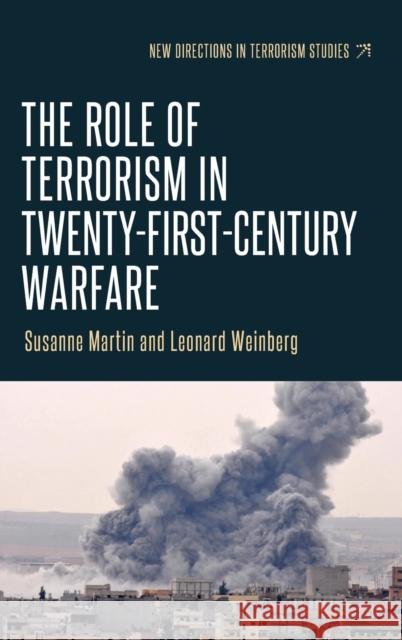
The role of terrorism in twenty-first-century warfare is a critical reflection on the major armed conflicts occurring during the 1990s and the first d...
The role of terrorism in twenty-first-century warfare is a critical reflection on the major armed conflicts of the 1990s and 2000s. Wars in Bosnia, Kosovo, Chechnya, Iraq, Afghanistan and Syria all involved the use of terrorism by one or more groups - looking to the future, what does this mean for violent conflicts yet to come?
Using a variety of case studies, Susanne Martin and Leonard Weinberg provide a systematic and comprehensive analysis of the roles played by terrorism both as a stand-alone tactic and as a means of igniting broad-scale conflict. They investigate...
The role of terrorism in twenty-first-century warfare is a critical reflection on the major armed conflicts of the 1990s and 2000s. Wars i...