Elizabeth Bishop represents a full-scale examination of Bishop's work--poetry, prose, and selected unpublished material--to reveal how personal loss becomes implicated in her vision of self as fluid and unfixed and, at the same time, how gender and sexual identity inform the experience of loss in the act of writing. Susan McCabe argues that Bishop counters modernist claims for an autonomous art object and an impersonal artist; Bishop's writing never represents an escape into perfected forms, but instead calls attention to the processes of language that construct identity. McCabe...
Elizabeth Bishop represents a full-scale examination of Bishop's work--poetry, prose, and selected unpublished material--to reveal how per...
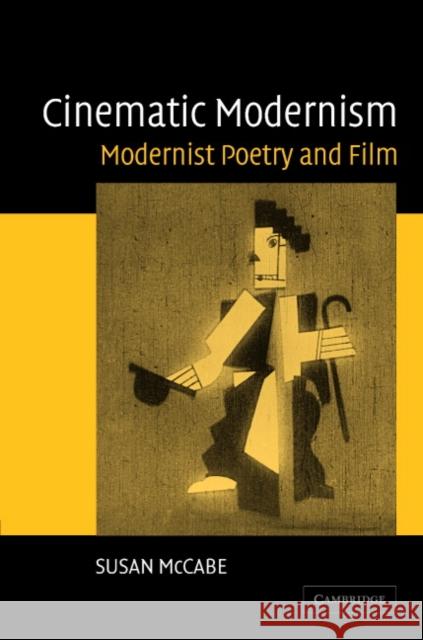
Susan McCabe juxtaposes the work of four American modernist poets with the techniques and themes of early twentieth-century European avant-garde films. The historical experience of World War One and its aftermath of broken and shocked bodies shaped a preoccupation with fragmentation in both film and literature. Film, montage and camera work provided poets with a vocabulary through which to explore and refashion modern physical and metaphoric categories of the body, including the hysteric, automaton, bisexual and femme fatale. This innovative study explores the impact of new cinematic modes of...
Susan McCabe juxtaposes the work of four American modernist poets with the techniques and themes of early twentieth-century European avant-garde films...
The Agha Shahid Ali Prize in Poetry was inaugurated in 2003 to honor the late poet, a nationally recognized writer and a former professor at the University of Utah, and is sponsored by the University of Utah Press and the University of Utah Department of English. Descartes Nightmare is the 2007 prizewinning volume selected by this year s judge, Cole Swenson, of the Iowa Writers Workshop.
The Agha Shahid Ali Prize in Poetry was inaugurated in 2003 to honor the late poet, a nationally recognized writer and a former professor at the Unive...
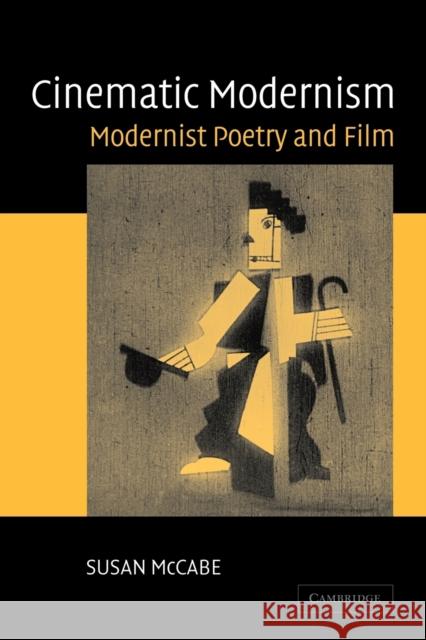
Susan McCabe juxtaposes the work of four American modernist poets with the techniques and themes of early twentieth-century European avant-garde films. The historical experience of World War One and its aftermath of broken and shocked bodies shaped a preoccupation with fragmentation in both film and literature. Film, montage and camera work provided poets with a vocabulary through which to explore and refashion modern physical and metaphoric categories of the body, including the hysteric, automaton, bisexual and femme fatale. This innovative study explores the impact of new cinematic modes of...
Susan McCabe juxtaposes the work of four American modernist poets with the techniques and themes of early twentieth-century European avant-garde films...