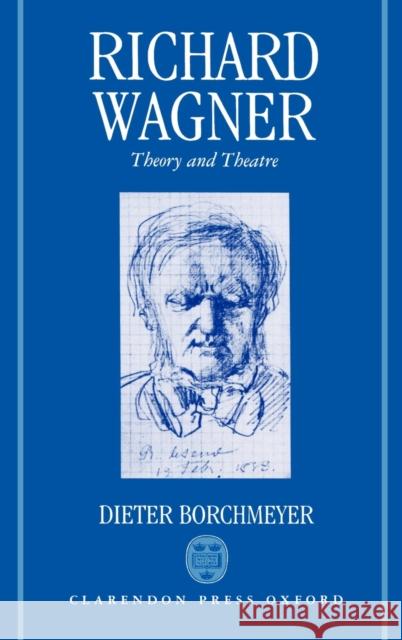
Richard Wagner has come to be seen as the quintessential artist of the nineteenth century. Borchmeyer here provides the first systematic and comprehensive account of Wagner's aesthetic theory, examining his hitherto neglected prose writings and his ideas on music drama from the various standpoints of literature, the linking of ideas, and the sociology of art. The preeminent importance for Wagner of classical Greek art and mythology emerges with particular clarity, while his links with the great figures and forms of world theatre-- Shakespeare, the commedia dell'arte, the popular theatre, and...
Richard Wagner has come to be seen as the quintessential artist of the nineteenth century. Borchmeyer here provides the first systematic and comprehen...
Richard Wagner continues to be the most controversial artist in history, a perpetually troubling figure in our cultural consciousness. The unceasing debate over his works and their impact--for and against--is one reason why there has been no genuinely comprehensive modern account of his musical dramas until now. Dieter Borchmeyer's book is the first to present an overall picture of these musical dramas from the standpoint of literary and theatrical history. It extends from the composer's early works--still largely ignored--to the Ring Cycle and Parsifal, and includes Wagner's...
Richard Wagner continues to be the most controversial artist in history, a perpetually troubling figure in our cultural consciousness. The unceasin...
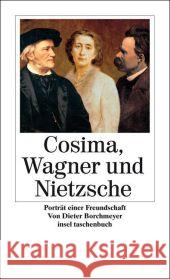
An Pfingsten 1869 besucht Nietzsche Richard Wagner und Cosima von Blow in deren Haus in Tribschen bei Luzern. Dies ist der Beginn einer innigen Freundschaft - und eine der kulturhistorisch bedeutsamsten Dreierkonstellationen. Zwischen den beiden Mnnern entwickelt sich fast eine Vater-Sohn-Beziehung, bis es 1878 zum Bruch kommt. Die Entzweiung mit Nietzsche ist die wohl tiefste menschliche Enttuschung in Wagners Leben gewesen. Und auch Nietzsche, der die Tribschener Jahre immer wieder als die glcklichste Zeit seines Lebens bezeichnet hat, hat die Trennung von Wagner und Cosima nie verwunden....
An Pfingsten 1869 besucht Nietzsche Richard Wagner und Cosima von Blow in deren Haus in Tribschen bei Luzern. Dies ist der Beginn einer innigen Freund...
Goethe, Johann W. von Huber, Peter Borchmeyer, Dieter
Mit den Dramen Iphigenie, Egmont und Tasso hat Goethe seinen eigentlichen Beitrag zum Welttheater geleistet. Der vorliegende Band vereinigt diese Klassiker des Theaters und darüber hinaus sein dramatisches Werk vom ersten Weimarer Jahrzehnt bis zum Vorabend der Französischen Revolution unmittelbar bevor auf der historischen Bühne der Vorhang zu einem beispiellosen weltgeschichtlichen Schauspiel aufgerissen wurde, das Goethes Vertrauen in die Aussagekraft der alten dramatischen Formen erschütterte. Der Band enthält darüber hinaus alle satirischen Komödien, Singspiele und Maskenzüge der...
Mit den Dramen Iphigenie, Egmont und Tasso hat Goethe seinen eigentlichen Beitrag zum Welttheater geleistet. Der vorliegende Band vereinigt diese Klas...