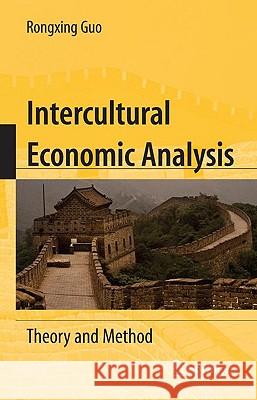
Since the end of the Cold War, the study of intercultural relations has become one of the most popular topics in the field of global politics and economics. This book presents a methodological framework for the analysis of intercultural issues frequently misinterpreted by existing theories. The book uses a challenge-and-response theory of cultural development to examine the relationship between different natural disasters and threats and the developments of ancient civilizations. The spatial interaction of ancient civilizations is assessed and some theoretical patterns of intercultural...
Since the end of the Cold War, the study of intercultural relations has become one of the most popular topics in the field of global politics and e...
This book gathers the work of leading scholars from several disciplines on fragile regions, especially those regions seeking to preserve, strengthen or create processes to restore or reestablish security and effective social and economic management. It tackles the multifarious issues that shape and affect fragile regions, drawing upon a wide range of intellectual and methodological approaches, including such fields as area studies, natural resource science, biology, environmental and resource economics and management, and political economy. The volume brings together the perspectives of a...
This book gathers the work of leading scholars from several disciplines on fragile regions, especially those regions seeking to preserve, strengthen o...
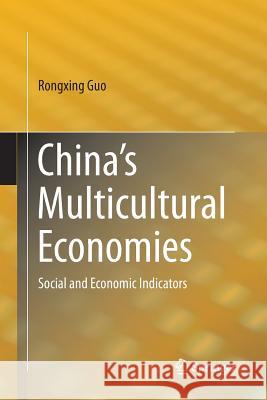
Although the majority of China's population is of the Han nationality (which accounts for more than 90% of China's population), the non-Han ethnic groups have a population of more than 100 million. Until now, China has officially identified, except for other unknown ethnic groups and foreigners with Chinese citizenship, 56 ethnic groups. In addition, ethnic groups vary widely in size. With a population of more than 15 million, the Zhuang have the largest ethnic minority, and the Lhoba, with only two thousand or more, the smallest. China's ethnic diversity has resulted in a special...
Although the majority of China's population is of the Han nationality (which accounts for more than 90% of China's population), the non-Han ethnic gro...
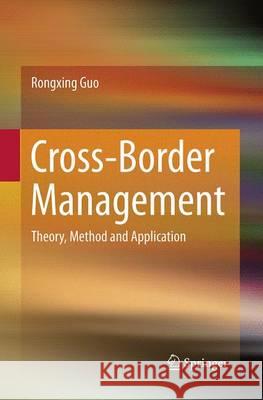
This book presents a new approach to management in an increasingly interactive world. In this context, the use of the word "new" has two meanings. The first relates to a new definition of borders (which are natural, institutional, functional, or mixed); the second concerns the fact that the book applies (and, where necessary, develops) analytical tools, methods and models that are different from those used in other similar books. The objectives of this book are: to clarify whether existing management theories and methods can be effectively applied in an entity (which can be defined as a...
This book presents a new approach to management in an increasingly interactive world. In this context, the use of the word "new" has two meanings. The...
Although the majority of China's population is of the Han nationality (which accounts for more than 90% of China's population), the non-Han ethnic groups have a population of more than 100 million. Until now, China has officially identified, except for other unknown ethnic groups and foreigners with Chinese citizenship, 56 ethnic groups. In addition, ethnic groups vary widely in size. With a population of more than 15 million, the Zhuang have the largest ethnic minority, and the Lhoba, with only two thousand or more, the smallest. China's ethnic diversity has resulted in a special...
Although the majority of China's population is of the Han nationality (which accounts for more than 90% of China's population), the non-Han ethnic gro...
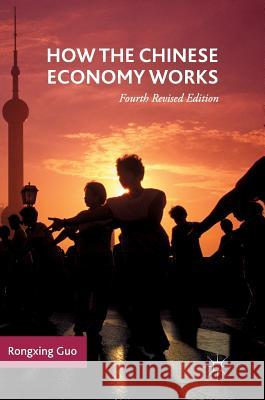
This fourth revised edition sets out to analyze and compare the operational mechanisms of the Chinese economy between the pre- and post-reform periods and through national, regional and local dimensions. It examines the driving forces both endogenous and exogenous that have influenced China s economic development during the past decades. Both positive and negative consequences of the Chinese economic transformation have been clarified. A multiregional comparison of the Chinese economy is conducted in terms of natural and human resources, institutional evolution, as well as economic and...
This fourth revised edition sets out to analyze and compare the operational mechanisms of the Chinese economy between the pre- and post-reform ...
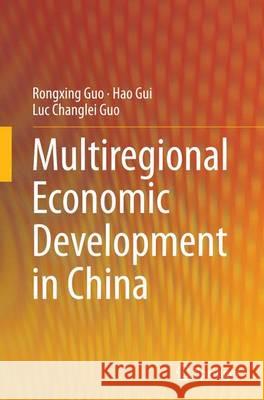
This book provides, in an easy-to-use format, an extensive collection of data and information on China's 31 provinces and its interprovincial economic linkages.
This book provides, in an easy-to-use format, an extensive collection of data and information on China's 31 provinces and its interprovincial economic...
This book, comprised of entirely original research, collects data on the socioeconomic situation of China's 56 ethnic groups. Although the majority of China's population is of the Han nationality (which accounts for more than 90% of China's population), the non-Han ethnic groups have a population of more than 100 million. China has officially identified, except for other unknown ethnic groups and foreigners with Chinese citizenship, 55 ethnic minorities. In addition, ethnic minorities vary greatly in size. With a population of more than 15 million, the Zhuang are the largest ethnic...
This book, comprised of entirely original research, collects data on the socioeconomic situation of China's 56 ethnic groups. Although the majority...