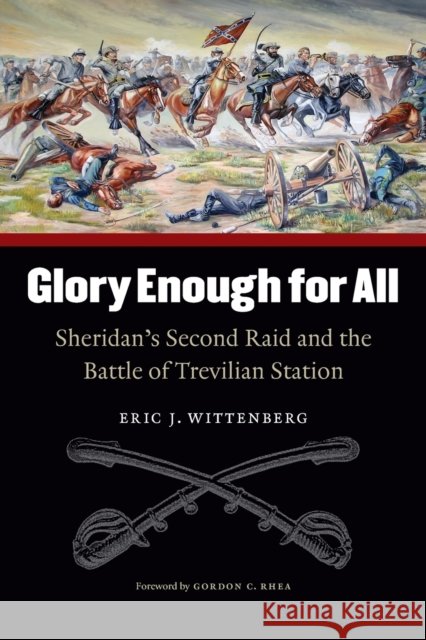
After the ferocious fighting at Cold Harbor, Virginia, in June 1864, Union Lt. Gen. Ulysses S. Grant ordered his cavalry, commanded by Maj. Gen. Philip H. Sheridan, to distract the Confederate forces opposing the Army of the Potomac. Glory Enough for All chronicles the battle that resulted when Confederate cavalry pursued and caught their Federal foes at Trevilian Station, Virginia, perhaps the only truly decisive cavalry battle of the American Civil War. Eric J. Wittenberg tells the stories of the men who fought there, including eight Medal of Honor winners and one Confederate whose death at...
After the ferocious fighting at Cold Harbor, Virginia, in June 1864, Union Lt. Gen. Ulysses S. Grant ordered his cavalry, commanded by Maj. Gen. Phili...
Told in his own words, this is the story of Sgt. Thomas W. Smith's service in the Civil War--the greatest adventure of his life. It is also the story of his regiment, the 6th Pennsylvania Cavalry, known as Rush's Lancers, named both for the distinctive wooden lances they carried for the first two years of the war and for their first commanding officer, Col. Richard H. Rush. These letters provide rare insight into the workings and daily life of a noncommissioned officer. They are filled with humor and humanity and demonstrate the hardships withstood by the common soldier of the Civil War. The...
Told in his own words, this is the story of Sgt. Thomas W. Smith's service in the Civil War--the greatest adventure of his life. It is also the story ...
Primarily known for his postwar exploits, most famously his 1876 defeat at Little Big Horn, George Armstrong Custer is receiving renewed interest for his successful Civil War generalship. He led the Michigan Cavalry Brigade in more than sixty battles and skirmishes. Forming perhaps the finest single cavalry brigade in the war, these horse soldiers repeatedly proved themselves as formidable opponents to the Confederates, earning them the nickname of "Custer's Wolverines."
Among the Wolverines was James Harvey Kidd, who serves as an excellent example of the sort of man who followed...
Primarily known for his postwar exploits, most famously his 1876 defeat at Little Big Horn, George Armstrong Custer is receiving renewed interest for ...
During the Civil War, James Harvey Kidd fought alongside General George Armstrong Custer as a member of the 6th Michigan Cavalry--the Wolverines. After the war, Kidd served as brigadier general in the Michigan National Guard and, upon returning to his civilian career as a newspaperman, published two newspapers in his hometown.
Eric J. Wittenberg presents many of this newspaperman's captivating writings in their original form. Kidd wrote eloquently about his Civil War experiences, especially his service with Custer. His speech given at the dedication of the Custer monument in Monroe,...
During the Civil War, James Harvey Kidd fought alongside General George Armstrong Custer as a member of the 6th Michigan Cavalry--the Wolverines. A...
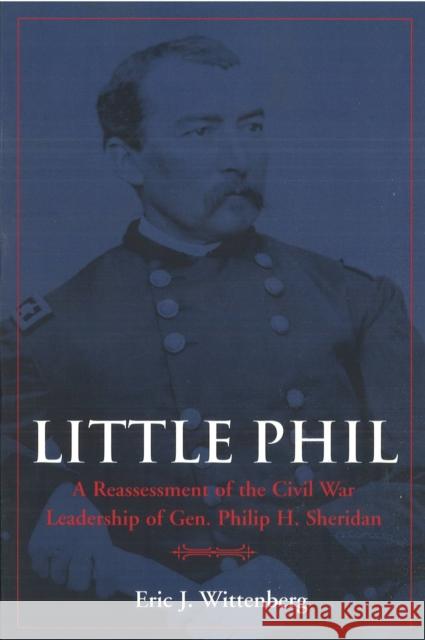
Unlike Gen. Ulysses S. Grant and Gen. William T. Sherman, whose controversial Civil War-era reputations persist today, Maj. Gen. Philip H. Sheridan has been largely untouched by controversy. In Little Phil, historian Eric J. Wittenberg reassesses the war record of a man long considered one of the Union Army's greatest generals. From his earliest days at West Point, Phil Sheridan refused to play by the rules. He was fortunate to receive merely a suspension, rather than expulsion, when as a cadet he charged a superior officer with a bayonet. Although he achieved fame as a cavalryman late...
Unlike Gen. Ulysses S. Grant and Gen. William T. Sherman, whose controversial Civil War-era reputations persist today, Maj. Gen. Philip H. Sheridan ha...
Unlike Gen. Ulysses S. Grant and Gen. William T. Sherman, whose controversial Civil War-era reputations persist today, Maj. Gen. Philip H. Sheridan has been largely untouched by controversy. In Little Phil, historian Eric J. Wittenberg reassesses the war record of a man long considered one of the Union Army's greatest generals. From his earliest days at West Point, Phil Sheridan refused to play by the rules. He was fortunate to receive merely a suspension, rather than expulsion, when as a cadet he charged a superior officer with a bayonet. Although he achieved fame as a cavalryman late...
Unlike Gen. Ulysses S. Grant and Gen. William T. Sherman, whose controversial Civil War-era reputations persist today, Maj. Gen. Philip H. Sheridan ha...
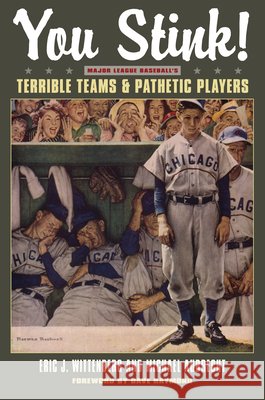
A satiric look at the jeer-ful side of our national pastime
There are countless volumes celebrating the best teams in professional baseball. Unfortunately, winning represents only one side of the game. For every champion's record-setting season, there has been an equally memorable story of defeat. These teams and their shameful contributions to America's national pastime have been a neglected topic in the annals of baseball history. Until now.
In You Stink , two fanatical historians (or historian fans), Michael Aubrecht and Eric Wittenberg, give...
A satiric look at the jeer-ful side of our national pastime
There are countless volumes celebrating the best teams in profe...