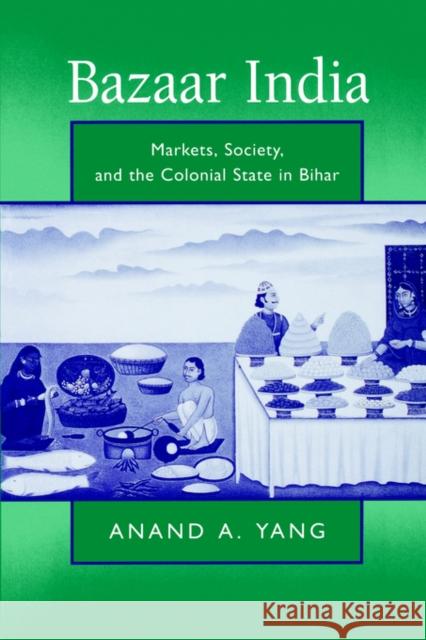
The role of markets in linking local communities to larger networks of commerce, culture, and political power is the central element in Anand A. Yang's provocative and original study. Yang uses bazaars in the northeast Indian state of Bihar during the colonial period as the site of his investigation. The bazaar provides a distinctive locale for posing fundamental questions regarding indigenous societies under colonialism and for highlighting less familiar aspects of colonial India. At one level, Yang reconstructs Bihar's marketing system, from its central place in the city of Patna down...
The role of markets in linking local communities to larger networks of commerce, culture, and political power is the central element in Anand A. Yang'...
The essays presented here reflect recent widespread interest in reconsidering the political, geographical, and cultural boundaries conventionally observed by area specialists and others. They intentionally range widely through time and space, dealing with diverse issues and contexts, but each highlights the very general theme of cross-cultural interaction. Although they draw heavily on area studies, the contributors seek to put previously separate bodies of scholarship in dialogue with one another by exploring those interactions that have historically linked world regions.
Four...
The essays presented here reflect recent widespread interest in reconsidering the political, geographical, and cultural boundaries conventionally o...
In the early decades of the eighteenth century, Yemen hosted a bustling community of merchants who sailed to the southern Arabian Peninsula from the east and the west, seeking and offering a range of commodities, both luxury and mundane. In Shipped but Not Sold, Nancy Um opens the chests these merchants transported to and from Yemen and examines the cargo holds of their boats to reveal the goods held within. They included eastern spices and aromatics, porcelain cups and saucers with decorations in gold from Asia, bales of coffee grown in the mountains of Yemen, Arabian horses, and a wide...
In the early decades of the eighteenth century, Yemen hosted a bustling community of merchants who sailed to the southern Arabian Peninsula from th...
This collection of essays asserts the specific value of world history research and teaching, showing how the field contributes to the larger historical profession and offering concrete suggestions to develop more interaction between the academy and the public. The twelve contributors, each with their own academic areas of interest, are experienced scholars and classroom teachers. Uniting them together in this volume is their professional relationship with Jerry H. Bentley (1949-2012). This shared connection served as a catalyst to showcase Bentley's enduring legacy: a commitment to...
This collection of essays asserts the specific value of world history research and teaching, showing how the field contributes to the larger histor...
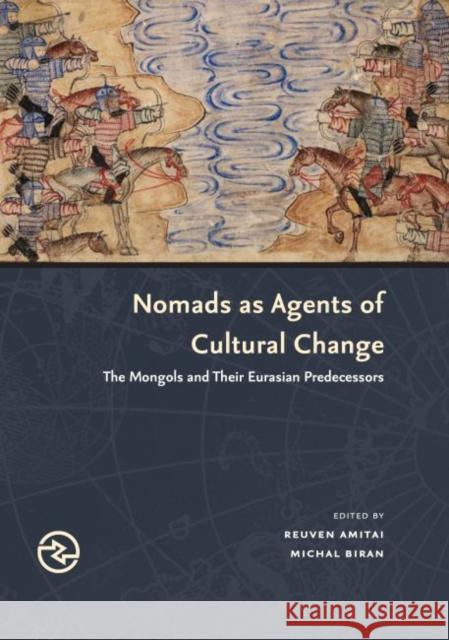
Brings together a distinguished group of scholars from different disciplines and cultural specializations to explore how nomads played the role of ""agents of cultural change"". The comparative approach of this study, encompassing both a lengthy time span and a vast region, enables a clearer understanding of the key role that Eurasian pastoral nomads played in the history of the Old World.
Brings together a distinguished group of scholars from different disciplines and cultural specializations to explore how nomads played the role of ""a...

Provides a unique account of how the Southern Kuril Islands have shaped the parameters of the Russian state and framed debates on the politics of identity in the post-Soviet era. By shifting the debate beyond a proliferation of Eurocentric and Moscow-focused writings, Paul B. Richardson reveals broad alternatives and possibilities for Russian identity in Asia.
Provides a unique account of how the Southern Kuril Islands have shaped the parameters of the Russian state and framed debates on the politics of iden...
Examines the history of the first Korean diaspora in a Western society during the highly tense geopolitical atmosphere of the Soviet Union in the late 1930s. Jon K. Chang demonstrates that the Koreans of the Russian Far East were continually viewed as a problematic and maligned nationality (ethnic community) during the Tsarist and Soviet periods.
Examines the history of the first Korean diaspora in a Western society during the highly tense geopolitical atmosphere of the Soviet Union in the late...