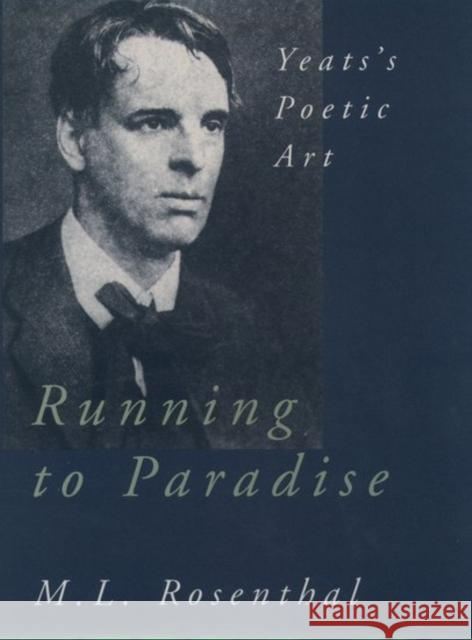
In Running to Paradise, M.L. Rosenthal, hailed by the Times Literary Supplement as "one of the most important critics of twentieth-century poetry," leads us through the lyric poetry and poetic drama of our century's greatest poet in English. His readings shed new, vivid light on Yeats's daring uses of tradition, his love poetry, and the way he faced the often tragic realities of revolution and civil war. Running to Paradise describes Yeats's whole effort--sometimes leavened by wild humor--to convey, with high poetic integrity, his passionate sense of his own life...
In Running to Paradise, M.L. Rosenthal, hailed by the Times Literary Supplement as "one of the most important critics of twentieth-c...
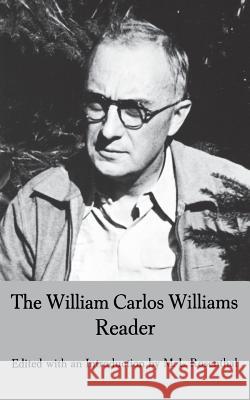
This book talks about William Carlos Williams's work in poetry, friction, autobiography, drama and essays-shows conclusively that his prose was also remarkably original, versatile and powerful.
This book talks about William Carlos Williams's work in poetry, friction, autobiography, drama and essays-shows conclusively that his prose was also r...
In this original work, one of our most distinguished poets and critics considers the nature of poetry as "a recovery, in language, of revelatory awareness in process," and of structure as a "balancing of pressures active inside the poem." In fresh, precise language, he presents a compelling theory of poetry based on intimate engagement with the many poems he quotes and discusses.
In this original work, one of our most distinguished poets and critics considers the nature of poetry as "a recovery, in language, of revelatory aware...
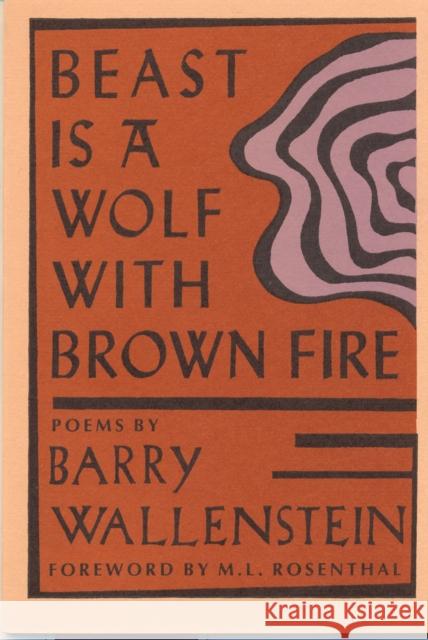
"The feeling here is 'urban' -- a certain removal or distancing combined with keen awareness, the sense of the impersonal wash of night coming over the lonely multitudes amid the surrealistic concrete.... The wry, lost energy of these pieces is the lyric voice of its generation." - M.L. Rosenthal
"The feeling here is 'urban' -- a certain removal or distancing combined with keen awareness, the sense of the impersonal wash of night coming ove...
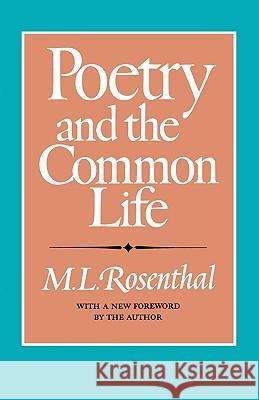
The poet and critic M.L. Rosenthal explores the sources of poetry in our daily lives, in the common speech, and in the awareness and sensibility that poets share with the rest of humanity. Through a wide range of examples drawn from poetry, he explores how art is a natural human activity that makes us aware of ourselves and the world around us in a way as never before. He exposes poetry's relation to our surroundings, politics, language, sex, love, and death.
The poet and critic M.L. Rosenthal explores the sources of poetry in our daily lives, in the common speech, and in the awareness and sensibility that ...