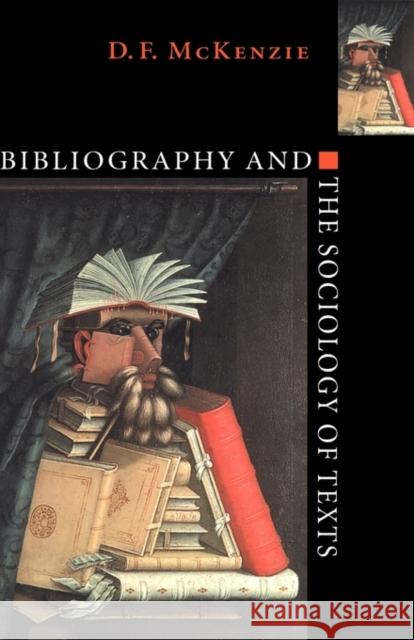
"The greatest bibliographer of our time," was how historian Robert Darnton described D. F. McKenzie. Yet until now many of McKenzie's major essays, scattered in specialist journals and inaccessible publications, have circulated mainly in tattered photocopies. This volume, edited by two of McKenzie's former students, brings together for the first time a wide range of his writings on bibliography, the book trade, and the "sociology of texts." Selected by the author himself before his sudden death in 1999, the essays range from the material transmission of Shakespeare's plays in the...
"The greatest bibliographer of our time," was how historian Robert Darnton described D. F. McKenzie. Yet until now many of McKenzie's major essays,...
The Chronology and Calendar of Documents relating to the London Book Trade 1641-1700 provides, for the first time, easy access to information about the authors, printers, and distributors of books in the later seventeenth century. Chronological entries allow an insight into the day-to-day workings of the book trade. Substantial indexes allow quick reference to information on specific book titles, named authors, and book trade personnel, and specific topics such as booksellers' bills, coffee-houses, and imported books.
The Chronology and Calendar of Documents relating to the London Book Trade 1641-1700 provides, for the first time, easy access to information about th...
The Chronology and Calendar of Documents relating to the London Book Trade 1641-1700 provides, for the first time, easy access to information about the authors, printers, and distributors of books in the later seventeenth century. Chronological entries allow an insight into the day-to-day workings of the book trade. Substantial indexes allow quick reference to information on specific book titles, named authors, and book trade personnel, and specific topics such as booksellers' bills, coffee-houses, and imported books.
The Chronology and Calendar of Documents relating to the London Book Trade 1641-1700 provides, for the first time, easy access to information...
D.F. McKenzie shows how the material form of texts crucially determine their meanings. He demonstrates that as works are reproduced and reread, they take on different forms and meanings. This is true of all forms of recorded information, McKenzie claims, including sound, graphics, films, landscape and new electronic media. The bibliographical skills first developed for manuscripts and books can, he shows, be applied to a wide range of cultural documents. This book offers a unifying concept of texts that seeks to acknowledge their variety and the complexity of their relationships.
D.F. McKenzie shows how the material form of texts crucially determine their meanings. He demonstrates that as works are reproduced and reread, they t...