Literature explores the human condition, the mystery of the world, life and death, as well as our relations with others, and our desires and dreams. It differs from science in its aims and methods, but Babuts shows, in other respects literature has much common ground with science. Both aim for an authentic version of truth. To this end, literature employs metaphors, and it does so in a manner similar to that of scientific inquiry. Cognitive science views of literature see a one-to-one correlation between the world and text, in which meaning belongs to the author, and literature is equivalent...
Literature explores the human condition, the mystery of the world, life and death, as well as our relations with others, and our desires and dreams. I...
Mimesis is a critical and philosophical term going back to Aristotle. It carries a wide range of meanings, including imitation, representation, mimicry, the act of expression, and the presentation of self. In modern literary criticism, mimesis has received renewed attention in the last two or three decades and been subject to wide-ranging interpretations. Nicolae Babuts looks at the concept of mimesis from a cognitive perspective. He identifies two main strands: the mimetic relation of art and poetry to the world, defined in terms of reference to an external reality, and the importance of...
Mimesis is a critical and philosophical term going back to Aristotle. It carries a wide range of meanings, including imitation, representation, mim...
Literature explores the human condition, the mystery of the world, life and death, as well as our relations with others, and our desires and dreams. It differs from science in its aims and methods, but Babuts shows in other respects that literature has much common ground with science. Both aim for an authentic version of truth. To this end, literature employs metaphors, and it does so in a manner similar to that of scientific inquiry. The cognitive view does not imply that there is a one-to-one correlation between the world and text, that meaning belongs to the author, or that literature is...
Literature explores the human condition, the mystery of the world, life and death, as well as our relations with others, and our desires and dreams. I...
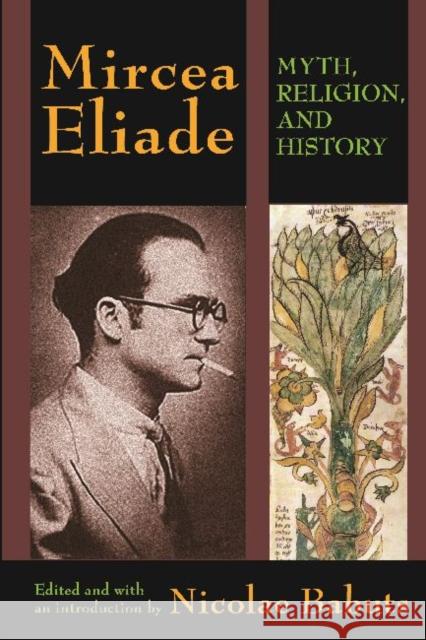
Mircea Eliade (1907-1986) was one of the twentieth century's foremost students of religion and cultural environments. This book examines the emergence, function, and value of religion and myth in his work.
Nicolae Babuts, Robert Ellwood, Eric Ziolkowski, John Dadosky, Robert Segal, Mac Linscott Ricketts, Douglas Allen, and Liviu Borda examine Eliade's views on the interaction between the sacred and the profane. Each explores Eliade's phenomenological approach to the study of religion and myth. They show that modern rites of initiation, cultural activities, and spectacles like...
Mircea Eliade (1907-1986) was one of the twentieth century's foremost students of religion and cultural environments. This book examines the emerge...
Nicolae Babuts believes that the study of metaphoric thought and literature can be enriched by the application of recent discoveries from neuroscientific c experiments. He maintains that metaphors are neither linguistic formations nor conceptual formations, but instead the product of association of images and language. They are a matter of vision.
Memory is an essential component in the creation of meaning and is the way the mind receives messages from the outside world. In this process of transferring data from the outside world, the mind's overriding tendency is to integrate and...
Nicolae Babuts believes that the study of metaphoric thought and literature can be enriched by the application of recent discoveries from neuroscie...