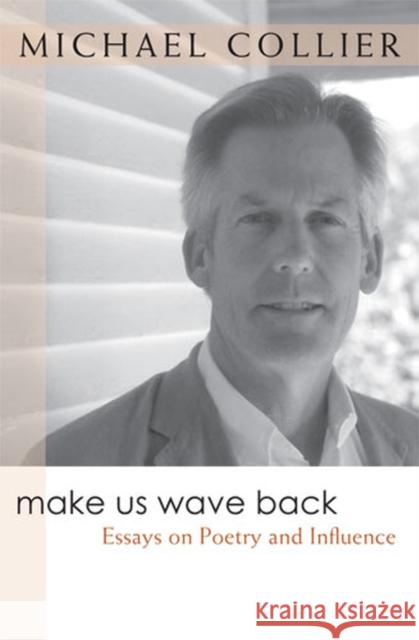
"Michael Collier's book is refreshing in its refusal to push for one particular aesthetic. He regards his own preference for realism over abstraction as more a matter of temperament than of considered judgment, and respects poets more skeptical than he is about the ability of poetry to connect with the world. The result is an engaging record of his influences and enthusiasms, which are wide enough to include both Whitman and Larkin, both Jorge Borges and William Maxwell."--Carl Dennis, Pulitzer Prize-winning author of Unknown Friends and Practical Gods "Michael...
"Michael Collier's book is refreshing in its refusal to push for one particular aesthetic. He regards his own preference for realism over abstraction ...
Michael Collier's poems are like a living film of the image of one's past. In rich detail, they bring to life the geography of childhood--commonplace events that have a unique texture of one's own--a dream of flying, a secret obsession, a school pageant, a jam session in the garage. The memories are folded into the heart, but with an inevitable sense of loss, a sense of capturing "the moment held in the air, the illusion of something whole, something true." Water and light are constant images in this book, apt conduits to the past. Memories are refracted "in the faces of old regrets." But...
Michael Collier's poems are like a living film of the image of one's past. In rich detail, they bring to life the geography of childhood--commonplace ...
Since issuing its first volumes in 1959, the Wesleyan poetry program has challenged the reigning aesthetic of the time and profoundly influenced the development of American poetry. One of the country's oldest programs, its greatest achievement has been the publication of early works by yet undiscovered poetry who have since become major awarded Pulitzer and Bollingen prizes, National Book Awards, and many other honors. At a time when other programs are being phased out, Wesleyan takes this opportunity to celebrate its distinguished history and reaffirm its commitment to poetry with...
Since issuing its first volumes in 1959, the Wesleyan poetry program has challenged the reigning aesthetic of the time and profoundly influenced the d...
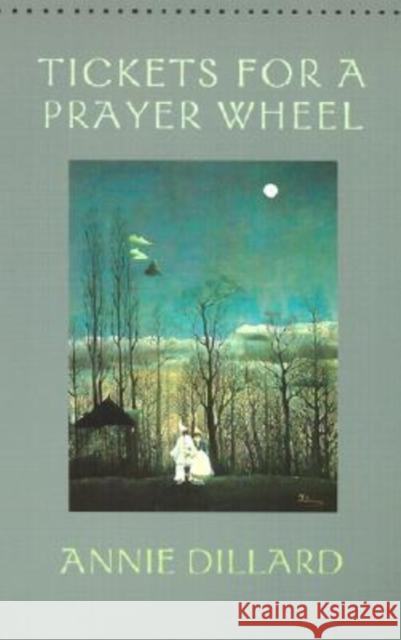
Best known for Pilgrim at Tinker Creek, her Pulitzer Prize-winning narrative on nature and eternity, Annie Dillard writes fiction and nonfiction, as well as poetry, that explore abstract and sensory phenomena, the role of the artist in society and the creative process. The poems gathered in Tickets for a Prayer Wheel, first published in 1974, show us that the concerns of the author have not changed since she was in her twenties. Hers is a poetry of fact -- of science and nature, eternity and time, and how we know what we know. Often commended for their precise imagery, these poems speak of...
Best known for Pilgrim at Tinker Creek, her Pulitzer Prize-winning narrative on nature and eternity, Annie Dillard writes fiction and nonfiction, as w...