Two epochal developments profoundly influenced the history of the Atlantic world between 1770 and 1870-the rise of women's rights activism and the drive to eliminate chattel slavery. The contributors to this volume, eminent scholars from a variety of disciplines, investigate the intertwining histories of abolitionism and feminism on both sides of the Atlantic during this dynamic century of change. They illuminate the many ways that the two movements developed together and influenced one another. Approaching a wide range of transnational topics, the authors ask how conceptions of slavery and...
Two epochal developments profoundly influenced the history of the Atlantic world between 1770 and 1870-the rise of women's rights activism and the dri...
W.E.B. Du Bois was one of the most profound and influential African American intellectuals of the 20th century. His tenacious engagement with racism, and his contributions to African American studies are well known. Yet scholarly attention to his work has been sporadic and uneven. This collection of essays is intended as both an addition and spur to the current renaissance of interest in Du Bois's work. Interpreting Du Bois's thoughts on race and culture in a broadly philosophical sense, this volume assembles essays by philosophers, literary critics, historians and sociologists in the field...
W.E.B. Du Bois was one of the most profound and influential African American intellectuals of the 20th century. His tenacious engagement with racism, ...
A medical thriller from Pulitzer Prize-winning author James B. Stewart about serial killer doctor Michael Swango and the medical community that chose to turn a blind eye on his criminal activities. No one could believe that the handsome young doctor might be a serial killer. Wherever he was hired--in Ohio, Illinois, New York, South Dakota--Michael Swango at first seemed the model physician. Then his patients began dying under suspicious circumstances. At once a gripping read and a hard-hitting look at the inner workings of the American medical system, Blind Eye describes a...
A medical thriller from Pulitzer Prize-winning author James B. Stewart about serial killer doctor Michael Swango and the medical community that chose ...
This collection of essays offers an interdisciplinary study of jazz and rap as they relate to black culture in America. Each essay offers insight and thoughtful discourse on these popular musical styles and their roles within the Black community.
This collection of essays offers an interdisciplinary study of jazz and rap as they relate to black culture in America. Each essay offers insight and ...
Throughout the Civil War era, no other white American spoke more powerfully against slavery and for the ideals of racial democracy than did Wendell Phillips. Nationally famous as "abolition's golden trumpet," Phillips became the North's most widely hailed public lecturer, even though he espoused ideas most regarded as deeply threatening -- the abolition of slavery, equality among races and classes, and women's rights. James Brewer Stewart's study resolves this seeming paradox by showing how Phillips came to possess such extraordinary rhetorical gifts, how he used them to shape the politics...
Throughout the Civil War era, no other white American spoke more powerfully against slavery and for the ideals of racial democracy than did Wendell...
How did racial prejudice originate and why has it been so deeply rooted in American culture? What have been the long-term effects of prejudice on the intellectual, communal, and psychological resources of African Americans? How might the nightmare of racial domination be truly brought to an end? Still pertinent today, these were among the key questions addressed more than a century and a half ago by Hosea Easton (1799--1837), an important yet long neglected activist and intellectual. A black minister from New England, Easton rose to prominence during the 1820s and 1830s by joining in the...
How did racial prejudice originate and why has it been so deeply rooted in American culture? What have been the long-term effects of prejudice on t...
Before the Civil War, slaveholders made themselves into the most powerful, most deeply rooted, and best organized private interest group within the United States. Not only did slavery represent the national economy's second largest capital investment, exceeded only by investment in real estate, but guarantees of its perpetuation were studded throughout the U.S. Constitution. The vast majority of white Americans, in North and South, accepted the institution, and pro-slavery presidents and congressmen consistently promoted its interests. In Abolitionist Politics and the Coming of the Civil...
Before the Civil War, slaveholders made themselves into the most powerful, most deeply rooted, and best organized private interest group within the...
William Lloyd Garrison (1805-79) was one of the most militant and uncompromising abolitionists in the United States. As the editor of the abolitionist paper The Liberator and cofounder of the American Anti-Slavery Society, Garrison spent most of his life arguing against slavery on strictly moral grounds. This engrossing book presents six essays that reevaluate Garrison's legacy, his accomplishments, and his limitations. Eminent scholars--David W. Blight, Bruce Laurie, James Brewer Stewart, Richard J. M. Blackett, and Lois A. Brown--and a distinguished journalist, Lloyd McKim...
William Lloyd Garrison (1805-79) was one of the most militant and uncompromising abolitionists in the United States. As the editor of the abolitionist...
Revised to include important new scholarship, James Brewer Stewart's eloquent survey of the abolitionist movement is also a superb analysis of how the antislavery movement reinforced and transformed the dominant features of pre-Civil War America. Revealing the wisdom and na vete of the crusaders' convictions and examining the social bases for their actions, Stewart demonstrates why, despite the ambiguity of its ultimate victory, abolition has left a profound imprint on our national memory.
Revised to include important new scholarship, James Brewer Stewart's eloquent survey of the abolitionist movement is also a superb analysis of how the...
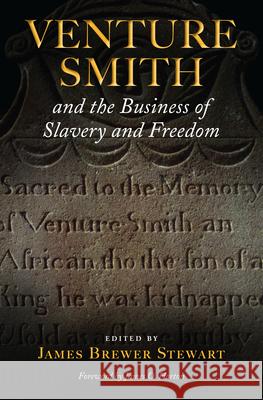
This title reconstructs the journey of an eighteenth-century African from enslavement through emancipation. This book originated in the summer of 2006, in the burial ground of the First Church of Christ, Congregational, of East Haddam, Connecticut, where a team of forensic scientists began excavating the graves of two emancipated slaves, Venture Smith (d. 1805) and his wife, Marget (d. 1809). Those requesting this remarkable disinterment were the Smiths' direct descendants, members of the eight, ninth tenth, and eleventh generations, who were determined to honor the bicentennial of their...
This title reconstructs the journey of an eighteenth-century African from enslavement through emancipation. This book originated in the summer of 2006...