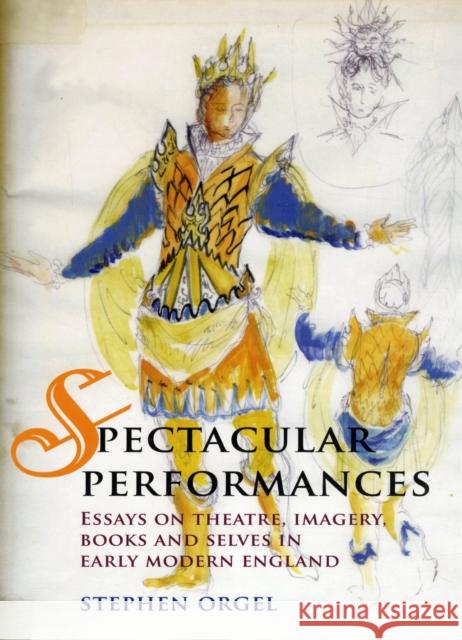
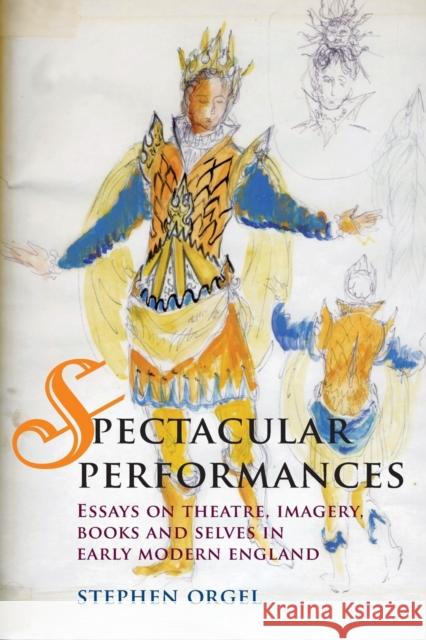
Why did Queen Elizabeth I compare herself with her disastrous ancestor Richard II? Why would Ben Jonson transform Queen Anne and her ladies into Amazons as entertainment for the pacifist King James? How do the concept of costume as high fashion and as self-fashioning, as disguise and as the very essence of theatre, relate to one other? How do portraits of poets help make the author readers want, and why should books, the embodiment of the word, be illustrated at all? What conventions connect image to text, and what impulses generated the great art collections of the early seventeenth century?...
Why did Queen Elizabeth I compare herself with her disastrous ancestor Richard II? Why would Ben Jonson transform Queen Anne and her ladies into Amazo...
Why did Queen Elizabeth I compare herself with her disastrous ancestor Richard II? Why would Ben Jonson transform Queen Anne and her ladies into Amazons as entertainment for the pacifist King James? How do the concepts of costume as high fashion and as self-fashioning, as disguise and as the very essence of theatre, relate to one other? How do portraits of poets help create the author that readers want, and why should books, the embodiment of the word, be illustrated at all? What conventions connect image to text, and what impulses generated the great art collections of the early seventeenth...
Why did Queen Elizabeth I compare herself with her disastrous ancestor Richard II? Why would Ben Jonson transform Queen Anne and her ladies into Amazo...
The fourteen essays in this collection explore the dominance of patronage in Renaissance politics, religion, theatre, and artistic life.
Originally published in 1982.
The Princeton Legacy Library uses the latest print-on-demand technology to again make available previously out-of-print books from the distinguished backlist of Princeton University Press. These editions preserve the original texts of these important books while presenting them in durable paperback and hardcover editions. The goal of the Princeton Legacy Library is to vastly increase access to the rich...
The fourteen essays in this collection explore the dominance of patronage in Renaissance politics, religion, theatre, and artistic life.
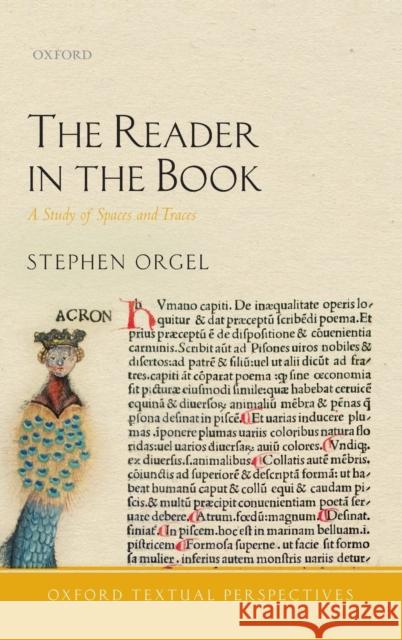
The Reader in the Book is concerned with a particular aspect of the history of the book, an archeology and sociology of the use of margins and other blank spaces. One of the most commonplace aspects of old books is the fact that people wrote in them, something that, until very recently, has infuriated modern collectors and librarians. But these inscriptions constitute a significant dimension of the book's history, and what readers did to books often added to their value. Sometimes marks in books have no relation to the subject of the book, merely names, dates, prices paid; blank...
The Reader in the Book is concerned with a particular aspect of the history of the book, an archeology and sociology of the use of margins an...
William Shakespeare A. R. Braunmuller Stephen Orgel
The acclaimed Pelican Shakespeare series edited by A. R. Braunmuller and Stephen Orgel The legendary Pelican Shakespeare series features authoritative and meticulously researched texts paired with scholarship by renowned Shakespeareans. Each book includes an essay on the theatrical world of Shakespeare's time, an introduction to the individual play, and a detailed note on the text used. Updated by general editors Stephen Orgel and A. R. Braunmuller, these easy-to-read editions incorporate over thirty years of Shakespeare scholarship undertaken since the original series, edited by...
The acclaimed Pelican Shakespeare series edited by A. R. Braunmuller and Stephen Orgel The legendary Pelican Shakespeare series features a...
The Reader in the Book is concerned with a particular aspect of the history of the book, an archeology and sociology of the use of margins and other blank spaces. One of the most commonplace aspects of old books is the fact that people wrote in them, something that, until very recently, has infuriated modern collectors and librarians. But these inscriptions constitute a significant dimension of the book's history, and what readers did to books often added to their value. Sometimes marks in books have no relation to the subject of the book, merely names, dates, prices paid; blank...
The Reader in the Book is concerned with a particular aspect of the history of the book, an archeology and sociology of the use of margins an...