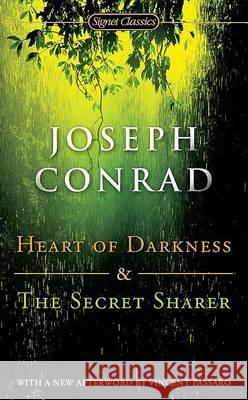
Heart of Darkness, a novel by Joseph Conrad, was originally a three-part series in Blackwood's Magazine in 1899. It is a story within a story, following a character named Charlie Marlow, who recounts his advanture to a group of men onboard an anchored ship. The story told is of his early life as a ferry boat captain. Although his job was to transport ivory downriver, Charlie develops an interest in investing an ivory procurement agent, Kurtz, who is employed by the government.
Heart of Darkness, a novel by Joseph Conrad, was originally a three-part series in Blackwood's Magazine in 1899. It is a story within a story, followi...
This volume presents all known Conrad letters from the years 1917-1919 (many of them published for the first time) in a framework highlighting their literary, historical, cultural, and biographical significance. His correspondence reveals his state of mind as he and his family dealt with the anxieties of the war time years, and the return to a fragile peace. During this time, Conrad published The Shadow-Line, The Arrow of Gold, and The Rescue, along with a considerable amount of shorter works, and was engaged in a critical rereading of his earlier books.
This volume presents all known Conrad letters from the years 1917-1919 (many of them published for the first time) in a framework highlighting their l...
In this pair of literary voyages into the inner self, Joseph Conrad has written two of the most chilling, disturbing, and noteworthy pieces of fiction of the twentieth century. Heart of Darkness is a devastating commentary on the corruptibility of humanity. Based on Conrad's own 1890 trip up the Congo River, the story is told by Marlow, the novelist's alter ego. It is a journey into darkness and horror--both literally, as the narrator descends into a sinister jungle landscape, and metaphorically, as he encounters the morally depraved Mr. Kurtz. The Secret Sharer is...
In this pair of literary voyages into the inner self, Joseph Conrad has written two of the most chilling, disturbing, and noteworthy pieces of fict...
Conrad was a Polish-born English novelist. His success is even more amazing since he did not learn to speak English until he was in his 20's. Conrad's narrative style places him at the beginning of the Modernist period of literature. This work of non-fiction describes Conrad's life of twenty years and his relationship with the sea. He talks of ships and their captains, storms, oceans and all aspects of a life at sea. This autobiography is a good beginning for an in depth study of Conrad's works and their relationship to his life in Poland and his love of the sea.
Conrad was a Polish-born English novelist. His success is even more amazing since he did not learn to speak English until he was in his 20's. Conrad's...
Conrad was a Polish-born English novelist. His success is even more amazing since he did not learn to speak English until he was in his 20's. Conrad's narrative style puts him at the beginning of the Modernist period of literature. Typhoon comes from Conrad's experiences on the sea. The story centers around the crew of a steamship in a storm. The hero is the captain whose strengh carries the crew through the adventure.
Conrad was a Polish-born English novelist. His success is even more amazing since he did not learn to speak English until he was in his 20's. Conrad's...
Also published as "The Duel, " Joseph Conrad's 1908 short novel "The Point of Honor" was adapted to film as the elegant "The Duellists, " Ridley Scott's 1977 film debut. Fans of the film will find Joseph Conrad's book a bit softer, but no less entertaining, than the brutal, uncompromising Napoleonic-era vendetta of animalistic Feraud against gentle, sensitive D'Hubert. A "point of honor" is defined as a "concern that seriously affects the perception of your honor," yet it is hard to discern which point of honor began the twenty-year series of duels between the two officers. Reportedly based...
Also published as "The Duel, " Joseph Conrad's 1908 short novel "The Point of Honor" was adapted to film as the elegant "The Duellists, " Ridley Scott...
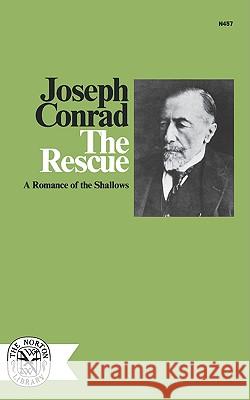
The Rescue was originally published in 1920; it concludes what is sometimes referred to as The Lingard Trilogy, a group of novels based on Conrad's experience as mate on the steamer, Vidar. Although it was the last of the three novels to be published, after Almayer's Folly (1895) and An Outcast of the Islands (1896), the events related in the novel precede those. The Rescue is a tersely written adventure novel with all the power and scope one would expect from Joseph Conrad.
The Rescue was originally published in 1920; it concludes what is sometimes referred to as The Lingard Trilogy, a group of novels based on Conrad's ex...
A legally blind Captain must continue to pilot his ship in order to provide for his family. As with all of Conrad's work The End of the Tether takes place in a bleak uncaring universe where tragedy is just around the corner.
A legally blind Captain must continue to pilot his ship in order to provide for his family. As with all of Conrad's work The End of the Tether takes p...
The Rescue was originally published in 1920; it concludes what is sometimes referred to as The Lingard Trilogy, a group of novels based on Conrad's experience as mate on the steamer, Vidar. Although it was the last of the three novels to be published, after Almayer's Folly (1895) and An Outcast of the Islands (1896), the events related in the novel precede those. The Rescue is a tersely written adventure novel with all the power and scope one would expect from Joseph Conrad.
The Rescue was originally published in 1920; it concludes what is sometimes referred to as The Lingard Trilogy, a group of novels based on Conrad's ex...