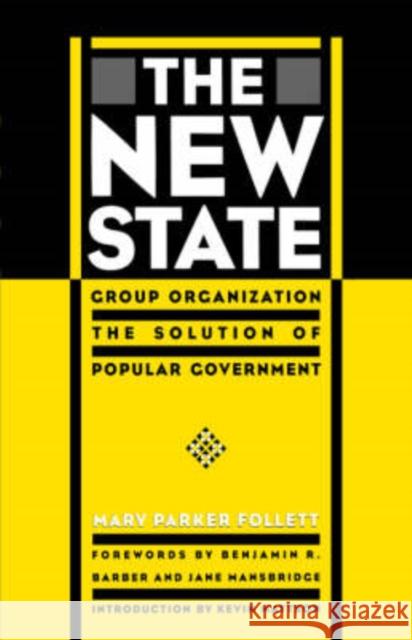
Having organized neighborhood discussion groups before World War I, Follett traces the dynamics she noticed in these forums and develops some core concepts useful for those working on questions of public deliberation today. She also shows how deliberation informs debates that raged in political theory during her own era. She discusses the works of pluralists (Harold Laski), idealists (T. H. Green and Bernard Bosanquet), and pragmatists (William James) and makes important arguments about the relationship between socialism and democracy. Her work is marked by rigorous thinking about the...
Having organized neighborhood discussion groups before World War I, Follett traces the dynamics she noticed in these forums and develops some core ...
Polarization. Partisanship. Rancor. Character assassinations. Government shutdowns. Why can't our elected officials just get along and do their jobs?
The United States was once seen as a land of broad consensus and pragmatic politics. Sharp ideological differences were largely absent. But today politics in America is dominated by intense party polarization and limited agreement among legislative representatives on policy problems and solutions.
Americans pride themselves on their community spirit, civic engagement, and dynamic society. Yet, as the editors of this volume...
Polarization. Partisanship. Rancor. Character assassinations. Government shutdowns. Why can't our elected officials just get along and do their job...