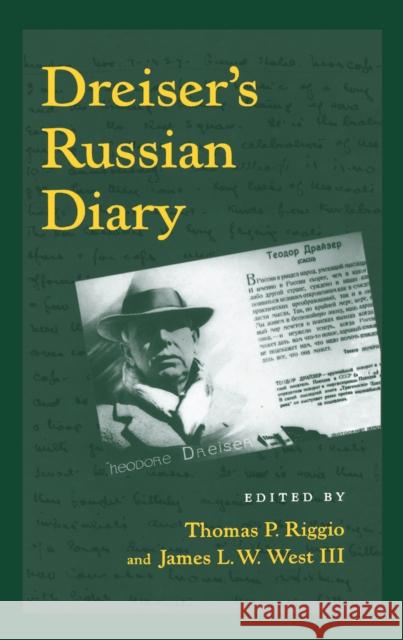
Theodore Dreiser's Russian Diary is an extended record of the American writer's travels throughout the Soviet Union in 1927-28. Dreiser was initially invited to Moscow for a week-long observance of the tenth anniversary of the October Revolution. He asked, and was granted, permission to make an extended tour of the country.
This previously unpublished diary is a firsthand record of life in the USSR during the 1920s as seen by a leading American cultural figure. It is a valuable primary source, surely among the last from this period of modern history.
Theodore Dreiser's Russian Diary is an extended record of the American writer's travels throughout the Soviet Union in 1927-28. Dreiser was ...
"It has long been known that Dreiser devoted much effort during the final two decades of his lfe to the preparation of a major philosophical work which remained unfinished at his death....The best evidence of Dreiser's later thought would appear to be t]his treatise, and it is appropriate that Marguerite Tjader and John J. McAleer--the two Dreiserians most sympathetic to the mystical religiosity of the later Dreiser--should make it available in published form." --American Literary Realism
"It has long been known that Dreiser devoted much effort during the final two decades of his lfe to the preparation of a major philosophical work w...
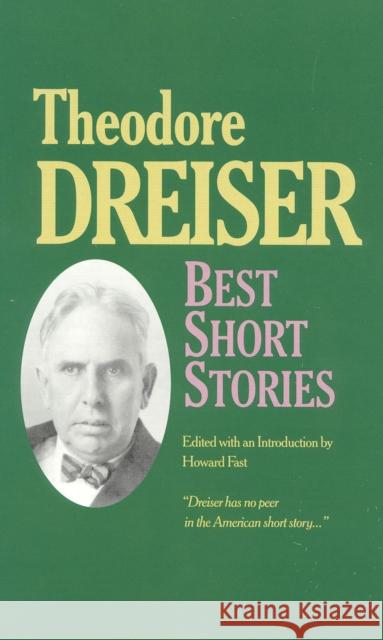
This extraordinary collection of short stories reminds us how great a talent Dreiser was. A giant among American writers, he fought throughout his career to capture life in realistic terms. In his stories as well as his celebrated novels, he sought to uncover the problems of common Americans at the turn of the century--their struggles with society and their dreams of power and wealth against a backdrop of threatening poverty. "Dreiser has no peer in the American short story....As fine as his novels are, they do not attain the artistic wholeness of his short tales. Among the moderns, there is...
This extraordinary collection of short stories reminds us how great a talent Dreiser was. A giant among American writers, he fought throughout his car...
1914. American author, outstanding representative of naturalism, whose novels depict real-life subjects in a harsh light. Dreiser's books were held to be amoral, and he battled throughout his career against censorship and popular taste. This is the second of a three book series, the first being The Financier, which continues the saga of Frank Cowperwood's quest for power and wealth through the use of financial acumen. The novel can also be viewed as a fictionalized history lesson of the tactics employed by the political and financial shakers and movers of that period. See other titles by this...
1914. American author, outstanding representative of naturalism, whose novels depict real-life subjects in a harsh light. Dreiser's books were held to...
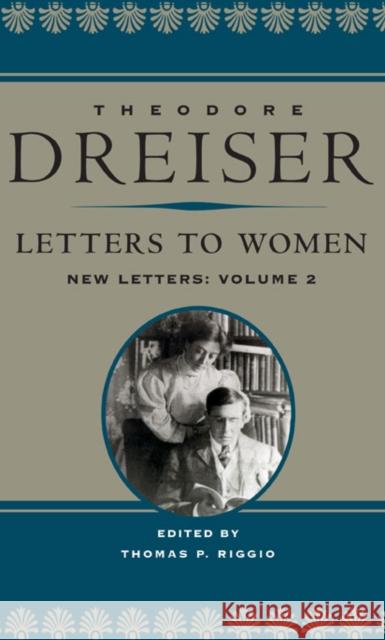
Theodore Dreiser led a long and controversial life, almost always pursuing some serious question, and not rarely pursuing women. This collection, the second volume of Dreiser correspondence to be published by the University of Illinois Press, gathers previously unpublished letters Dreiser wrote to women between 1893 and 1945, many of them showing personal feelings Dreiser revealed nowhere else. Here he both preens and mocks himself, natters and scolds, relates his jaunts with Mencken and his skirmishes with editors and publishers. He admits his worries, bemoans his longings, and...
Theodore Dreiser led a long and controversial life, almost always pursuing some serious question, and not rarely pursuing women. This collection, t...
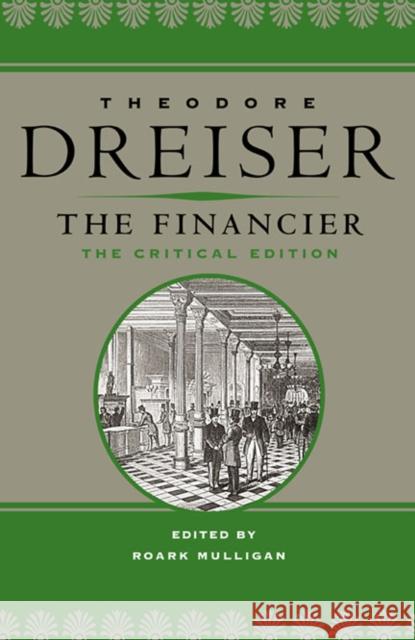
First published in 1912, Theodore Dreiser's third novel, "The Financier, " captures the ruthlessness and sparkle of the Gilded Age alongside the charismatic amorality of the power brokers and bankers of the mid-nineteenth century. This volume is the first modern edition of "The Financier" to draw on the uncorrected page proofs of the original 1912 version, which established Dreiser as a master of the American business novel. The novel was the first volume of Dreiser s Trilogy of Desire, also known as the Cowperwood Trilogy, which includes "The Titan" (1914) and "The Stoic" (1947). Dreiser...
First published in 1912, Theodore Dreiser's third novel, "The Financier, " captures the ruthlessness and sparkle of the Gilded Age alongside the chari...
This is a pre-1923 historical reproduction that was curated for quality. Quality assurance was conducted on each of these books in an attempt to remove books with imperfections introduced by the digitization process. Though we have made best efforts - the books may have occasional errors that do not impede the reading experience. We believe this work is culturally important and have elected to bring the book back into print as part of our continuing commitment to the preservation of printed works worldwide.
This is a pre-1923 historical reproduction that was curated for quality. Quality assurance was conducted on each of these books in an attempt to remov...
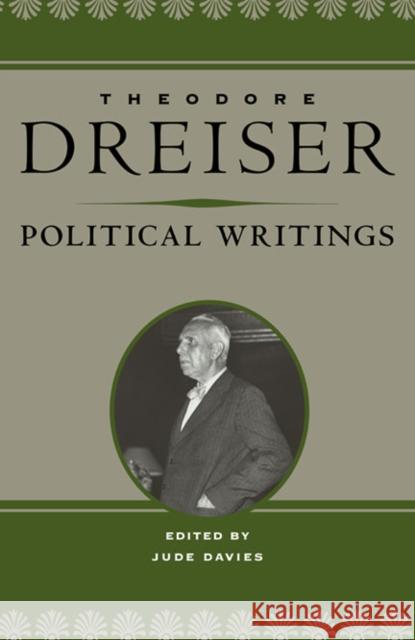
Theodore Dreiser staked his reputation on fearless expression in his fiction, but he never was more outspoken than when writing about American politics, which he did prolifically. Although he is remembered primarily as a novelist, the majority of his twenty-seven books were nonfiction treatises.To Dreiser, everything was political. His sense for the hype and hypocrisies of politics took shape in reasoned but emphatic ruminations in his fiction and nonfiction on the hopes and disappointments of democracy, the temptations of nationalism and communism, the threat and trumpets of war, and the...
Theodore Dreiser staked his reputation on fearless expression in his fiction, but he never was more outspoken than when writing about American politic...