From the publication of his first book in 1926, Langston Hughes was America's acknowledged poet of color, the first to commemorate the experience--and suffering--of African-Americans in a voice that no reader, black or white, could fail to hear. In this, his last collection of verse, Hughes's voice is more pointed than ever before, as he explicitly addresses the racial politics of the sixties in such pieces as -Prime, - -Motto, - -Dream Deferred, - -Frederick Douglas: 1817-1895, - -Still Here, - -Birmingham Sunday.- - History, - -Slave, - -Warning, - and -Daybreak in Alabama.- Sometimes...
From the publication of his first book in 1926, Langston Hughes was America's acknowledged poet of color, the first to commemorate the experience--and...
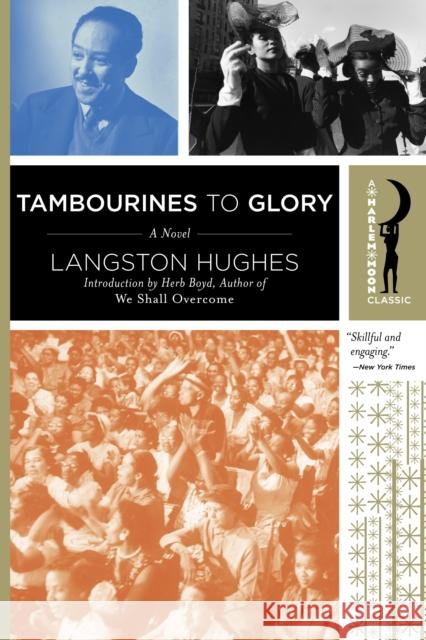
For every bustling jazz joint that opened in Korean War era Harlem, a new church seemed to spring up. Tambourines to Glory introduces you to an unlikely team behind a church whose rock was the curb at 126th and Lenox. Essie Belle Johnson and Laura Reed live in adjoining tenement flats, adrift on public relief. Essie wants to somehow earn enough money to reunite with her daughter and provide her with a nice home; Laura loves young men, mink coats, and fine Scotch. On a day of inspiration, the friends decide to use a thrift-store tambourine and a layaway Bible to start a church....
For every bustling jazz joint that opened in Korean War era Harlem, a new church seemed to spring up. Tambourines to Glory introduces you to an...
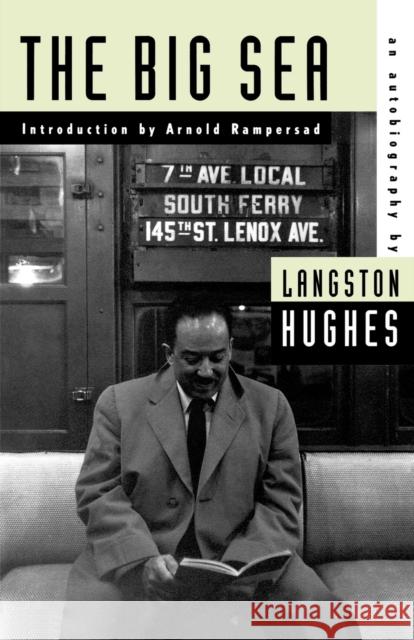
Langston Hughes, born in 1902, came of age early in the 1920s. In The Big Sea he recounts those memorable years in the two great playgrounds of the decade--Harlem and Paris. In Paris he was a cook and waiter in nightclubs. He knew the musicians and dancers, the drunks and dope fiends. In Harlem he was a rising young poet--at the center of the "Harlem Renaissance."
Arnold Rampersad writes in his incisive new introduction to The Big Sea, an American classic: "This is American writing at its best--simpler than Hemingway; as simple...
Introduction by Arnold Rampersad.
Langston Hughes, born in 1902, came of age early in the 1920s. In The Big Sea he recounts those memo...
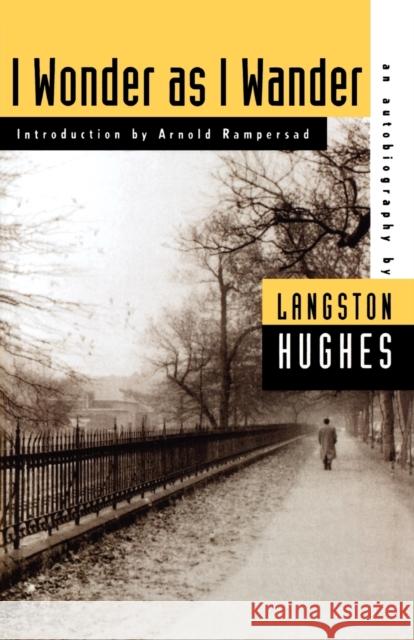
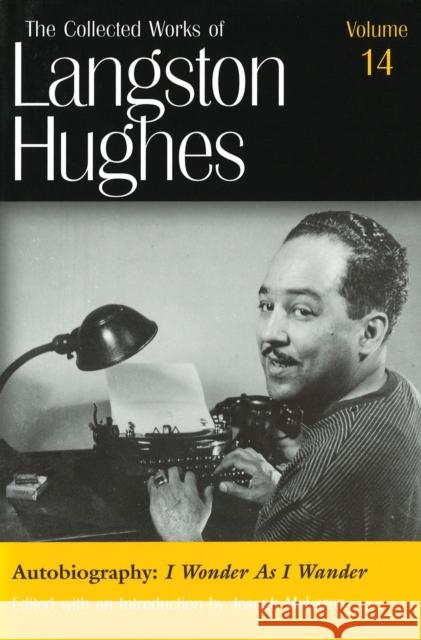
In I Wonder as I Wander, Langston Hughes vividly recalls the most dramatic and intimate moments of his life in the turbulent 1930s.
His wanderlust leads him to Cuba, Haiti, Russia, Soviet Central Asia, Japan, Spain (during its Civil War), through dictatorships, wars, revolutions. He meets and brings to life the famous and the humble, from Arthur Koestler to Emma, the Black Mammy of Moscow. It is the continuously amusing, wise revelation of an American writer journeying around the often strange and always exciting world he loves.
In I Wonder as I Wander, Langston Hughes vividly recalls the most dramatic and intimate moments of his life in the turbulent 1930s.
Langston Hughes Akiba Sullivan Harper Arnold Rampersad
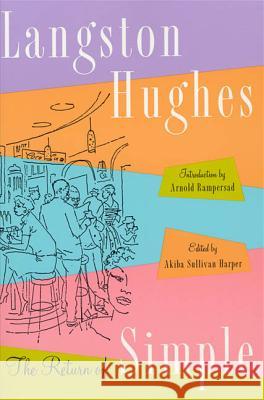
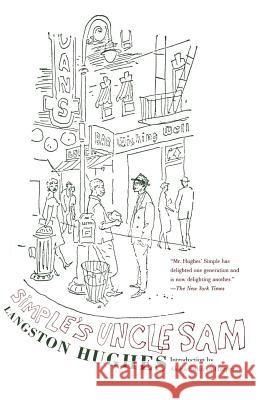
Jesse B. Simple, Simple to his fans, made weekly appearances beginning in 1943 in Langston Hughes' column in the Chicago Defender. Simple may have shared his readers feelings of loss and dispossession, but he also cheered them on with his wonderful wit and passion for life.
Jesse B. Simple, Simple to his fans, made weekly appearances beginning in 1943 in Langston Hughes' column in the Chicago Defender. Simple may have ...
Langston Hughes's most beloved character comes back to life in this extraordinary collection
Langston Hughes is best known as a poet, but he was also a prolific writer of theater, autobiography, and fiction. None of his creations won the hearts and minds of his readers as did Jesse B. Semple, better known as "Simple." Simple speaks as an Everyman for African Americans in Uncle Sam's America. With great wit, he expounds on topics as varied as women, Gospel music, and sports heroes--but always keeps one foot planted in the realm of politics and race. In recent years, readers have been...
Langston Hughes's most beloved character comes back to life in this extraordinary collection
Langston Hughes is best known as a poet, but he ...
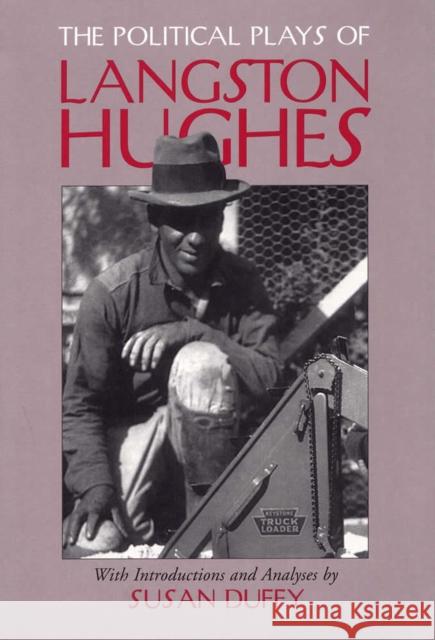
Among the most influential poets of the Harlem Renaissance, Langston Hughes is perhaps best remembered for the innovative use of jazz rhythms in his writing. While his poetry and essays received much public acclaim and scholarly attention, Hughes dramas are relatively unknown. Only five of the sixty-three plays Hughes scripted alone or collaboratively have been published (in 1963).
Published here, for the first time, are four of Hughes most poignant, poetic, and political dramas, "Scottsboro Limited," "Harvest "(also known as "Blood on the Fields"), "Angelo Herndon Jones," and "De...
Among the most influential poets of the Harlem Renaissance, Langston Hughes is perhaps best remembered for the innovative use of jazz rhythms in hi...
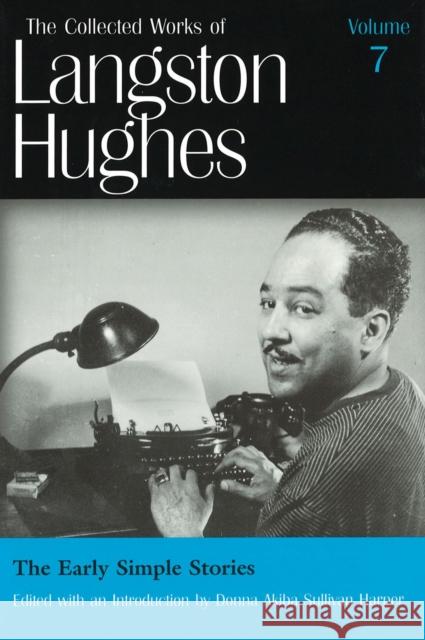
Jesse B. Semple first sprang to life in Langston Hughes's weekly "Chicago Defender" column in 1943. Almost immediately, the "Simple stories," as they were routinely called, had a large and ever-increasing audience. Simple soon became Harlem's Everyman an ordinary black workingman, representative of the masses of black folks in the 1940s.
Simple had migrated to Harlem, like many other blacks, seeking to escape the racism of the South, and he celebrated his new freedoms despite the economic struggles he still confronted. Simple's bar buddy and foil in the stories is the better-educated,...
Jesse B. Semple first sprang to life in Langston Hughes's weekly "Chicago Defender" column in 1943. Almost immediately, the "Simple stories," as th...
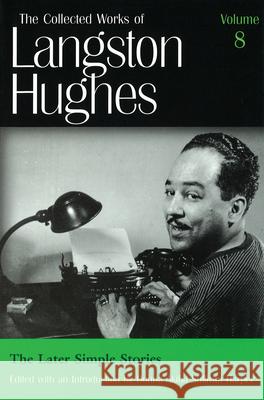
In Volume 8 of "The Collected Works of Langston Hughes, " the genial Harlem everyman, Jesse B. Semple returns with his more cosmopolitan bar buddy, Ananias Boyd. Social climber Joyce Lane is now Mrs. Jesse B. Semple, and Simple has minimized his flirtatious contacts with other women. Despite these ongoing characters, the later Simple stories are very different from the earlier Simple tales. The later stories evoke the historical and social context within which they were written, a politically dangerous time for the fictional adventures and fantasies of the main characters.
"The Later...
In Volume 8 of "The Collected Works of Langston Hughes, " the genial Harlem everyman, Jesse B. Semple returns with his more cosmopolitan bar buddy,...
I Wonder As I Wander (1956), Hughes's second volume of autobiography, is a continuation from The Big Sea, detailing his global travels to such areas as Cuba, Haiti, Paris, the Soviet Union, and the Far East. It culminates in his 1937 coverage for the Baltimore Afro-American of the Spanish Civil War. The travelogue highlights the beginning of Hughes's career as a journalist, a further realization of his goal to live as a professional writer. Furthermore, it shows the influence of legendary black educator Mary McLeod Bethune, who inspired Hughes to travel through the...
I Wonder As I Wander (1956), Hughes's second volume of autobiography, is a continuation from The Big Sea, detailing his global trave...