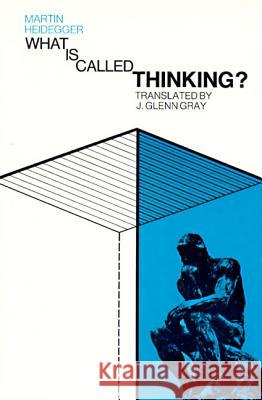
"For an acquaintance with the thought of Heidegger, What Is Called Thinking? is as important as Being and Time. It is the only systematic presentation of the thinker's late philosophy and . . . it is perhaps the most exciting of his books."--Hannah Arendt
"For an acquaintance with the thought of Heidegger, What Is Called Thinking? is as important as Being and Time. It is the only syste...
Poetry, Language, Thought collects Martin Heidegger's pivotal writings on art, its role in human life and culture, and its relationship to thinking and truth. Essential reading for students and anyone interested in the great philosophers, this book opens up appreciation of Heidegger beyond the study of philosophy to the reaches of poetry and our fundamental relationship to the world. Featuring "The Origin of the Work of Art," a milestone in Heidegger's canon, this enduring volume provides potent, accessible entry to one of the most brilliant thinkers of modern times.
Poetry, Language, Thought collects Martin Heidegger's pivotal writings on art, its role in human life and culture, and its relationship to...
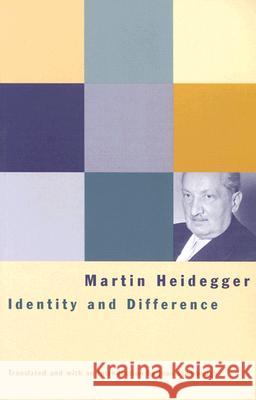
Identity and Difference consists of English translations and the original German versions of two little-known lectures given in 1957 by Martin Heidegger, "The Principle of Identity" and "The Onto-theo-logical Constitution of Metaphysics." Both lectures discuss the difficult problem of the nature of identity in the history of metaphysics. A helpful introduction and a list of references are also provided by the translator, Joan Stambaugh.
Identity and Difference consists of English translations and the original German versions of two little-known lectures given in 1957 by Martin ...
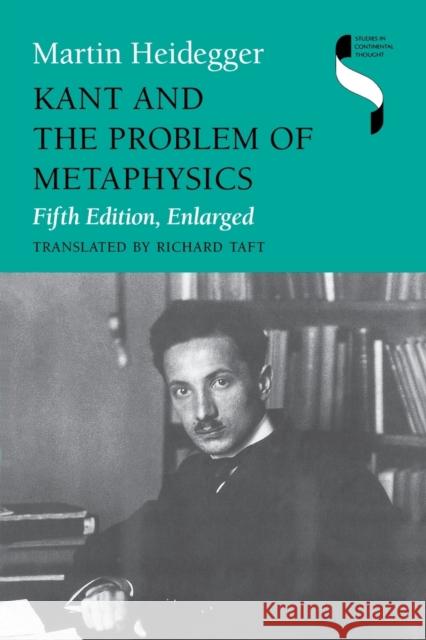
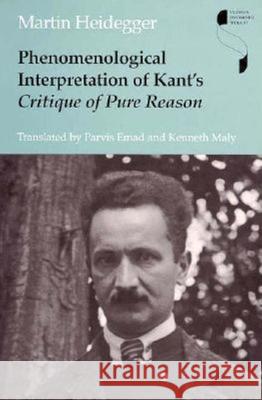
Since its original publication in 1929, Martin Heidegger's provocative book on Kant's Critique of Pure Reason has attracted much attention both as an important contribution to twentieth-century Kant scholarship and as a pivotal work in Heidegger's own development after Being and Time. This fifth, enlarged edition includes marginal notations made by Heidegger in his personal copy of the book and four new appendices--Heidegger's postpublication notes on the book, his review of Ernst Cassirer's Philosophy of Symbolic Forms, Heidegger's response to reviews by rudolf Odebrecht and Cassirer, and...
Since its original publication in 1929, Martin Heidegger's provocative book on Kant's Critique of Pure Reason has attracted much attention both as ...
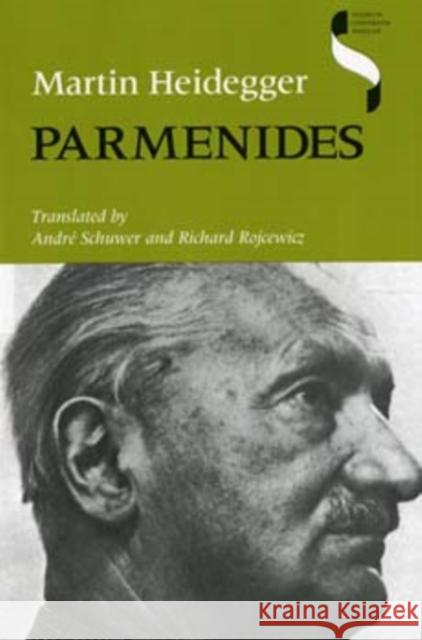
Parmenides, a lecture course delivered by Martin Heidegger at the University of Freiburg in 1942-1943, presents a highly original interpretation of ancient Greek philosophy. A major contribution to Heidegger s provocative dialogue with the pre-Socratics, the book attacks some of the most firmly established conceptions of Greek thinking and of the Greek world. The central theme is the question of truth and the primordial understanding of truth to be found in Parmenides' "didactic poem." Heidegger highlights the contrast between Greek and Roman thought and the reflection of that contrast in...
Parmenides, a lecture course delivered by Martin Heidegger at the University of Freiburg in 1942-1943, presents a highly original interpretation of...
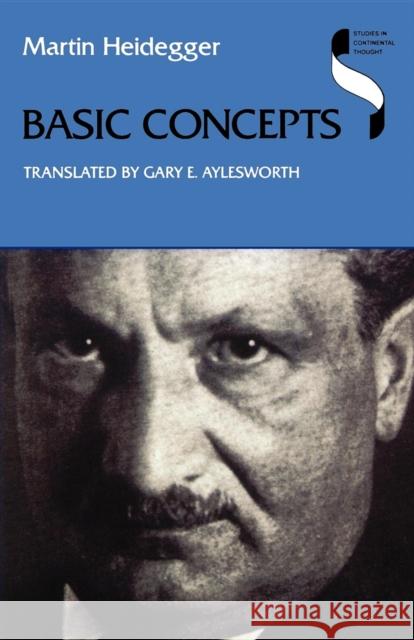
Basic Concepts, one of the first texts to appear in English from the critical later period of Martin Heidegger's thought, strikes out in new directions. First published in German in 1981 as Grundbegriffe (volume 51 of Martin Heidegger's Collected Works), it is the text of a lecture course that Heidegger gave at Freiburg in the winter semester of 1941 during the phase of his thinking known as the "turning." In this translation, Heidegger shifted his attention from the problem of the meaning of being to the question of the truth of being. In this lucid translation by Gary E. Aylesworth,...
Basic Concepts, one of the first texts to appear in English from the critical later period of Martin Heidegger's thought, strikes out in new direct...
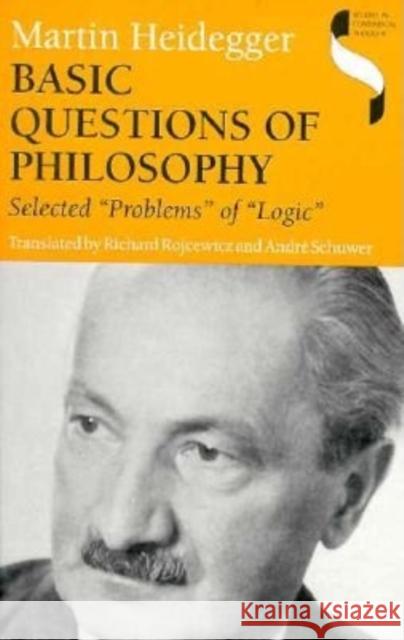
First published in German in 1984 as volume 45 of Martin Heidegger's collected works, this book is the first English translation of a lecture course he presented at the University of Freiburg in 1937-1938. Heidegger's task here is to reassert the question of the essence of truth, not as a "problem" or as a matter of "logic," but precisely as a genuine philosophical question, in fact the one basic question of philosophy. Thus, this course is about the essence of truth and the essence of philosophy. On both sides Heidegger draws extensively upon the ancient Greeks, on their understanding of...
First published in German in 1984 as volume 45 of Martin Heidegger's collected works, this book is the first English translation of a lecture cours...
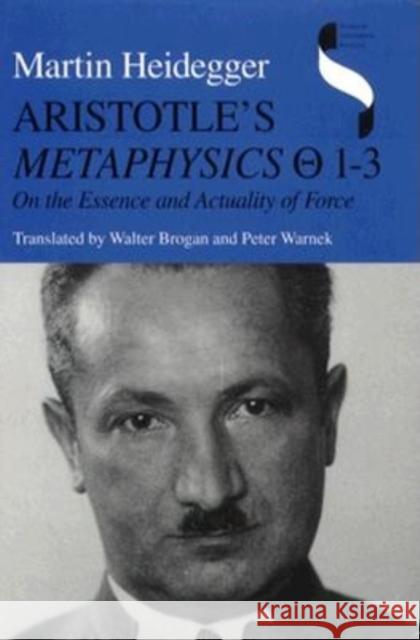
Martin Heidegger s reading of Aristotle was one of the pivotal influences in the development of his philosophy. First published in German in 1981 as volume 33 of Heidegger's Collected Works, this book translates a lecture course he presented at the University of Freiburg in 1931. Heidegger's careful translation and his probing commentary on the first three chapters of Book IX of Metaphysics show the close correlation between his phenomenological interpretation of the Greeks (especially of Aristotle) and his critique of metaphysics. Additionally, Heidegger's confrontation with Aristotle's...
Martin Heidegger s reading of Aristotle was one of the pivotal influences in the development of his philosophy. First published in German in 1981 a...
The text of Martin Heidegger's 1927-28 university lecture course on Emmanuel Kant's Critique of Pure Reason presents a close interpretive reading of the first two parts of this masterpiece of modern philosophy. In this course, Heidegger continues the task he enunciated in Being and Time as the problem of dismatling the history of ontology, using temporality as a clue. Within this context the relation between philosophy, ontology, and fundamental ontology is shown to be rooted in the genesis of the modern mathematical sciences. Heidegger demonstrates that objectification of beings as beings...
The text of Martin Heidegger's 1927-28 university lecture course on Emmanuel Kant's Critique of Pure Reason presents a close interpretive reading o...