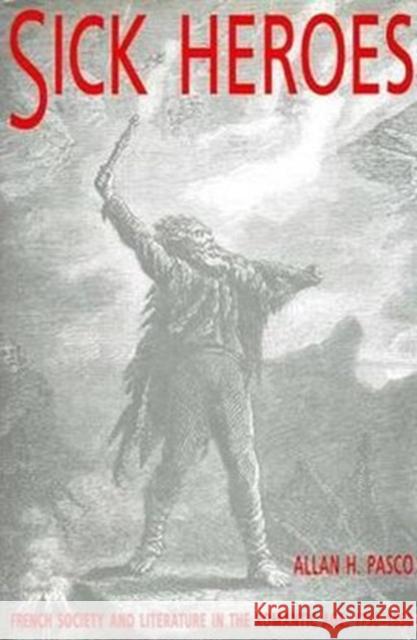
Sick Heroes examines the cultural practices that created those remarkably offensive, though strangely appealing, romantic heroes that appeared in European and especially in French literature in the latter half of the eighteenth century. Romanticism has long been considered a literary movement, but Pasco broadens its scope and suggests that it was a cultural reality born of widespread social factors and sustained by a mass market for novels, poems and plays that popularized attitudes and behaviour.
Sick Heroes examines the cultural practices that created those remarkably offensive, though strangely appealing, romantic heroes that appeared in Euro...
Sick Heroes examines the cultural practices that created those remarkably offensive, though strangely appealing, romantic heroes that appeared in European and especially in French literature in the latter half of the eighteenth century. Romanticism has long been considered a literary movement, but Pasco broadens its scope and suggests that it was a cultural reality born of widespread social factors and sustained by a mass market for novels, poems and plays that popularized attitudes and behaviour.
Sick Heroes examines the cultural practices that created those remarkably offensive, though strangely appealing, romantic heroes that appeared in Euro...
Pasco analyzes innovative nineteenth- and twentieth-century French works to suggest a definition of the novel, in all of its variations and difficulties: a relatively long, artistically designed, prose fiction. He permits literary aficionados to reevaluate novels through comparisons with other genres and both recent and former traditions.
Pasco analyzes innovative nineteenth- and twentieth-century French works to suggest a definition of the novel, in all of its variations and difficulti...
Pasco analyzes innovative nineteenth- and twentieth-century French works to suggest a definition of the novel, in all of its variations and difficulties: a relatively long, artistically designed, prose fiction. He permits literary aficionados to reevaluate novels through comparisons with other genres and both recent and former traditions.
Pasco analyzes innovative nineteenth- and twentieth-century French works to suggest a definition of the novel, in all of its variations and difficulti...