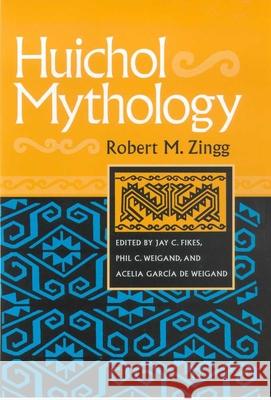
Best known for their ritual use of peyote, the Huichol people of west-central Mexico carried much of their original belief system into the twentieth century unadulterated by the influence of Christian missionaries. Among the Huichol, reciting myths and performing rituals pleases the ancestors and helps maintain a world in which abundant subsistence and good health are assured. This volume is a collection of myths recorded by Robert Zingg in 1934 in the village of Tuxpan and is the most comprehensive record of Huichol mythology ever published. Zingg was the first professional...
Best known for their ritual use of peyote, the Huichol people of west-central Mexico carried much of their original belief system into the twentieth c...
Because the archaeology of West Mexico has received little attention from researchers, large segments of the region's prehistoric ceramic sequences have long remained incomplete. This book goes far toward filling that gap by analyzing a collection of potsherds excavated in the 1960s and housed since then, though heretofore unanalyzed, at UCLA. The authors employ the rarely used statistical technique known as correspondence analysis to sequence the Long-Glassow collection of artifacts.
The book explains how correspondence analysis works and how it can be applied in archaeology. In...
Because the archaeology of West Mexico has received little attention from researchers, large segments of the region's prehistoric ceramic sequences...
The Anthropological Papers of the University of Arizona is a peer-reviewed monograph series sponsored by the School of Anthropology. Established in 1959, the series publishes archaeological and ethnographic papers that use contemporary method and theory to investigate problems of anthropological importance in the southwestern United States, Mexico, and related areas.
The Anthropological Papers of the University of Arizona is a peer-reviewed monograph series sponsored by the School of Anthropology. Established in 19...