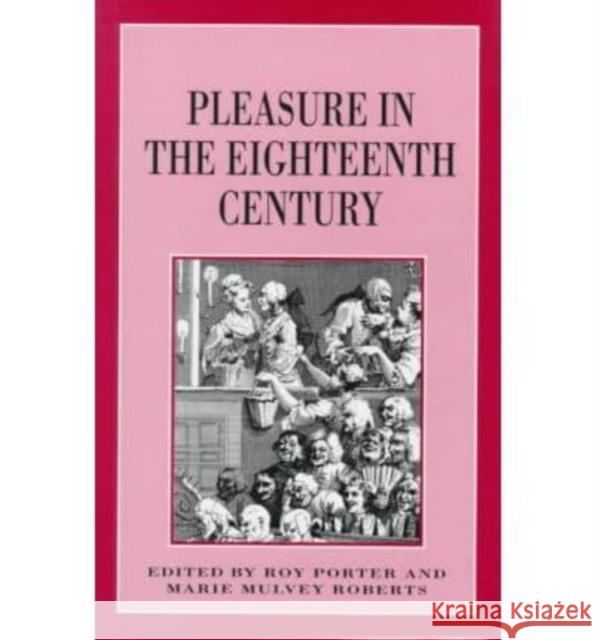
Pleasure, wrote Oscar Wilde, is the only thing worth having a theory about. In Pleasure in the Eighteenth Century, Roy Porter and Marie Mulvey Roberts question the idea of pleasure as unmediated, natural experience. To what extent was pleasure stage-managed to make it socially, morally, and politically acceptable?
Taking its cue from Michel Foucault, this volume represents a stunning example of the pleasures of analysis, a place where discourse about pleasure is a pleasure in its own right. From cross-dressing to feasting, music to charity work, the essays in this volume probe the...
Pleasure, wrote Oscar Wilde, is the only thing worth having a theory about. In Pleasure in the Eighteenth Century, Roy Porter and Marie Mulvey Robe...
The study of past society in terms of what it consumes rather than what it produces is - relatively speaking - a new development. The focus on consumption changes the whole emphasis and structure of historical enquiry. While human beings usually work within a single trade or industry as producers, as, say, farmers or industrial workers, as consumers they are active in many different markets or networks. And while history written from a production viewpoint has, by chance or design, largely been centred on the work of men, consumption history helps to...
The study of past society in terms of what it consumes rather than what it produces is - relatively speaking - a new development. Th...
First published in 1992, this book explores how we come to hold our present attitudes towards health, sickness and the medical profession. Roy Porter argues that the outlook of the age of Enlightenment was crucially important in the creation of modern thinking about disease, doctors and society. To illustrate this viewpoint, he focuses on Thomas Beddoes, a prominent doctor of the eighteenth century and examines his challenging, pugnacious, radical and often amusing views on a wide range of issues concerning the place of illness and medicine in society. Many modern debates in medicine...
First published in 1992, this book explores how we come to hold our present attitudes towards health, sickness and the medical profession. Roy Port...