One of the most innovative and respected figures of his literary generation in Europe, Hans Magnus Enzensberger (1929- ) has also become a major presence in international debates about literature and social change. The first English-language study of this influential literary figure, Poetic Maneuvers considers Enzensberger's poetical texts as part of a larger project to create a venue for intellectual reflection. From the first, Enzensberger resisted the marginalization of literature--particularly poetry--by connecting it with ethical imperatives of the post-Holocaust era. Charlotte Ann...
One of the most innovative and respected figures of his literary generation in Europe, Hans Magnus Enzensberger (1929- ) has also become a major prese...
Dividing his youth between the United States and the bilingual Alsace-Lorraine, Eugene Jolas (1894-1952) flourished in three languages. As an editor and poet, he came to know the major writers and artists of his time and enjoyed a pivotal position between the Anglo-American and Continental avant-garde. His editorship of transition, the leading avant-garde journal of Paris in the twenties and early thirties, provided a major impetus to writers from James Joyce (whose "Finnegans Wake" was serialized in transition) to Gertrude Stein, and Samuel Beckett, with first translations of Andre Breton,...
Dividing his youth between the United States and the bilingual Alsace-Lorraine, Eugene Jolas (1894-1952) flourished in three languages. As an editor a...
Among the avant-garde of the early twentieth century, the German movement remains one of the least understood in the current avant-garde and modernism debates. Rainer Rumold fills this gap with the first large-scale reassessment of the heyday and afterlife of German expressionist and Dada productions as a prolonged crisis of literary culture.
Among the avant-garde of the early twentieth century, the German movement remains one of the least understood in the current avant-garde and modernism...
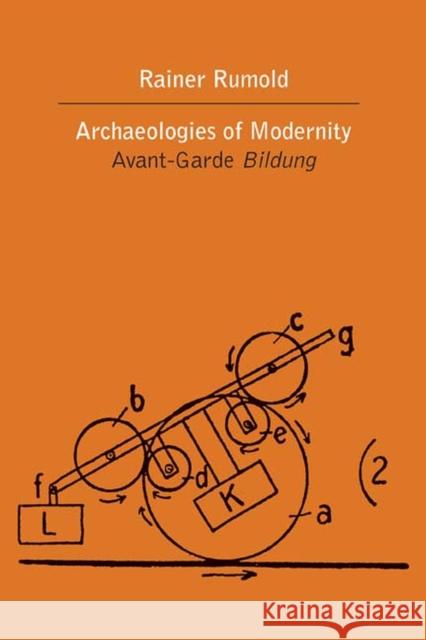
"Archaeologies of Modernity "explores the shift from the powerful tradition of literary forms of "Bildung" the education of the individual as the self to the visual forms of Bildung (from "Bild") that characterize German modernism and the European avant-garde. Interrelated chapters examine the work of Franz Kafka, Jean/Hans Arp, Walter Benjamin, and Carl Einstein, and of artists such as Oskar Kokoschka or Kurt Schwitters, in the light of the surge of an autoformation ("Bildung") of verbal and visual images at the core of expressionist and surrealist aesthetics and the art that followed. In...
"Archaeologies of Modernity "explores the shift from the powerful tradition of literary forms of "Bildung" the education of the individual as the s...
One of the most innovative and respected figures of his literary generation in Europe, Hans Magnus Enzensberger (1929- ) has also become a major presence in international debates about literature and social change. The first English-language study of this influential literary figure, Poetic Maneuvers considers Enzensberger's poetical texts as part of a larger project to create a venue for intellectual reflection. From the first, Enzensberger resisted the marginalization of literature--particularly poetry--by connecting it with ethical imperatives of the post-Holocaust era. Charlotte Ann...
One of the most innovative and respected figures of his literary generation in Europe, Hans Magnus Enzensberger (1929- ) has also become a major prese...
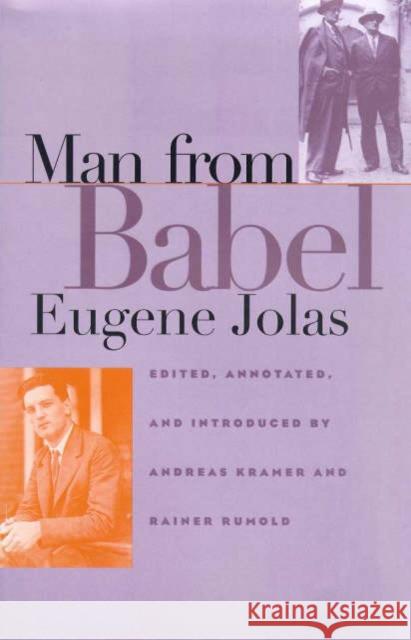
The autobiography of Eugene Jolas, available for the first time nearly half a century after his death in 1952, is the story of a man who, as the editor of the expatriate American literary magazine transition, was the first publisher of James Joyce's Finnegans Wake and other signal works of the modernist period. Jolas's memoir provides often comical and compelling details about such leading modernist figures as Joyce, Stein, Hemingway, Breton, and Gide, and about the political, aesthetic, and social concerns of the Surrealists, Expressionists, and other literary figures during...
The autobiography of Eugene Jolas, available for the first time nearly half a century after his death in 1952, is the story of a man who, as the edito...
Among the avant-garde of the early twentieth century, the German movement remains one of the least understood in the current avant-garde and modernism debates. Rainer Rumold fills this gap with the first large-scale reassessment of the heyday and afterlife of German expressionist and Dada productions as a prolonged crisis of literary culture.
Among the avant-garde of the early twentieth century, the German movement remains one of the least understood in the current avant-garde and modernism...
"Archaeologies of Modernity "explores the shift from the powerful tradition of literary forms of "Bildung"--the education of the individual as the self--to the visual forms of "Bildung" (from "Bild") that characterize German modernism and the European avant-garde. Interrelated chapters examine the work of Franz Kafka, Jean/Hans Arp, Walter Benjamin, and Carl Einstein, and of artists such as Oskar Kokoschka or Kurt Schwitters, in the light of the surge of an autoformation ("Bildung") of verbal and visual images at the core of expressionist and surrealist aesthetics and the art that...
"Archaeologies of Modernity "explores the shift from the powerful tradition of literary forms of "Bildung"--the education of the individual as the ...