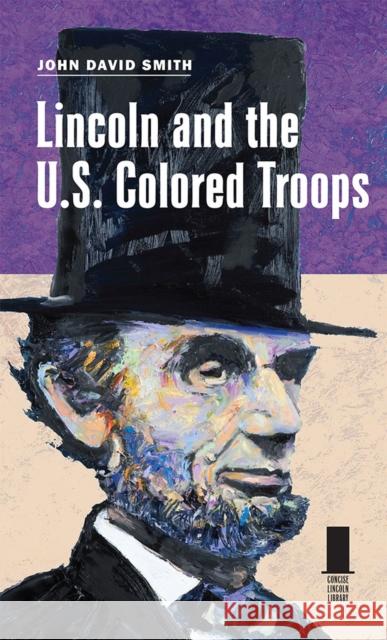
When Abraham Lincoln issued his final Emancipation Proclamation on January 1, 1863, he not only freed the slaves in the Confederate states but also invited freed slaves and free persons of color to join the U.S. Army as part of the U.S. Colored Troops (USCT), the first systematic, large-scale effort by the U.S. government to arm African Americans to aid in the nation's defense. By the end of the war in 1865, nearly 180,000 black soldiers had fought for the Union. Lincoln's role in the arming of African Americans remains a central but unfortunately obscure part of one of the most compelling...
When Abraham Lincoln issued his final Emancipation Proclamation on January 1, 1863, he not only freed the slaves in the Confederate states but also in...
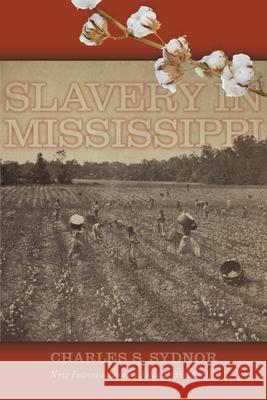
Slavery in Mississippi, first published in 1933, is a deeply researched and tightly argued social and economic study of slave life in Mississippi by Charles S. Sydnor (1898-1954). Inspired by Ulrich B. Phillips's American Negro Slavery (1918) and Life and Labor in the Old South (1929), Sydnor strived to test Phillips's contention that slavery was simultaneously a benign institution for African American slaves and an unprofitable one for their masters. Sydnor included pathbreaking chapters on such broad scholarly topics as slave labor, slave trading, and the profitability of slavery, but he...
Slavery in Mississippi, first published in 1933, is a deeply researched and tightly argued social and economic study of slave life in Mississippi by C...
The sesquicentennial of the Civil War and Reconstruction invites reflection on the broad meaning of American democracy, including the ideals of freedom, equality, racial justice, and self-determination. In We Ask Only for Even-Handed Justice, John David Smith brings together a wealth of primary texts -- editorials, letters, newspaper articles, and personal testimonies -- to illuminate the experience of emancipation for the millions of African Americans enmeshed in the transition from chattel slavery to freedom from 1865 to 1877.
The years following Appomattox offered the freed people...
The sesquicentennial of the Civil War and Reconstruction invites reflection on the broad meaning of American democracy, including the ideals of fre...
Writing in 1935 in his brilliant and brooding Black Reconstruction, W. E. B. Du Bois lamented America's post-Civil War era as a missed opportunity to reconstruct the war-torn nation in deed as well as in word. "If the Reconstruction of the Southern states, from slavery to free labor, and from aristocracy to industrial democracy, had been conceived as a major national program of America, whose accomplishment at any price was well worth the effort," wrote Du Bois, "we should be living today in a different world."
Interpreting American History: Reconstruction provides a primer on...
Writing in 1935 in his brilliant and brooding Black Reconstruction, W. E. B. Du Bois lamented America's post-Civil War era as a missed opportunity ...