Reform is one of the most significant themes, spiritual and intellectual, of the Middle Ages; and it has both institutional and individual dimensions. The Reformation crisis led to further variations on this crucial theme. This volume examines the theme of Reform from a variety of viewpoints while covering more than four centuries. Some contributions look at Apocalyptic dimensions in writings on reform. Another focuses on the influence of Gerhart Ladner on the study of reforming themes and reform movements. These articles will be useful for the study of intellectual history, ecclesiastical...
Reform is one of the most significant themes, spiritual and intellectual, of the Middle Ages; and it has both institutional and individual dimensions....
Christopher M. Bellitto T. M. Izbicki C. M. Bellitto
This volume commemorates the 6th centennial of the birth of Nicholas of Cusa (1401-1464), a Renaissance polymath whose interests included law, politics, metaphysics, epistemology, theology, mysticism and relations between Christians and non-Christian peoples. The contributors to this volume reflect Cusanus' multiple interests; and, by doing so they commemorate three deceased luminaries of the American Cusanus Society: F. Edward Cranz, Thomas P. McTighe and Charles Trinkaus. Contributors include: Christopher M. Bellitto, H. Lawrence Bond, Elizabeth Brient, Louis Dupre, Wilhelm Dupre, Walter...
This volume commemorates the 6th centennial of the birth of Nicholas of Cusa (1401-1464), a Renaissance polymath whose interests included law, politic...
One may read about the "early church" or the "Renaissance popes" without a clear idea of the who-where-when-what-why-and-how of those eras. This easy-to-read volume answers the basic question "what did the Church look like in this particular period?" for the four traditionally recognized eras of Church history: early, medieval, Reformation, and modern.
Each chapter includes a map and timeline to locate the reader in time and place. The timeline identifies what else was going on. Then they address these topics: 1) The Big Picture: a broad overview of the era; 2)...
One may read about the "early church" or the "Renaissance popes" without a clear idea of the who-where-when-what-why-and-how of those eras. This ea...
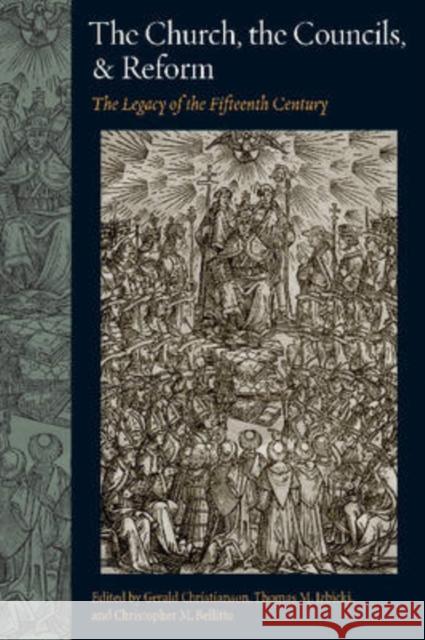
The Church, the Councils, and Reform brings together leading authorities in the field of church history to reflect on the importance of the late medieval councils. This is the first book in English to consider the lasting significance of the period from Constance to Trent (1414-1563) when several councils met to heal the Great Schism (1378) and reform the church. The authors look afresh at this era and consider how its legacy of reform and conciliarism may remain relevant to todays contexts of challenge and change. Since the central convictions of the conciliar movement involved the...
The Church, the Councils, and Reform brings together leading authorities in the field of church history to reflect on the importance of the late medie...
At the conclusion of his definitive study The Idea of Reform, which carved out reform as a distinct field of intellectual history, Gerhart Ladner stated that the idea of reform was to remain the self-perpetuating core, the inner life spring of Christian tradition through lesser and greater times. Ladner himself sought to explore patristic theology and early Christian monasticism and his insights laid the groundwork for a half-century of scholarship. Now, in celebration of the 50th anniversaries of the publication of The Idea of Reform and the Second Vatican Council, Reassessing Reform...
At the conclusion of his definitive study The Idea of Reform, which carved out reform as a distinct field of intellectual history, Gerhart Ladner stat...