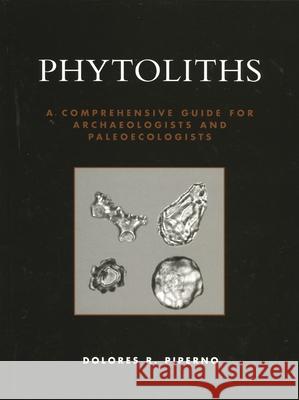
The study of phytoliths--inorganic silica remnants plants leave behind when they die and decay--has developed dramatically over the last twenty years. New publications have documented a diverse array of phytoliths from many regions around the globe, while new understandings have emerged as to how and why plants produce phytoliths. Together, these developments make phytoliths a powerful tool in reconstructing past environments and human uses of plants. In Phytoliths, Dolores Piperno makes sense of the discipline for both those working directly with phytoliths in the field or the lab as well as...
The study of phytoliths--inorganic silica remnants plants leave behind when they die and decay--has developed dramatically over the last twenty years....
Paleobotanical studies are assuming an increasingly important role in archaeology, providing information on prehistoric social structures, environments, and economic concerns. This volume presents the latest applications of phytolith analysis in archaeology and paleoecology. It demonstrates the versatility of the discipline.
MASCA Vol. 10
Paleobotanical studies are assuming an increasingly important role in archaeology, providing information on prehistoric social structures, environm...